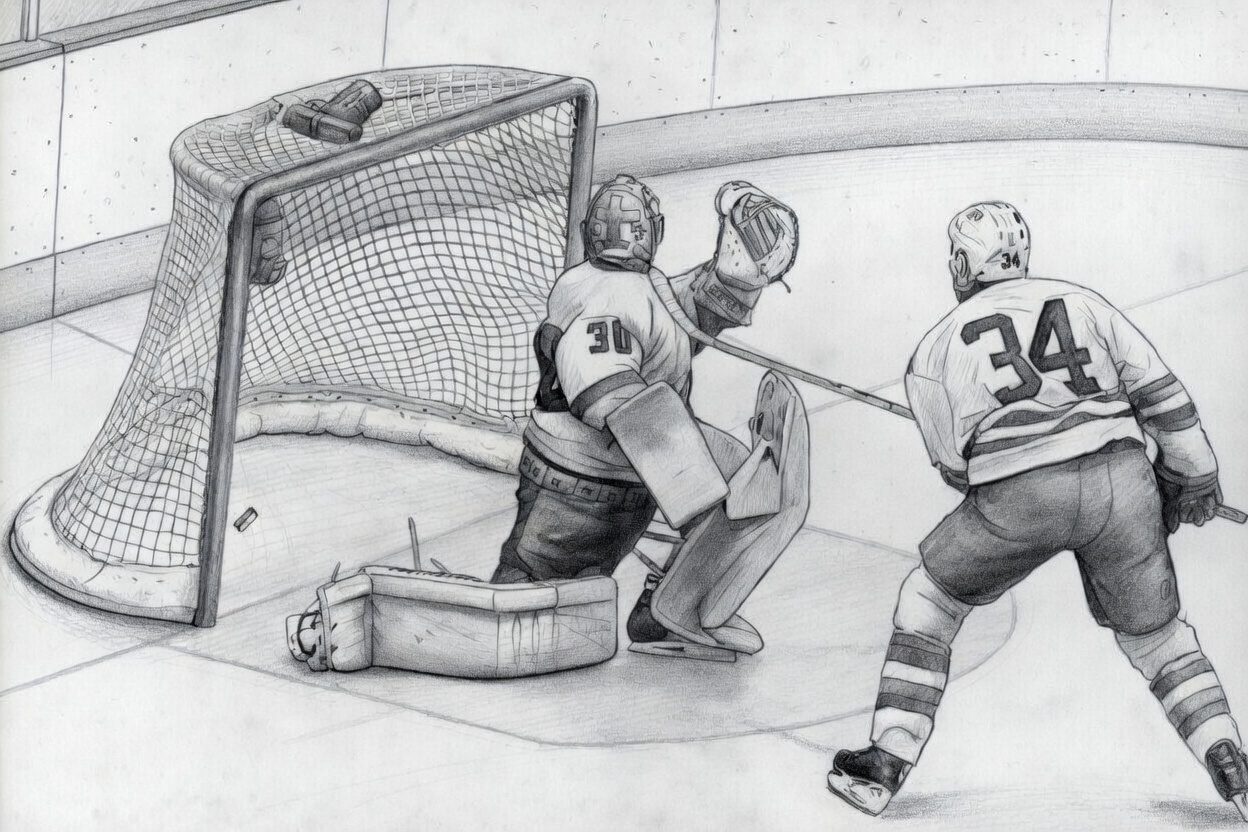
If you’re old like me, you will remember when the cutting edge of hockey analysis and the finest writing was to be found, not on large corporate sites nor still less in newspapers, but on things called “blogs.” Back when “67” was a Toronto Maple Leafs reference, people would start blogs that looked like hell, had no marketing to speak of besides word-of-mouth, were updated erratically as a rule, contained whatever the author found interesting, had no possibility whatsoever of making any money, and changed the way people thought about hockey: bringing serious statistical analysis to the game, at first, almost single-handed.
Those days are gone and shall never return. The “blog” has become a column on a corporate network at best; a Substack at worst. Young people are more likely to start a YouTube channel than a long-form writing enterprise, and the community of the comment section has become the community of the chat window. AI and social media motivate takes churned out at speed rather than 1,500 words about Stan Weir every third Wednesday.
That’s not all bad: the gifted can now actually make money writing on the Internet (even I made some), and the really smart guys turned hobbies into thriving careers. Edmonton Oilers bloggers circa 2006 have more Stanley Cup rings than the post-Messier Edmonton Oilers, but as to bringing the style back, 2006 was twenty years ago. The old days had its excesses: I went along with some of them, and glad I am that they’re lost in the mists of time. It had its limitations: we’d have killed for Hockey Reference or Natural Stat Trick in my hockey-writing era. Concepts that were once almost in-jokes, “Fenwick” and counting scoring chances, are now commonplace. For tastes to change with the times is no unhealthy thing.
However, just because not all change is bad doesn’t mean we can’t be nostalgic for what once was. Especially for the actual game of hockey: the quality of play is as good as ever but I cannot be the only one turned off today’s NHL by the toenail-offside reviews, the endless gambling ads, three-on-three overtime and shootouts, and the politicization of everything. Middle-class people used to buy season tickets to watch the greatest teams ever, and today’s professional sports economy is a system of grinding up people with poor impulse control’s dopamine receptors to squeeze the money out.
Thus, what I’m doing here: mathematically-aware nostalgia that will be updated as frequently as I choose until I run out of ideas or get sick of it.
Time to Kill Now will be no more and no less than me going through hockey, old writing, old statistics, with a brain from 2026 to talk about the game that was. My inspiration, like all good 2006-era hockey blogs, is baseball writer Bill James, whose statistical creativity and IQ is several standard deviations above mine but in terms of both math and writing will forever be the gold standard. If I could do anything in sports writing it would be to write The Bill James Historical Baseball Abstract but for hockey. I pitched it off-the-cuff on X-formerly-Twitter and like four people were in favour, but they were the right four.
Here’s the good side of today’s media: if you want to know about the current NHL season you are in clover, you could read and watch intelligent analysis every waking hour and never come to the end of it. But hockey history is, and to some degree always has been, the domain of old journalists putting together quick books of things they sort of remember writing about. It’s a broad, fascinating topic, from the prehistoric days of Cyclone Taylor to the Original Six to the internationalization of the game to the Summit Series to the WHA to the Live Puck Era to the Dead Puck Era to today, which we mostly know in snapshots (Maurice Richard’s 50 goals in 50 games), stories (Bobby Baun’s broken leg), personalities (Gordie Howe), and dynasties (usually the Habs).

Hi, this is a comment.
To get started with moderating, editing, and deleting comments, please visit the Comments screen in the dashboard.
Commenter avatars come from Gravatar.
Nesting test.
Root additional reply test.