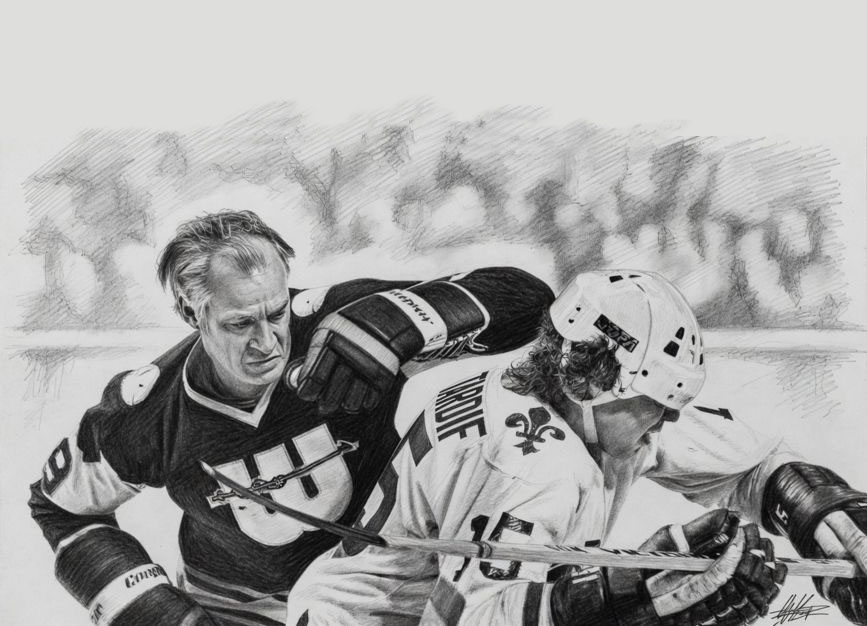
The philosopher Conan once said: “What is best in life? To crush your enemies, see them driven before you, and hear the lamentations of the women.” True at the time, but the best in modern life to cheer with the smallest group of fellow-fans required for it to technically count as a public event. It is called being a hipster and it is the only way to be. Tragically, as hockey fans, hipsterdom is not easy, for these days most organized North American hockey is either affiliated with or aspires to affiliation with the NHL, and going to a midget game to cheer one someone else’s kid is a bit creepy even for those of us with giant mustaches reeking of IPA. So we must look back into history, at some of the great hipster hockey teams that can never become too mainstream, because the river of time has passed them by.
For many years your author was a Canadian soccer fan, so perhaps you imagine I was thrilled to see Vancouver, British Columbia awash during the 2026 World Cup not only with soccer, but with Canadian soccer: with Liam Millar wraps on the SkyTrain and Canada kits seen on random walks through town, and crowds in the tens of thousands enthusiastically cheering Les Rouges on to a tournament performance that, while hardly remarkable, was better than expected.
Certainly not! It’s all gotten so mainstream. Canadian soccer is for the normies now, urgh! Retch! Blech! To see a beautiful family of respectable people wearing matching Stephen Eustaquio sweaters, saying “morning! hope they win tonight!” as they skip through the sun singing “ooh ahh Canada” makes me sick! I enjoyed Canadian soccer long before it was cool; this must be how Nirvana fans felt when Nevermind came out (I don’t know, I never got into Nirvana, they were too popular). Yet the old memories still provide fuel, standing in a decaying Communist stadium with nine other people cheering for Iain Hume to somehow find the ball in the middle of a cow pasture and put a goal past Cuba. So it is with hockey. If we look into history, there is great hipsterdom to be found; hipsterdom that survives not in spite of how terrible things were, but because of it.
Thus, the New York Golden Blades
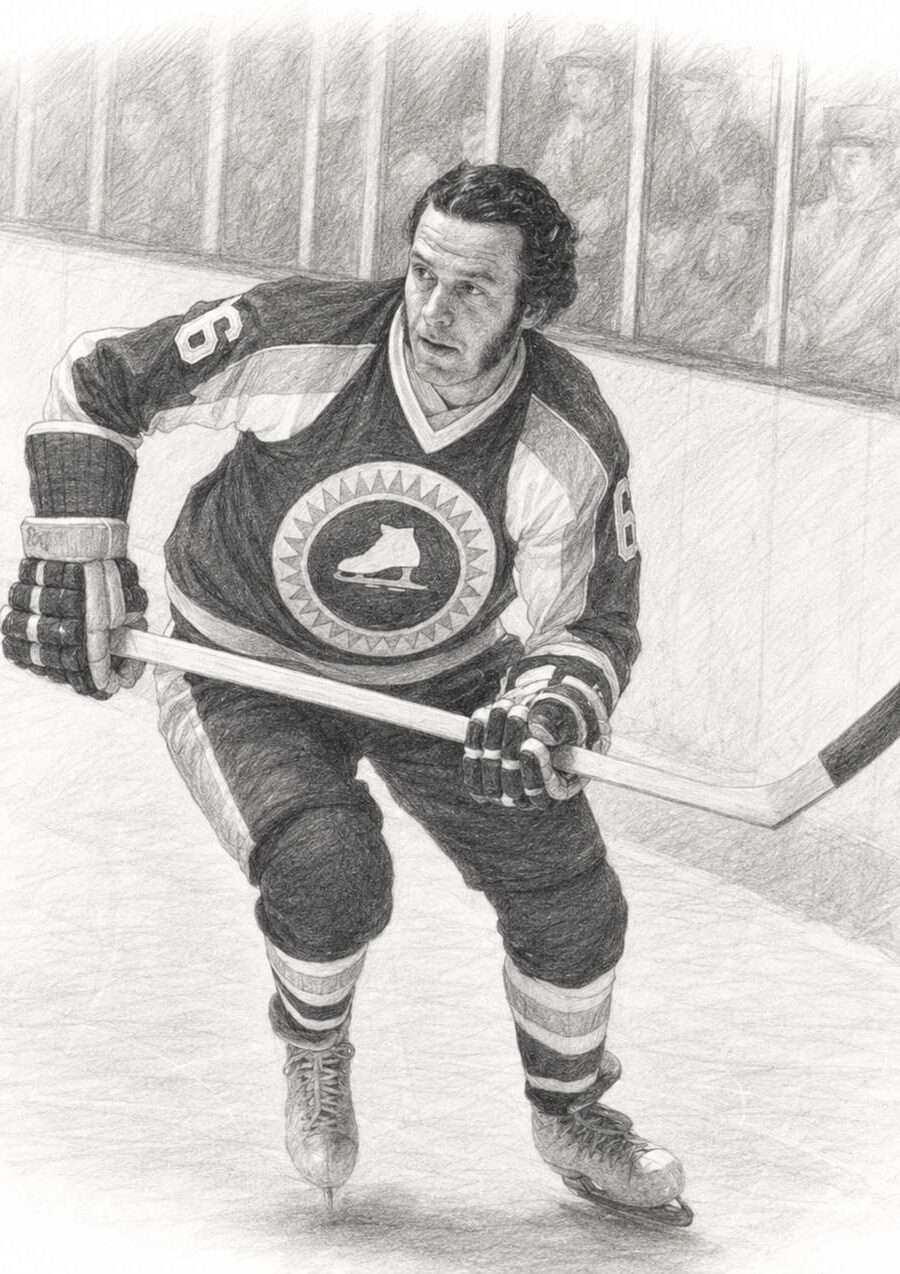
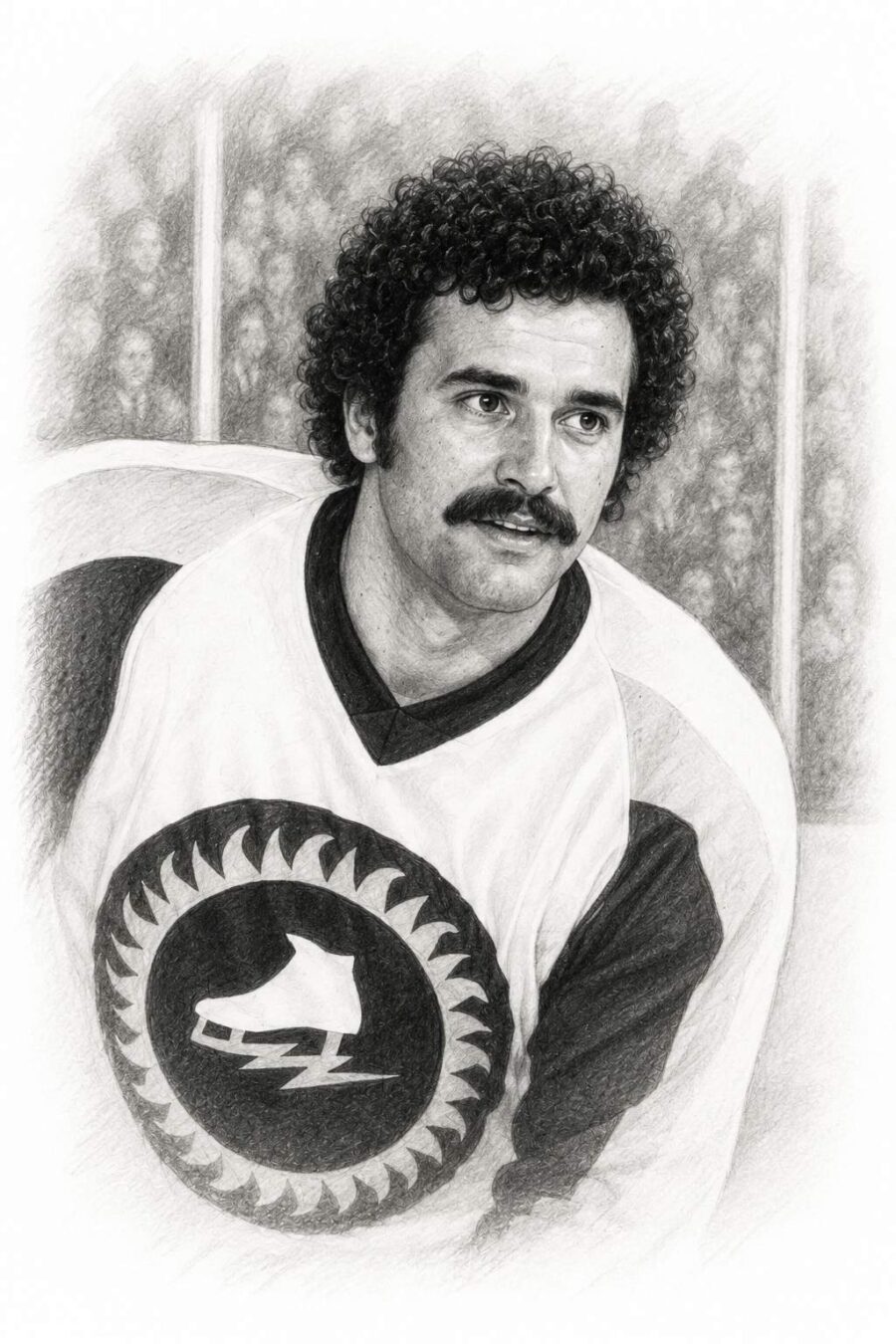
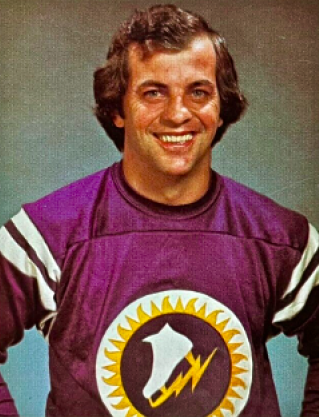
The New York Golden Blades existed from, and I am not kidding here, October 6, 1973 to November 20, 1973. The Blades had started life as the New York Raiders, which existed for a very simple reason: the World Hockey Association was major league sports, and major league sports had teams in the New York City. It had no other rationale. At first, the WHA had planned to play in Long Island’s brand new Nassau Coliseum, which would have at least given them a sporting chance of survival. Alas, Nassau County didn’t consider the WHA an appealing bet for some reason, and when the NHL expanded to Long Island with the New York Islanders Nassau ghosted the Raiders like the worst Hinge date ever. So the WHA, which for all its virtues never let a terrible idea get in the way of its execution, rented dates at Madison Square Garden and had the Raiders play there.
You may ask, “why would somebody go see games in a quirky new league when they could see the Rangers in the same building, or even the Islanders across the water?” The answer is very simple: nobody did. Under head coach Camille Henry, who was not an inspired choice, the Raiders dressed in sweaters that resembled a WHL team’s and played before WHL crowds. They finished 33-43-2, and actually scored a lot thanks to some stars and fantastic forward depth, but none of their goalies were any good and their defensemen weren’t much better. Everyone forgets the Raiders and they should.
But the Golden Blades! Ah, that was a different kettle of fish. A stinkier one. The WHA somehow found new ownership willing to keep a team at Madison Square Garden. They had some interesting ideas. They tried to stir things up. In this they were not unusual among World Hockey Association owners. They found some people who knew enough about hockey to look after the on-ice product. All standard so far. They had less money than they thought they did. Yep, that’s the WHA. But some of their mad ideas raised eccentricity to inspiration.
They gained André Lacroix and Kevin Morrison, which was an interesting way to solve your defensive problems, and lost so much depth that with the best playmaker and the best attacking defenseman in the league their scoring got worse. On the bright side, Morrison was a brilliantly entertaining player, a square-bodied afroed hard-hitting hard-skating classic WHA defenseman with hands. Lacroix, who was extremely French-Canadian, was not much less spectacular. They added Harry “The Horse” Howell, a Rangers legend who by 1973 was seven hundred billion years old and deeply washed up, but skilled, brainy defensemen who have turned terrible provide entertainment of a sort. They had Bill Speer, the ugliest man in hockey history, 5’11” with a circus face and a build that was not just hockey fat but Actually Fat1; he’s been lost as a player except for his shot-blocking, but a guy who looked like that and played 265 major league games obviously brought something to the rink.