Skip to content

Remembering Gerry Meehan

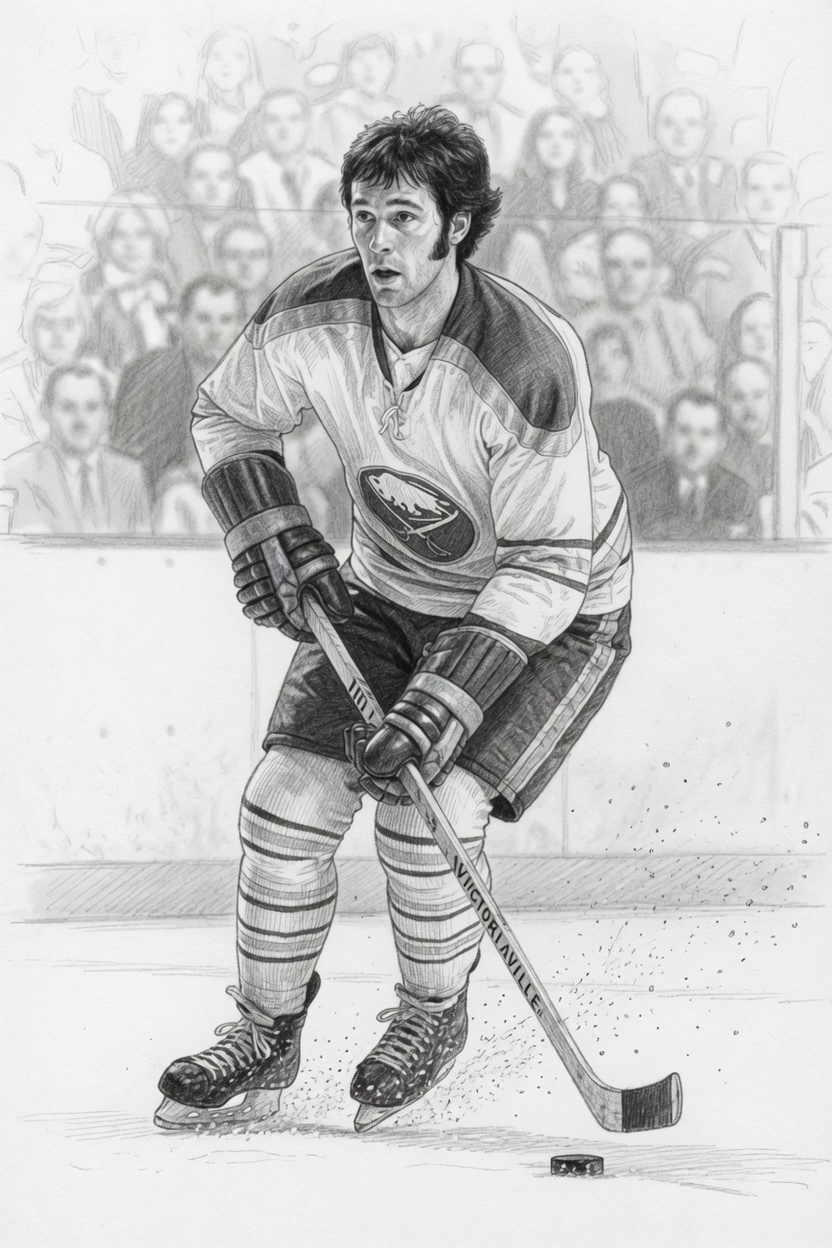
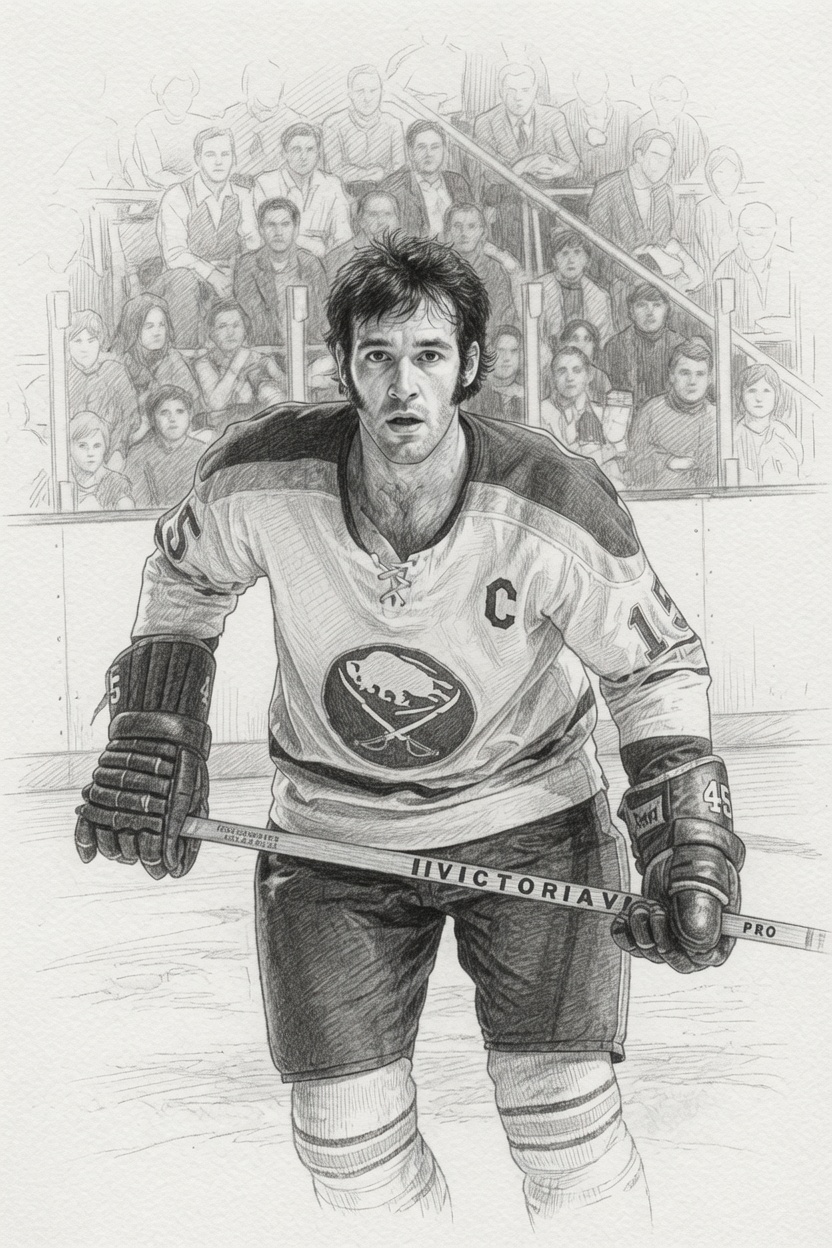
Gerry Meehan, forward for six NHL teams and long-time NHL front office jack-of-all-trades, died earlier this month at age 79. Meehan was perhaps most famous as “the man who built the Buffalo Sabres twice” and destroyed the Philadelphia Flyers once. The second captain in Sabres history, Meehan scored one of their most famous goals and led Buffalo to their first ever playoff appearance. As Sabres general manager Meehan got Alex Mogilny out of the Soviet Union, drafted Pierre Turgeon, traded him for Pat LaFontaine, probably lost a trade for Dale Hawerchuk, but made up for every imaginable sin by acquiring Dominik Hasek for a scrub and a fourth-round pick: if that’s not the best trade in NHL history I’d very much like to know what is. Meehan’s time as GM was relatively short, but few general managers can say they acquired the two best players in franchise history in such a span.

As a player, Meehan was destined for an awkward epoch: the immediate expansion era. Meehan was never considered a star prospect, as a kid he played well for good teams but didn’t stand out. He was drafted by the Leafs, but it was the first ever amateur draft, for the few players who hadn’t signed with an NHL team already; Meehan went last overall. Although the format was so weird you have to put an asterisk beside this, Meehan was probably the best last overall pick until Patric Hornqvist 42 years later.

Had he been ten years older, Meehan would been lost in the deep dark sea of the Original Six. Had he been ten years younger, he would have benefited from the highest-scoring era in NHL history, for Meehan was a premature ’80s Guy if ever there was one. He had good size and skill, was respected, played a versatile attacking game, and got the puck on goal. He was smart on the ice and smarter off it. But he had a rep as a soft player, which when his most famous teammate was Gilbert Perreault took some doing. Despite, or maybe because of this, he played in 672 big league games. Though he wasn’t a regular in a big-league lineup until he was 24, he was basically never hurt; he had two eighty-game seasons, a 78, three 77s, a 74, and a 72. He played for one of the worst teams in NHL history, the 1975–76 Washington Capitals, and may have been the reason they weren’t the worst team in NHL history. He never came close to leading an NHL team in scoring. His teams always traded him, usually for not much; the team that got him usually improved. Not a great player, and better remembered in the front office, but a man before his time, a Volkswagen Golf during a Buick age, who showed how far you can get with brains and a work ethic.

Meehan was a Toronto boy, through and through, born in the Big Smoke and raised in Newmarket. His was a typical NHL player upbringing: a big family of three brothers and two sisters, father an office worker and mother a nurse, playing pond hockey around the GTA for hours, building his local reputation as a strong young player, and eventually making his major junior debut in his age 16 season for the Toronto Neil McNeil Maroons of the Metro Junior A League.

The Metro Junior A League was a two-season experiment which can only be described as “very 1960s.” The Toronto St. Michael’s Majors were the defending Memorial Cup champions, but under Father David Bauer they were also an organization that took amateurism, academics, and personal growth unusually seriously. The Ontario Hockey Association then played a 48-game schedule with travel that doesn’t seem extensive to us today (the teams ranged from Niagara Falls all the way to Peterborough), but it bothered the Roman Catholic educators who ran (and run) the St. Michael’s College School that sponsored the team. They wanted a shorter schedule and less travel, and Stafford Smythe, supremo of the Toronto Maple Leafs and their junior team, the Toronto Marlboros, wanted them happy.

St. Mike’s had long been a source of Leafs talent: just that season goalie Gerry Cheevers, defensemen Arnie Brown and Tim Horton, forwards Dick Duff, Dave Keon, and Frank Mahovlich, and little-bit-of-everything Red Kelly were St. Mike’s grads on the Stanley Cup champions. The Leafs did not run the Majors, but they had a strong influence. They provided coaches, and a hockey-playing Toronto teenager with any interest from the Leafs and any claim to Roman Catholicism would be off to St. Michael’s College. In those pre-draft days a Major was a Leaf in waiting, and reading those names you can see why Stafford Smythe wanted the program to keep operating.

With the Majors and the Marlboros, Smythe cobbled together a five-team Greater Toronto junior circuit that would, in principle, both satisfy the St. Michael’s fathers and give the Leafs more junior hockey strength. They’d play a 33-game season within streetcar range of each other, the OHA let their champion play the rest-of-the-league champion in the playoffs for a crack at the Memorial Cup, and the Leafs would benefit not only from the well-run Majors program but maybe some diamonds in the rough from the rest of the league. A nice idea that didn’t work. The Marlboros, who’d been lousy in the full OHA, were the second-best team in the metro league, and the rest were nowhere. A couple decent players showed up on those overwhelmed ex-junior B teams, most notably WHA star forward Wayne Carlton and Andy Brown, the last maskless goaltender in NHL history, but not enough to give credibility. The St. Mike’s Majors won the league in a walk and then decided that even 33 games in the GTA took too great a toll, transferring their franchise to Neil McNeil High School, another Roman Catholic institution out by Victoria Park.

Smythe kept his league together another season, which is where Gerry Meehan comes in. Meehan played seven games as a 16-year-old on a Neil McNeil team that went 33-4-3, beating the Marlboros to the metro league title by 19 points. He scored once. The thing was, Gerry Meehan was not Toronto Maple Leafs property. He was concentrating on school and his parents, though open to a hockey career, seemed disinclined to put him under a team’s control. The famous A, B, and C-forms would still be around until 1967; Meehan’s parents had not signed one. So, on the strength of seven major junior games and one point, Meehan was eligible for the first NHL draft.

The 1963 NHL Amateur Draft, as it was then called, was as odd as you’d expect. Four rounds and twenty-one picks of extremely young players almost exclusively from southern Ontario (one played in Portage-la-Prairie) who hadn’t already signed agreements with an NHL team. At least two players, Roy Pugh and Cam Allison, were fifteen years old when their names were called1. The first overall pick was Garry Monahan, who was pretty good; the second overall was Pete Mahovlich, who was very good indeed, and third overall was someone named Orest Romashyna, who was at the time playing junior C. Teams started passing on picks in the third round, and Gerry Meehan was the last overall pick in the first ever NHL entry draft, 21st overall. Only five players of the 21 drafted ever played an NHL game, but all five were solid.

According to the rules, teams weren’t allowed to talk to these prospects about turning pro until their eighteenth birthday. But according to the rules you weren’t supposed to draft 15-year-olds either. This was the Clarence Campbell NHL, nobody was getting their knickers in a twist, and all the good players were off to their drafting team’s junior affiliates as soon as they could tie their skates tight enough. Meehan was among them. Smythe’s experimental league fell apart and the best players joined the Marlboros on the regular OHA circuit. They won the thing by miles, then the Memorial Cup. Meehan played a part-time role with good numbers and meanwhile attended (ironically enough) St. Michael’s College, his eyes on his grades. In his age 18 season he became a regular, and while he was only fifth on the Marlboros in scoring he got a one-game skate with Rochester in the AHL under head coach Joe Crozier, of whom Meehan would see a great deal more later. The next year he was second in team scoring, and in his final major junior season he led an underachieving team, tying for ninth in the league.
His focus was still on academics. After graduating from St. Michael’s, Meehan combined classes at the University of Toronto with his major junior career. His GPA was good enough for law school, but entering his twenties he finally had to choose: his performance at Maple Leafs training camp got him a minor league contract, but minor-league hockey in Tulsa and law school were incompatible.

Meehan picked Tulsa. Perhaps, like many kids in his position, he assumed law school would still be there if his hockey career fizzled out. His hockey career did not fizzle out, but he was right anyway. He was a bright kid.

Tulsa, in the old Central league, was the top Leafs developmental farm team for reasons that probably made sense at the time. They had a pretty good lineup that included minor league legend Len Haley, hard-skating defenseman Ron Ward, an enigmatic French-Canadian scoring forward and future WHA sniper named Andre Hinse, Meehan’s Marlboros teammate and future Sabres highlight-reel co-star Mike Byers, tough defenseman Pat Quinn, and in goal two future major league starters, Al Smith and Serge Aubry, among several other future or former big-leaguers. Good competition, and Meehan showed well. Under head coach John McLellan Tulsa went 37-22-11, and Meehan was fourth in team scoring with 72 points in 60 games. Scoring was high in the Central league, and Meehan was not the star, but freed from homework he had passed his first test as a full-time hockey player.

Meehan started 1968–69 in the minors, played well, and was called up in December, making his NHL debut December 1, 1968 at Madison Square Garden. He got his first shot in his third NHL game and his first assist in his fourth. It was, ironically enough given the future course of his career, on the power play, setting up Pierre Pilote for the first goal in a 4-1 Leafs win. Despite that opportunity production was slow in coming. His second NHL point was not until his 20th NHL game, another power play assist on a Tim Horton goal.

They were the only two points Meehan ever got as a Leaf. He registered 28 shots in 25 games, no goals, and a -1. On March 2 Toronto traded Meehan, with his old pal Mike Byers and superjourneyman Bill Sutherland, to Philadelphia for Forbes Kennedy, who was finished as a player, and prospect Brit Selby, who turned out okay but not great. Meehan was the best player in the trade, and at first the Flyers found him a minor blessing. In twelve games in Philadelphia Meehan’s production improved, in that he had three assists and more than a shot per game, and with Meehan the lousy Flyers actually had a pretty good March, 7-2-5 to close out a 20-35-21 season.

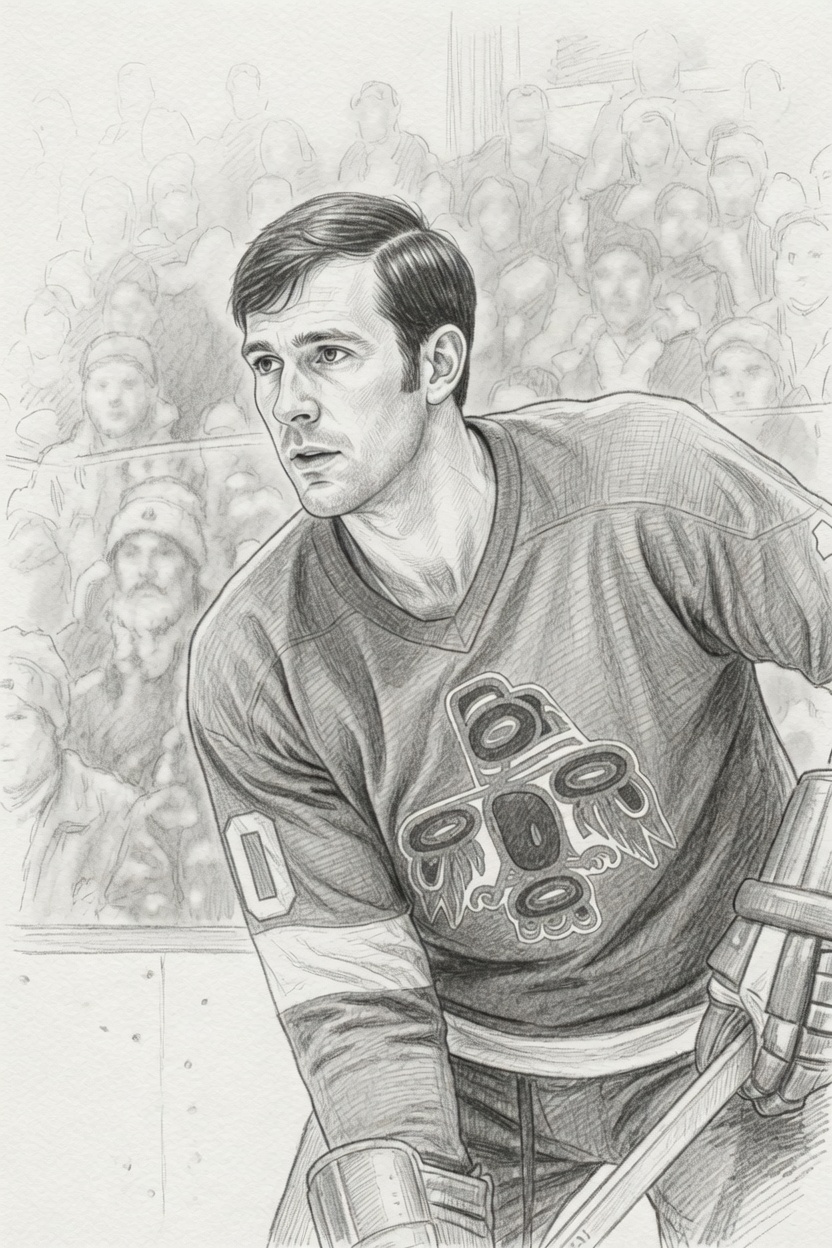
He can’t have made much of an impression, though. Meehan spent all of 1969–70 in the Western Hockey League (then a minor pro league) with the Seattle Totems. Meehan was the Totems’ fourth-leading scorer, behind three players you’ve never heard of. He was relatively young for the circuit, and the second-youngest regular on the team, for the WHL had some big league pretensions. In the years before the NHL had much presence out west, the Dub was an attractive option for veteran players not clearly good enough to crack the major circuit but who wanted to play close to home. Very often the WHL was the end of a player’s NHL hopes rather than the beginning. Meehan was still Flyers property, and one presumes they kept an eye on him—at any rate, Punch Imlach did.

Punch Imlach built the Buffalo Sabres. A Toronto Maple Leafs legend fired by Stafford Smythe at the end of the 1968–69 season, Imlach was also part-owner of the WHL Vancouver Canucks. Vancouver was joining the NHL for 1970–71 and “everyone knew” Imlach would go with them, but when the NHL Vancouver ownership bought Imlach and his partners out, Punch joined their expansion rivals in Buffalo instead. Imlach used his first expansion draft pick on Boston’s Tom Webster, a fine player who Imlach immediately sent to Detroit for goalie Roger Crozier; good dealing, as no decent goalies were available and Crozier was someone you could win with. Punch waited until his thirteenth pick for a Leaf, Chris Evans, but then ol’ Punch made his moves.

Eddie Shack and Dick Duff went to Buffalo shortly after the start of the season for (I am not making this up) a seventh-round pick and an eighth-round pick. Early in November Imlach grabbed Bobby Baun off of waivers, which infamously annoyed Baun to no end: Imlach traded him to St. Louis the next day for ex-Leafs prospect and good Taranna boy Larry Keenan plus Jean-Guy Talbot, who had been a great player five years earlier. Buffalo’s first captain was an ex-Leaf, Floyd Smith, an undersized do-everything-not-that-well sort of leader. Punch acquired Smith, along with a minor leaguer named Brent Imlach, in exchange for cash, and yes there was a relation. Smith was already obviously washed up but was ten times the player Brent Imlach was, and having spent ownership’s money to get his son a job, Punch maybe felt like he had to make a bit more of old Floyd than he should have. Smith struggled into December 1971 before even he realized he had to hang up the axe, but went on to a successful coaching career and had the distinction of being the first captain of the Buffalo Sabres.

And Gerry Meehan, who Imlach traded out of Toronto but might have seen good in the WHL, came from Philadelphia in the expansion draft and was the only one of those old Leafs who was much use at all.

This makes it sound worse than it was, the Punch Imlach nostalgia tour. In fact, while Imlach was not at all done with old Leafs (Tim Horton came later), thanks to young Gilbert Perreault, old Phil Goyette, three good goalies, and enough old Leafs to fill out a Hall of Fame ballot2, Buffalo finished five games below .500, seven points better than expansion brothers Vancouver and better than three other expansion-era teams as well as the Detroit Red Wings. Duff, Smith, and Keenan stunk out the joint, but Shack was not that bad and Meehan was positively useful. In his first full NHL season, Meehan finished third in Sabres scoring behind Perreault and Goyette, who may have been older than the Erie Canal but wasn’t called “The Professor” because he relied on his physique. Meehan seems to have spent relatively little time on the powerplay (after all, why would you ever use Gerry Meehan when you had a 33-year-old Eddie Shack?) and his 19 even-strength goals were second on the team behind Perreault. He led the team in even strength assists, with 28 to 27 for Goyette.

November 18, 1970 would have been one of the best days in the life of several Buffalo Sabres. It was Buffalo’s first ever trip to Toronto, the first time Imlach coached at the Gardens from the visitors’ bench. Both teams were off to crummy starts but it was still the Leafs, at home; Buffalo won 7-2. Meehan scored early in the second to put Buffalo up 2-1 and, with the score 4-2 Buffalo, scored again early in the third and added two assists to turn a win into a rout. Larry Keenan scored two goals, old man Smith had two assists, and Punch Imlach put Stafford Smythe squarely in his place, for one night at least.

Every expansion team hopes to pull a Gerry Meehan out of the draft. Sure, you get stars and near-stars who benefit from the change of scenery, but Gerry Meehan is the player you dream of over the long hours scouting. Prior to Buffalo, Meehan had been nobody. A minor-leaguer with a couple failed auditions. After that season, he was a top-six NHL forward. Meehan was announced Buffalo’s new captain in November 1971, while the old horse Floyd Smith played a few games as a player-assistant coach before being humanely destroyed at trackside3.

After such promise, the team’s weaknesses flared up in their second season. Perreault regressed. Too many of their players were old. The team drafted Rick Martin, the second piece of the French Connection, but between Perreault, Meehan, and Martin, had perhaps crossed a threshold of being too easy to push around. Eddie Shack was still there, and holy moly did he ever play, but a washed-up Eddie Shack was not putting the fear of God into anybody and late in the year Imlach cut his losses brilliantly, flipping Shack to Pittsburgh for prospect René Robert and completing the most famous line in Sabres history. Meehan took a step back as well, and while it looks like he still wasn’t getting much powerplay time there were so many problems on that team it’s hard to pick him out of the big picture. He recorded the fourth-most shots on the team behind Martin, Perreault, and unheralded 24-year-old winger Danny Lawson, a year away from winning the first WHA goalscoring title, but while Lawson could put the puck on net he couldn’t make it go in and everything stank. Punch had a heart attack in January, and between them Floyd Smith and Joe Crozier at least didn’t make things worse (Crozier became permanent head coach the next season). The Sabres were 16-43-19, third-last in the NHL.

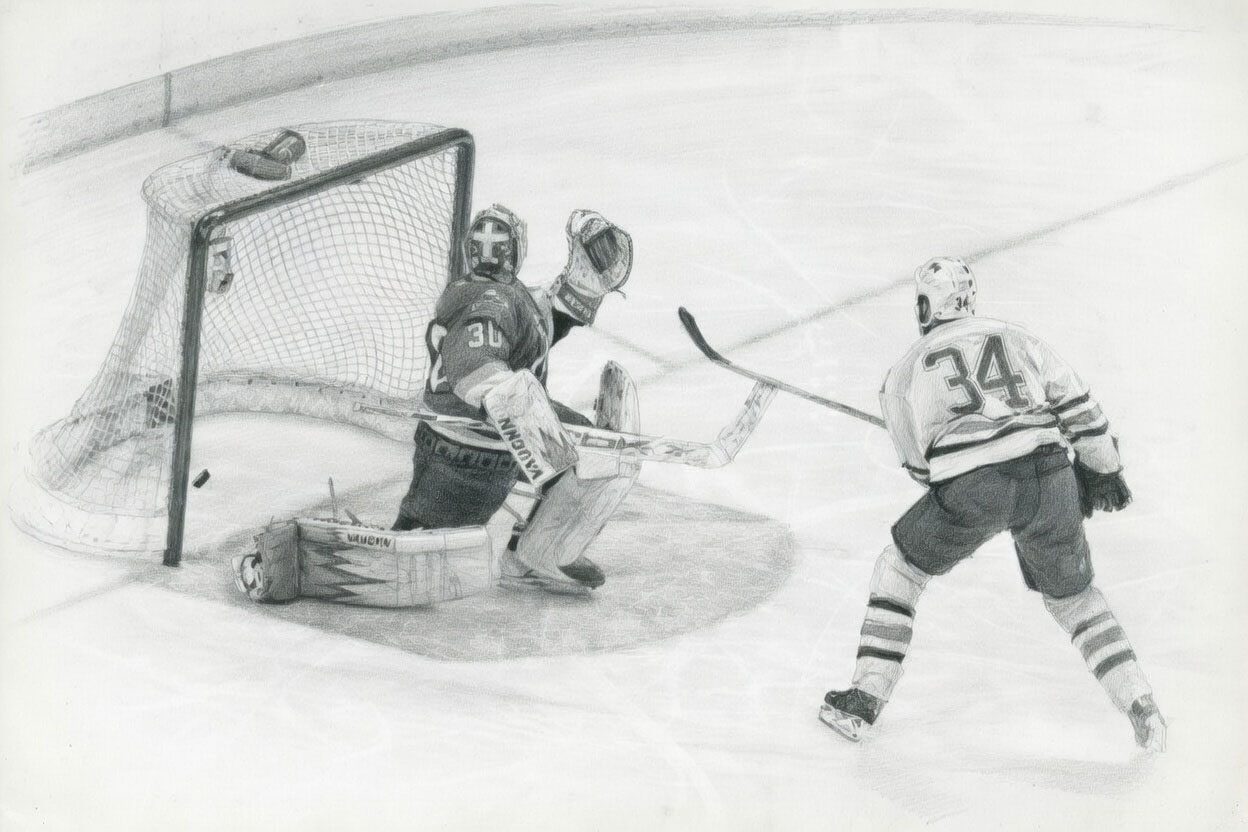
Meehan did make history. Buffalo played Philadelphia in the last two games of the season. Buffalo, 15-42-9 when the two-game set started, was dreaming of golf, but the Flyers were 25-37-13 and had a shot at the playoffs if they won out. Philadelphia took the first game at the Spectrum 3-1, on a two-point night by Machine Gun Kelly, and the second would decide everything. A tie would be good enough for Philadelphia, and Buffalo wasn’t going to give it to them, because it was at the Buffalo Memorial and even in 1972 everyone hated the frigging Flyers. Bobby Clarke and Rick Foley kicked things off for Philadelphia, giving the Flyers a 2-0 lead midway through the second, but the French Connection stirred. Perreault’s 26th brought Buffalo within one, and a Robert powerplay goal in the third tied it. That was still good enough for Philadelphia, they were sitting back, and Gerry Meehan went out for the last shift. He stripped the puck off a Flyer in the neutral zone, who immediately sprinted back to his own zone. Meehan passed to Mike Byers, who eluded the closest thing to a forecheck Philadelphia could muster and found Meehan in stride. The Flyers backed right off, strolling into their zone, and must have realized too late they had backed off too much: Meehan shot almost from the boards and beat Doug Favell low to eliminate Philadelphia with four seconds left.

If you think there is no joy in playing for a 16-win team, watch the video. The crowd exploded, players came off the bench to congratulate Meehan, it was the greatest moment to that point in Sabres history. They put “Meehan ends Flyers playoff hopes” on the scoreboard. Meehan, one shot and one goal, was named first star. Because everyone hated the Flyers. Buffalo fans still remember that goal.

Viewed as a story, Gerry Meehan had given his town something to celebrate. But it had still been a dud of a season; viewed as hockey, the unheralded leader’s first season under the spotlight has been a failure. So much, perhaps, for Gerry Meehan.

Well, no. In 1972–73, the World Hockey Association began and pillaged the NHL, including the Sabres. Lawson went to the Philadelphia Blazers, and stardom, when they offered to double his money and play him with André Lacroix4. Al Hamilton joined the Alberta Oilers because Bill Hunter loved him5, veteran blueliner Larry Hillman went to Cleveland, and other players of less consequence, defensemen Terry Ball and Jim Watson, and co-Flyer killer Mike Byers, made the move. Only Hamilton had been an important player for the Sabres, though Lawson would have been if he’d had a fair shake and Hillman had been good once. Given what a miserable season they had and how irascible Imlach could be, Buffalo got off easy. The French Connection remained, Meehan remained and kept the “C”. It got better.

The 1972–73 Sabres were not a great team, but at 37-27-14, they were better than they seemed to have any right to be. Perreault surged to his first point-per-game season, 88 ponts in 78 games, and won the Lady Byng. The French Connection made the All-Star game as a unit. Defenseman Jim Schoenfeld, 20 years old, played 66 games, hit everything that moved, and was fourth in the Calder voting. Meehan was only fifth in team scoring, but it was a good fifth: behind the French Connection and Jim Lorentz. Meehan’s 60 points was his second-best total, and in context probably his best season: the French Connection did not share the power play, and of his 60 points 52 were at even strength. Perreault had 61 EVP, and Meehan tied Robert for second on the team with less ice time and lesser linemates.

Even strength production was Meehan’s trademark. Over the seasons he spent as an everyday player, 1970–71 to 1977–78, Meehan was 33rd in the NHL in even-strength goals with 135. Not elite, and buoyed up by the fact that Meehan almost never came out of the lineup, but availability does count. Over the same span, he was 38th in the NHL in shots with 1,385. In the 1980s, with diluted rosters and goalies falling over everywhere, Gerry Meehan would have picked up a 40-goal season somewhere along the way. As it was, he was a solid second-line player 5-on-5.

With his even-strength prowess you would think Meehan the sort of player who could rise to the occasion in big games. It seldom happened, though he got too few opportunities to draw any conclusions. In ten NHL playoff games, Meehan had 1 point and was -5, but in four of those ten, for Philadelphia, Meehan barely played. Video evidence is hard to come by, but there is one big game in Gerry Meehan’s career on YouTube, and it looks good.

April 1, 1973, the St. Louis Blues visited Buffalo in the last game of the regular season. The Sabres would be guaranteed their first ever playoff spot with a win. The highlights are on YouTube, replete with extremely 1970s music. Gerry Meehan, #15, keeps showing up. Sometimes bad: briefly dogging it in his own zone on a highlight Roger Crozier save. He’s also on the ice for St. Louis’s opening goal in the second minute but was not responsible for the minus. After an outstanding Perreault goal to tie it, in the second period Meehan dekes journeyman defenseman Paul Curtis into Lake Ontario and shoots from the slot but is stopped. The third goal is all Meehan: his dump-in keeps the play alive, he sets up trouble with a dangerous tight-angle shot, gathers in St. Louis goalie Jacques Caron’s hurried clearance, takes his time, goes behind the net, and finds Jim Lorentz for the insurance marker. From then Meehan doesn’t show up: the Sabres defended the lead to the point of sometimes having three D out as was the style at the time, and that was never exactly Gerry Meehan o’clock, but he had done his share. Captain Meehan had a goal, an assist, and five shots in a must-win game: the three stars have not been recorded but probably rhymed with Gilbert Perreault, Roger Crozier, and Gerry Meehan.

That game won Buffalo a playoff series against the 52-10-16 Montreal Canadiens. You liked Gilbert Perreault’s 88 points? Two Habs, Jacques Lemaire and Frank Mahovlich, had more, and scoring wasn’t even the best thing Jacques Lemaire did. Their own Perreault-type, the Roadrunner, Yvon Cournoyer, was better than Perreault per-game that year. They had Henri Richard and Serge Savard and Ken Dryden and a young Larry Robinson and a young Steve Shutt and they just had everybody. The 1972–73 Canadiens slip through history’s cracks, since they only won one Stanley Cup in a row instead of four or five, but that was a deadly team. Montreal won the first three games of the series by a combined score of 14-6, and had a 1-0 lead after the first period of Game 4. Meehan, like most of the Sabres, was pointless in the series. Then, in the second, Meehan and Lorentz set up Jim Schoenfeld to tie the game and momentum swung. The French Connection took over from there, Perreault scoring twice, and the Sabres had their first ever playoff win, 5-1. Two days later they did it again, with Perreault’s three assists and Robert’s two-goals one-assist highlighting a 3-2 Buffalo win in overtime. Montreal won game six, and the series, 4-2, but Buffalo outshot Montreal 44-24 and Ken Dryden stole the show. In the three elimination games Meehan had no goals, one assist, ten shots, and was -1. Ten shots in three games, supporting the heroics of the French Connection, and an apple on the goal that turned the series momentum, is something one wishes one had video of. Sometimes you play well and get beat. It looks like that happened to Gerry Meehan in the 1973 playoffs.

As a player, this was the highlight of Meehan’s career. Buffalo took a bad step back in 1973–74. Perreault missed 23 games and Meehan dropped 21 even-strength points from the year before. Decent forward depth let them make a run at .500 but they couldn’t click on the powerplay (Meehan’s six PPG was his career best as a Sabre, suggesting they were desperate enough to use him). In goal, Crozier’s ill health limited to twelve bad games and while Dave Dryden had his best NHL season in response, it wasn’t Crozier good. Schoenfeld was hurt most of the year and the defense of Larry Carriere, Mike Robitaille, Paul Terbenche, 44-year-old Tim Horton, and detritus was about as good as it sounds. Joe Crozier was fired at the end of the season, replaced by Floyd Smith, and the Sabres went on to the Stanley Cup finals, but it was too late for Meehan: he was a marked man and only three games into 1974-75 (one assist, four shots, and a -3) Punch traded him to Vancouver for Jocelyn Guevremont and Bryan McSheffrey.

It was a fine deal for Buffalo. Guevremont was a bit of a terror, not a great player but a dastardly defenseman, exactly the man Buffalo needed, while in Vancouver Meehan never clicked. The Canucks were good, won the Smythe Division, and went to the playoffs, but Meehan didn’t get to enjoy that either. 25 points in 57 games wasn’t good enough, even allowing that 23 of them were at even strength. -6 in 57 games was worse. If the Canucks wanted scoring forwards who hardly scored, they had others who could play better defense too. There was no place for Meehan in the Canucks lineup, so they traded him to Atlanta for Bob Murray.

The Atlanta Flames. Where dreams went to die. Their star players were goalie Dan Bouchard, centre Tim Lysak, and winger Curt Bennett. Pat Quinn was very important for them, which is not a good sign. Jacques Richard, the second overall pick in 1972, was already winning a reputation for dogging it in games, skipping practices entirely, and not talking to anybody if he could possibly avoid it. They could, in principle, use a dose of Meehan-esque leadership, and in practice, it worked for a while. The Flames, 26-27-13 when Meehan showed up, went 8-4-2 the rest of the way. Meehan had fourteen points in fourteen games, for the first time in his career got enough powerplay time for it to show up, and averaged two shots a game. It was too little and far too late; the Flames were still five points behind the New York Islanders for the last playoff spot in the Patrick. But you could be forgiven for seeing a bright light on the horizon.

You’d have been wrong, for nothing could make the Atlanta Flames not be the Atlanta Flames. In their great big basket of 15-goal 40-point undistinguished forwards, Meehan was older than most and less established on the team. Once again, the powerplay minutes went elsewhere; this time it was hard to argue, as even his shooting dipped below a shot and a half per game. He wasn’t getting the ice time, he wasn’t any worse than a bunch of those mediocre players but also wasn’t making a compelling argument to play instead of them, so in January Atlanta sent Meehan, Jean Lemieux, and a first-round pick to Washington for Bill Clement. It was a trade of problems; Clement had joined Washington that season and made the All-Star Game but was also -30 and didn’t really score that much. Later Clement would make another All-Star Game and, funnily enough, get a bit of a rep as a defensive forward, but Meehan was off to one of the worst teams that ever was, the 1975–76 Washington Capitals.

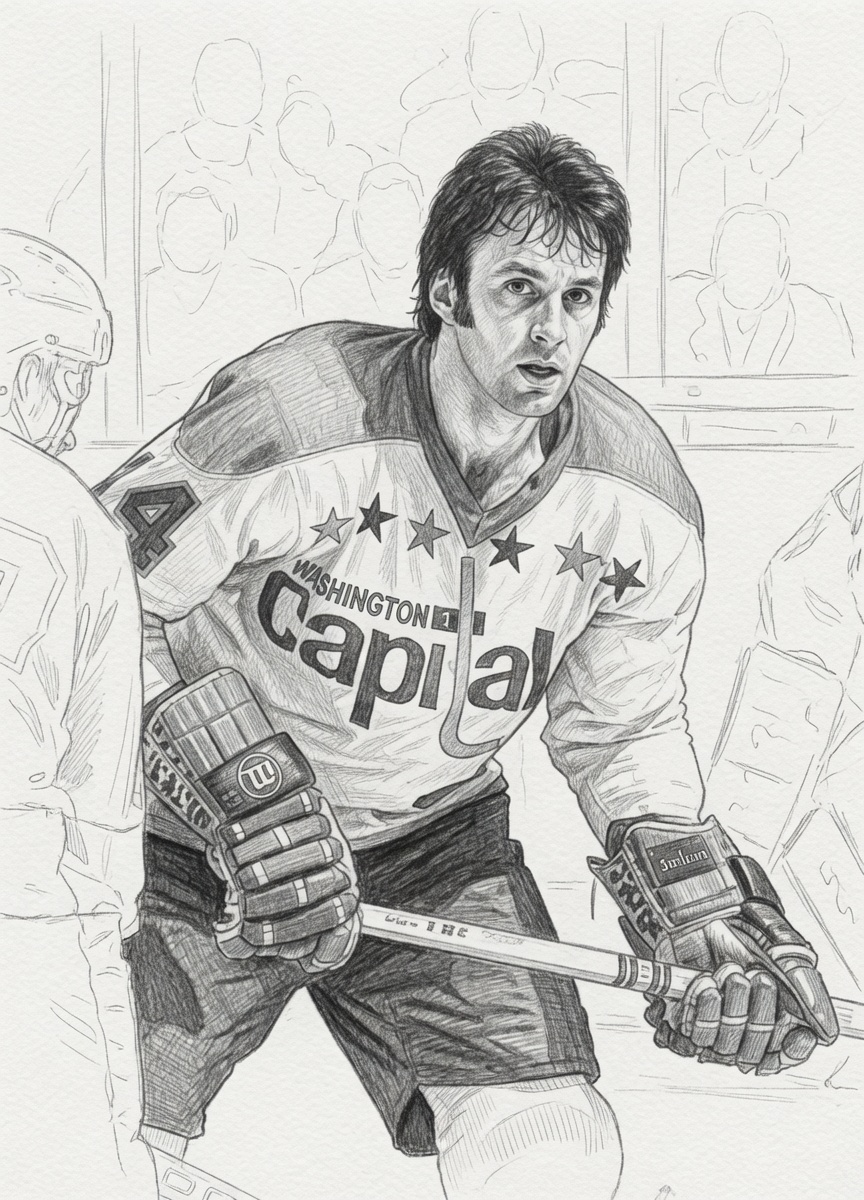
Where, once again, Meehan made the team better. Without Meehan Washington was 4-39-5, or 0.135; every inch as bad as their infamous 1974–75 debut. With Meehan they were 7-20-5, 0.297. You do not exactly plan the parade when you see an improvement like that, but Meehan dragged them from infamy to mere ignominy. In only 32 games he was fifth on the team in scoring with 31 points. 23 even-strength points was fourth, and he led the team in even-strength points per game by a mile. Even his -7 was by far the best among anyone on the team who played as many games as he did. The Capitals “rallied” the next year to 24-42-14, and Meehan kept contributing, second on the team in scoring behind Guy Charron and tied for second in even strength points with Harland Monahan. Meehan, aged 30, recorded his career high of nine powerplay goals and added 15 powerplay assists, the second-best powerplay man on the team. Charron got all the plaudits, but Meehan was a superb spearcarrier, admittedly by the standards of a team 18 games below .500 and second-last on the circuit in scoring. It was a nice coda to a good career, for the next year Meehan’s wheels started to fall off. 43 points in 78 games was third on the team and a bad number. 28 even strength points, for a player who’d once made his bones 5-on-5, was probably worse. And -41 was not only the worst plus/minus on the team, but the worst forward in the NHL.

The Capitals stuck with Meehan for a bit into 1978–79, but he did very little, and the arrival of Dennis Maruk must have made him seem pointless in more ways than one. He was 32 years old, the second-oldest forward on the team behind Dennis Hextall, who was paid for more than point production. The Capitals released Meehan in December so he could sign with the WHA’s Cincinnati Stingers, coached by his old captain Floyd Smith, where he played two games and then put the stick away for good.

Not that it was the end of Gerry Meehan. While with the Sabres he had finished his undergraduate degree at Canisius College, a Jesuit institution in Buffalo, and when his career was winding down somebody told Meehan’s wife that Gerry should take the LSAT. He scored well, and by 1982 was in the University at Buffalo Law School. His post-playing career is even more extraordinary than his playing career was: he was an early enthusiast for computerized analytics, he did everything except coach in a long, illustrious career, and he is certainly better remembered for that today. Not unjustly, but he deserves to be known as a player too. A proud Sabre, who’d show up at events with his #15 sweater and the C on his chest long after he was old and grey, and a proud lawyer, and an accomplished man. Time and time again, it looked like Gerry Meehan had missed the bus as a player, and time and time again he went to a new team and made it better for a while. Not many players can say as much; not many players can say they seized so many passing chances by the skin of their teeth. Gerry Meehan showed the power of brains, character, and persistence.

  1. Pugh never got above a bit role in major junior; Allison got a cup of coffee in the pros and spent time on the old amateur Canadian national team.
  2. Dick Duff, Buffalo 1970–71: 53GP 7G 13A 20P -18, age 34. Hockey Hall of Fame.
  3. Although he was finished as a player by the time he got to Buffalo, Smith stayed in the system and coached them to a few of their best-ever seasons. His coaching record was good until a DUI in Toronto that killed two people motivated a move into scouting for the rest of his career.
  4. Murray Greig, Big Bucks and Blue Pucks (Toronto: Macmillan Canada, 1997), 112.
  5. Greig, 82.

Leave a Reply

Your email address will not be published. Required fields are marked *