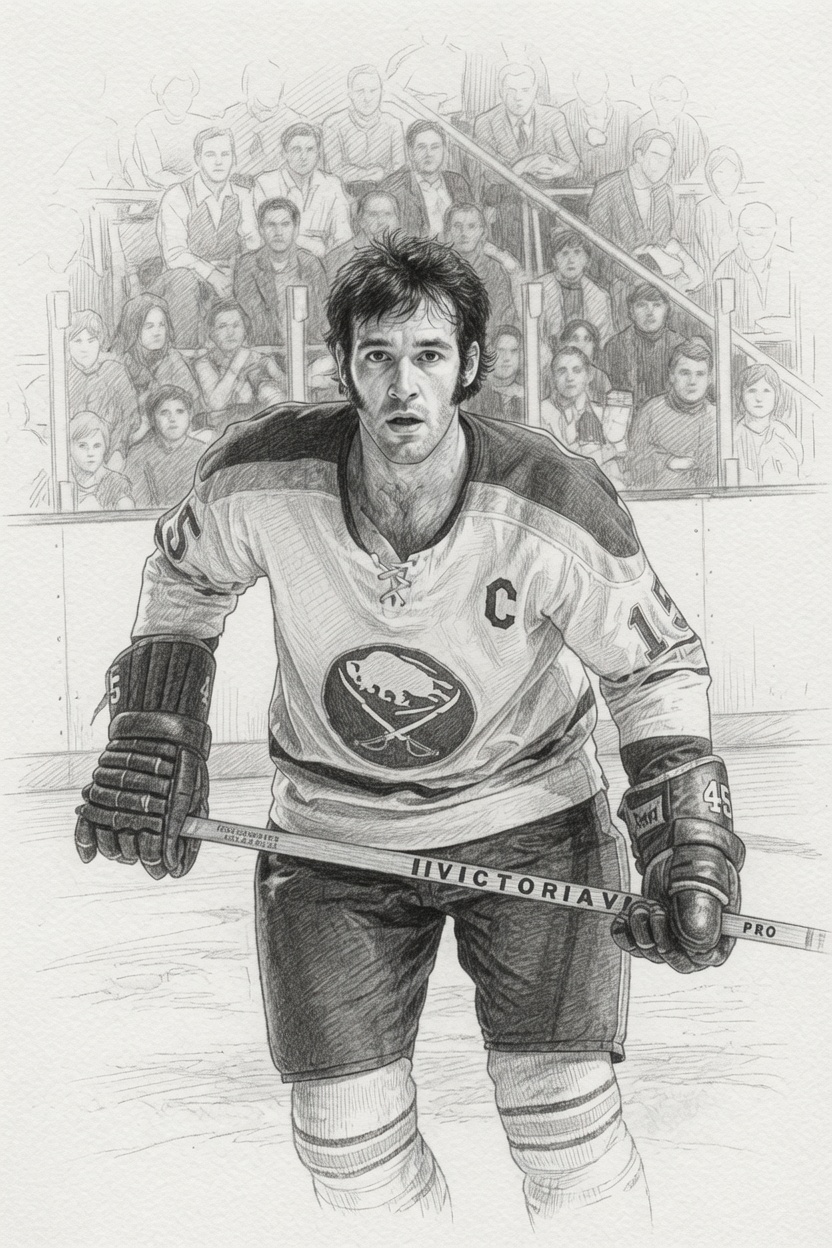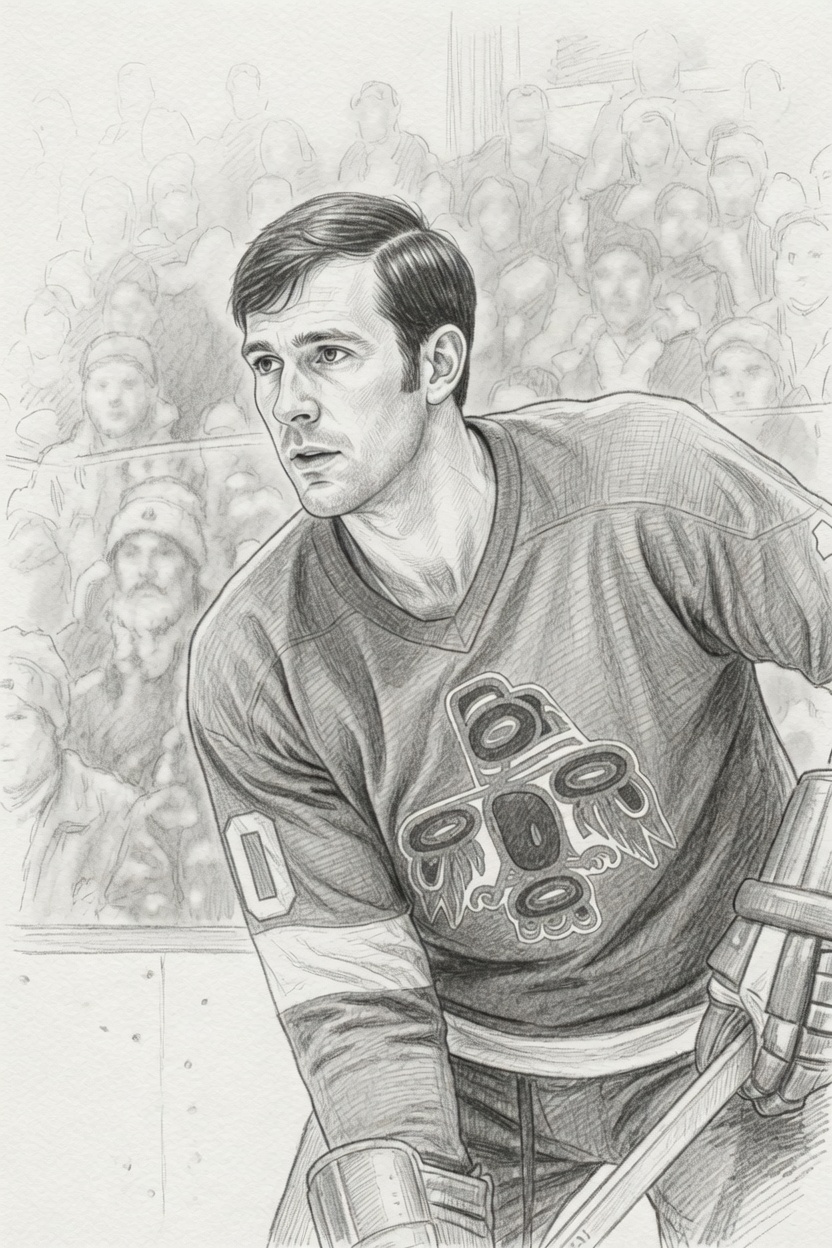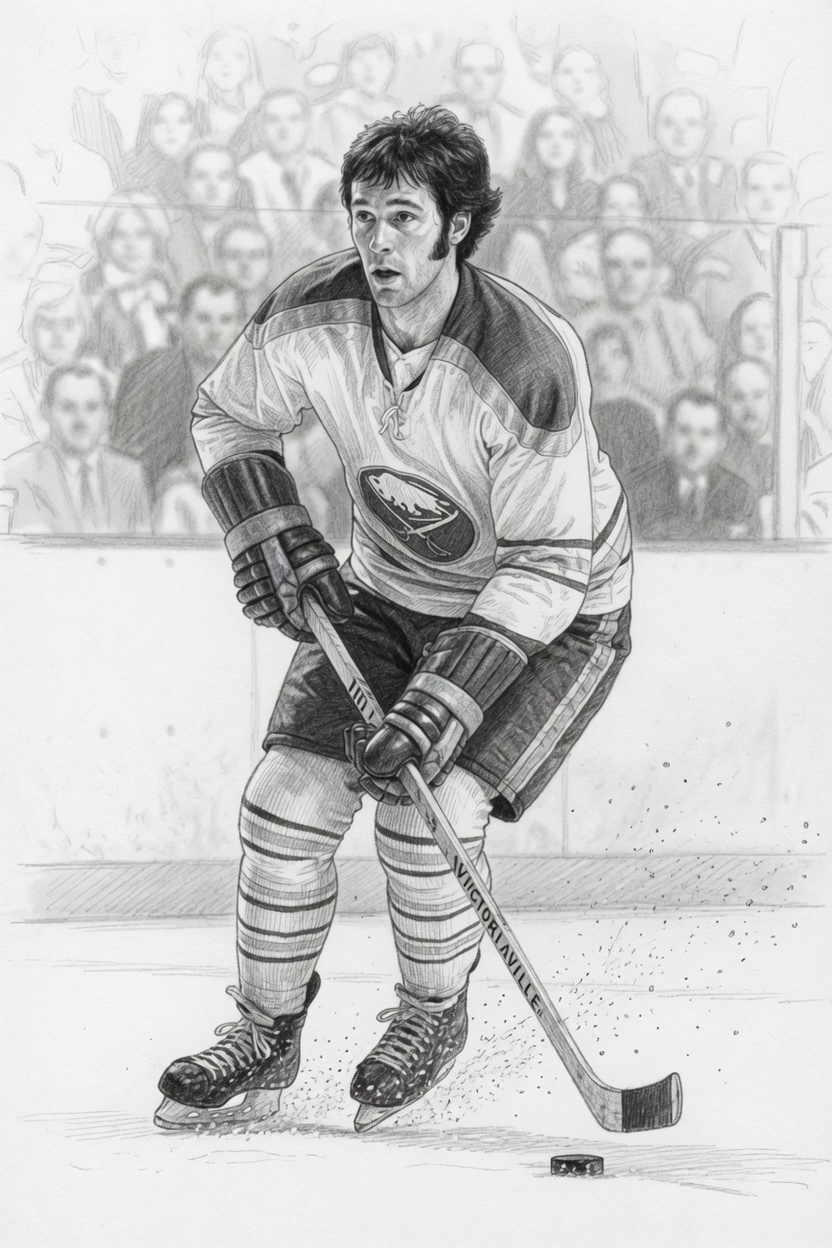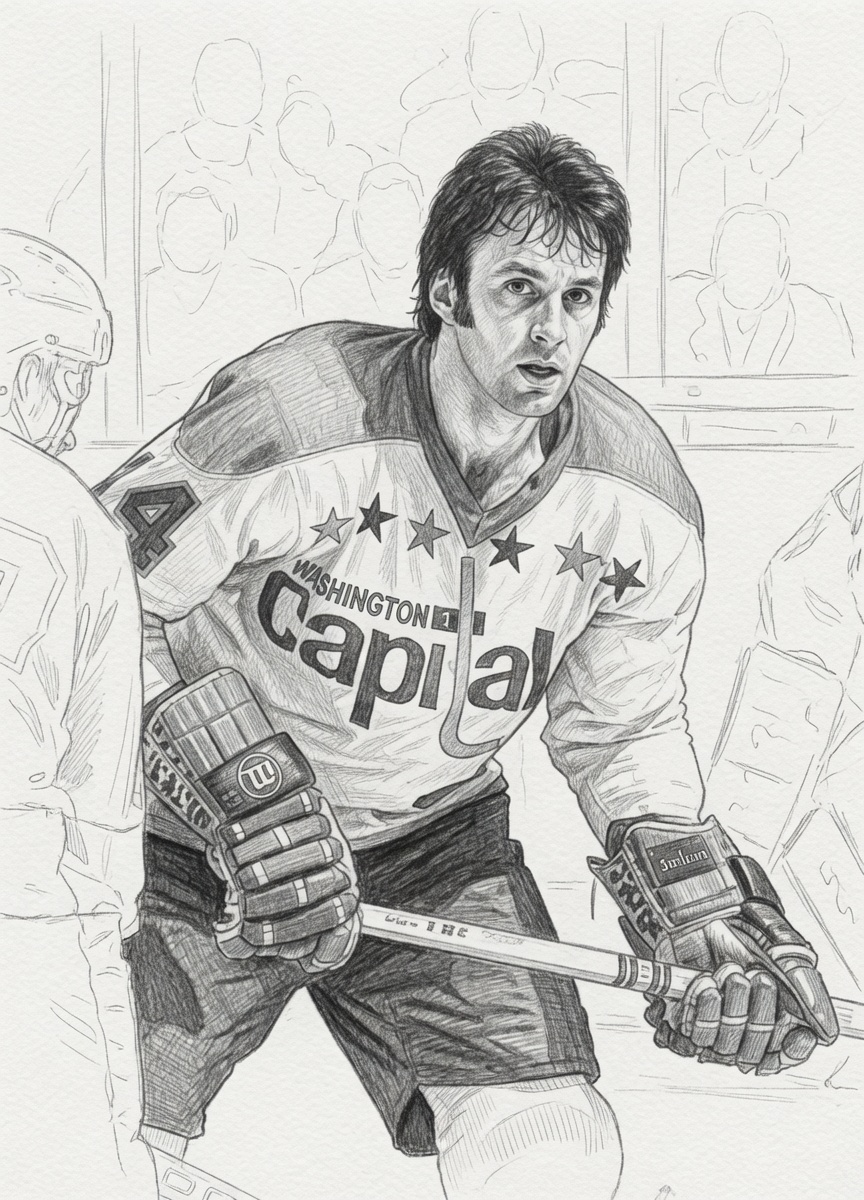
Gerry Meehan, forward for six NHL teams and long-time NHL front office jack-of-all-trades, died earlier this month at age 79. Meehan was perhaps most famous as “the man who built the Buffalo Sabres twice” and destroyed the Philadelphia Flyers once. The second captain in Sabres history, Meehan scored one of their most famous goals and led Buffalo to their first ever playoff appearance. As Sabres general manager Meehan got Alex Mogilny out of the Soviet Union, drafted Pierre Turgeon, traded him for Pat LaFontaine, probably lost a trade for Dale Hawerchuk, but made up for every imaginable sin by acquiring Dominik Hasek for a scrub and a fourth-round pick: if that’s not the best trade in NHL history I’d very much like to know what is. Meehan’s time as GM was relatively short, but few general managers can say they acquired the two best players in franchise history in such a span.
As a player, Meehan was destined for an awkward epoch: the immediate expansion era. Meehan was never considered a star prospect, as a kid he played well for good teams but didn’t stand out. He was drafted by the Leafs, but it was the first ever amateur draft, for the few players who hadn’t signed with an NHL team already; Meehan went last overall. Although the format was so weird you have to put an asterisk beside this, Meehan was probably the best last overall pick until Patric Hornqvist 42 years later.
Had he been ten years older, Meehan would been lost in the deep dark sea of the Original Six. Had he been ten years younger, he would have benefited from the highest-scoring era in NHL history, for Meehan was a premature ’80s Guy if ever there was one. He had good size and skill, was respected, played a versatile attacking game, and got the puck on goal. He was smart on the ice and smarter off it. But he had a rep as a soft player, which when his most famous teammate was Gilbert Perreault took some doing. Despite, or maybe because of this, he played in 672 big league games. Though he wasn’t a regular in a big-league lineup until he was 24, he was basically never hurt; he had two eighty-game seasons, a 78, three 77s, a 74, and a 72. He played for one of the worst teams in NHL history, the 1975–76 Washington Capitals, and may have been the reason they weren’t the worst team in NHL history. He never came close to leading an NHL team in scoring. His teams always traded him, usually for not much; the team that got him usually improved. Not a great player, and better remembered in the front office, but a man before his time, a Volkswagen Golf during a Buick age, who showed how far you can get with brains and a work ethic.
Meehan was a Toronto boy, through and through, born in the Big Smoke and raised in Newmarket. His was a typical NHL player upbringing: a big family of three brothers and two sisters, father an office worker and mother a nurse, playing pond hockey around the GTA for hours, building his local reputation as a strong young player, and eventually making his major junior debut in his age 16 season for the Toronto Neil McNeil Maroons of the Metro Junior A League.
The Metro Junior A League was a two-season experiment which can only be described as “very 1960s.” The Toronto St. Michael’s Majors were the defending Memorial Cup champions, but under Father David Bauer they were also an organization that took amateurism, academics, and personal growth unusually seriously. The Ontario Hockey Association then played a 48-game schedule with travel that doesn’t seem extensive to us today (the teams ranged from Niagara Falls all the way to Peterborough), but it bothered the Roman Catholic educators who ran (and run) the St. Michael’s College School that sponsored the team. They wanted a shorter schedule and less travel, and Stafford Smythe, supremo of the Toronto Maple Leafs and their junior team, the Toronto Marlboros, wanted them happy.
St. Mike’s had long been a source of Leafs talent: just that season goalie Gerry Cheevers, defensemen Arnie Brown and Tim Horton, forwards Dick Duff, Dave Keon, and Frank Mahovlich, and little-bit-of-everything Red Kelly were St. Mike’s grads on the Stanley Cup champions. The Leafs did not run the Majors, but they had a strong influence. They provided coaches, and a hockey-playing Toronto teenager with any interest from the Leafs and any claim to Roman Catholicism would be off to St. Michael’s College. In those pre-draft days a Major was a Leaf in waiting, and reading those names you can see why Stafford Smythe wanted the program to keep operating.
With the Majors and the Marlboros, Smythe cobbled together a five-team Greater Toronto junior circuit that would, in principle, both satisfy the St. Michael’s fathers and give the Leafs more junior hockey strength. They’d play a 33-game season within streetcar range of each other, the OHA let their champion play the rest-of-the-league champion in the playoffs for a crack at the Memorial Cup, and the Leafs would benefit not only from the well-run Majors program but maybe some diamonds in the rough from the rest of the league. A nice idea that didn’t work. The Marlboros, who’d been lousy in the full OHA, were the second-best team in the metro league, and the rest were nowhere. A couple decent players showed up on those overwhelmed ex-junior B teams, most notably WHA star forward Wayne Carlton and Andy Brown, the last maskless goaltender in NHL history, but not enough to give credibility. The St. Mike’s Majors won the league in a walk and then decided that even 33 games in the GTA took too great a toll, transferring their franchise to Neil McNeil High School, another Roman Catholic institution out by Victoria Park.
Smythe kept his league together another season, which is where Gerry Meehan comes in. Meehan played seven games as a 16-year-old on a Neil McNeil team that went 33-4-3, beating the Marlboros to the metro league title by 19 points. He scored once. The thing was, Gerry Meehan was not Toronto Maple Leafs property. He was concentrating on school and his parents, though open to a hockey career, seemed disinclined to put him under a team’s control. The famous A, B, and C-forms would still be around until 1967; Meehan’s parents had not signed one. So, on the strength of seven major junior games and one point, Meehan was eligible for the first NHL draft.
The 1963 NHL Amateur Draft, as it was then called, was as odd as you’d expect. Four rounds and twenty-one picks of extremely young players almost exclusively from southern Ontario (one played in Portage-la-Prairie) who hadn’t already signed agreements with an NHL team. At least two players, Roy Pugh and Cam Allison, were fifteen years old when their names were called1. The first overall pick was Garry Monahan, who was pretty good; the second overall was Pete Mahovlich, who was very good indeed, and third overall was someone named Orest Romashyna, who was at the time playing junior C. Teams started passing on picks in the third round, and Gerry Meehan was the last overall pick in the first ever NHL entry draft, 21st overall. Only five players of the 21 drafted ever played an NHL game, but all five were solid.
According to the rules, teams weren’t allowed to talk to these prospects about turning pro until their eighteenth birthday. But according to the rules you weren’t supposed to draft 15-year-olds either. This was the Clarence Campbell NHL, nobody was getting their knickers in a twist, and all the good players were off to their drafting team’s junior affiliates as soon as they could tie their skates tight enough. Meehan was among them. Smythe’s experimental league fell apart and the best players joined the Marlboros on the regular OHA circuit. They won the thing by miles, then the Memorial Cup. Meehan played a part-time role with good numbers and meanwhile attended (ironically enough) St. Michael’s College, his eyes on his grades. In his age 18 season he became a regular, and while he was only fifth on the Marlboros in scoring he got a one-game skate with Rochester in the AHL under head coach Joe Crozier, of whom Meehan would see a great deal more later. The next year he was second in team scoring, and in his final major junior season he led an underachieving team, tying for ninth in the league.