Skip to content

Bob Gainey Was Overrated

According to Hockey-Reference.com, 134 forwards played at least 500 NHL games between 1979–80 and 1989–90. Of those, Bob Gainey was 118th in points per game with 0.46. Basically tied with Rick Meagher, another Selke-winning forward I don’t recall seeing in the Hockey Hall of Fame, and Pat Hughes, who was some guy. He was much worse than Troy Murray (66th, 0.77), another Selke winner and a St. Albert Saints legend, much worse than Keith Acton (86th, 0.68), much worse his successor Guy Carbonneau (87th, 0.66). He scored less than Steve Tambellini (100th, 0.56) and Craig MacTavish (103rd, 0.53), he scored less than Tiger Williams (107th, 0.51). This is a list of (mostly) good players, because few bad ones play 500 NHL games in a decade, but a Hockey Hall of Famer is not just one of the hundred best forwards of the ’80s.

Bob Gainey is not an accidental Hall of Famer, but was inducted in 1992 at the earliest possible moment, before his management and coaching careers had added any laurels. He has, on multiple occasions, been named one of the 100 best players in NHL history. notwithstanding that he was a less effective offensive player than Steve Tambellini (though a considerably better general manager). Steve Shutt: “There are a lot of defensive forwards in the league, but he is the only one who controls a game.” Serge Savard: “I can’t think of anyone on our team who means more to us than Gainey. A few guys like Larry Robinson, Guy Lafleur and Guy Lapointe mean as much. But they’re not more important than Gainey.” The Habs have retired his number. He won five Stanley Cups, one as a captain, the first four Selke Trophies in a row, and a Conn Smythe.

Who cares? Nobody pretends Bob Gainey is in the Hall of Fame for his scoring. His strengths did not show up in statistics and everyone knew it. He was a durable leader with first-rate intelligence, strong physical play, and an inspiring work ethic; if there was an NHL award for intangibles Gainey would have won it every year until the voters got sick of him, and arguably that’s what those Selkes in fact were. And Gainey’s teams won. He was obviously a useful player, but realize just how vast a problem his scoring is. Offensively, he does not belong in the conversation with any other Hall-of-Fame forward. He is not close; he is not close to being close. Over the highest-scoring era in hockey history, Bob Gainey was an average to below-average scoring forward. To be a Hockey Hall of Fame-quality player, he would have to be so good defensively as to make up for that. Today, we know that is probably impossible. Defensive forwards are not that valuable, and Bob Gainey simply wasn’t extraordinary enough to be the exception.

Here are Gainey’s career statistics with a few advanced statistics tacked onto the right. Put a pin in them, they’ll be important1.

Bob Gainey
Season Age Team GP G A Pts +/- PIM SOG OPS DPS PS
1973–74 20 Montreal 66 3 7 10 -9 34 55 -1.7 0.3 -1.3
1974–75 21 Montreal 80 17 20 37 +25 49 132 0.9 1.3 2.2
1975–76 22 Montreal 78 15 13 28 +20 57 155 0.1 1.3 1.4
1976–77 23 Montreal 80 14 19 33 +31 41 143 0.6 1.2 1.8
1977–78 24 Montreal 66 15 16 31 +11 57 140 1.2 0.7 1.9
1978–79 25 Montreal 79 20 18 38 +12 44 153 1.3 1.1 2.4
1979–80 26 Montreal 64 14 19 33 -1 32 153 1.1 0.7 1.8
1980–81 27 Montreal 78 23 24 47 +13 36 181 1.9 1.4 3.2
1981–82 28 Montreal 79 21 24 45 +36 24 172 1.2 1.8 3.0
1982–83 29 Montreal 80 12 18 30 +6 43 149 -0.1 0.9 0.8
1983–84 30 Montreal 77 17 22 39 +11 41 125 1.0 1.5 2.5
1984–85 31 Montreal 79 19 13 32 +14 40 164 0.5 1.6 2.1
1985–86 32 Montreal 80 20 23 43 +11 20 133 1.3 1.4 2.7
1986–87 33 Montreal 47 8 8 16 0 19 73 0.0 0.7 0.7
1987–88 34 Montreal 78 11 11 22 +8 14 101 -0.5 1.2 0.7
1988–89 35 Montreal 49 10 7 17 +13 34 66 0.1 1.0 1.1
Total 1160 239 262 501 +201 585 2094 8.8 18.1 26.9

We are not asking whether Bob Gainey was a good defensive forward because we can be certain that he was. Gainey played 1,160 NHL games with the Montreal Canadiens when they were one of the smartest teams in sports, and if Gainey wasn’t legitimately good defensively he’d have been run out of the league. That Gainey was significantly more valuable than his scoring suggests is the null hypothesis. We are trying to establish whether he was so good defensively to elevate his underwhelming offensive production to a Hall of Fame career.

The case against Bob Gainey as a Hall-of-Fame calibre player can be simplified to three points:

  1. We cannot prove that he controlled the game defensively. We don’t have the game data to be definitive, and point shares are a sufficiently flawed system that his poor numbers aren’t proof, but if he generated a ton of very valuable turnovers we’d see them in his assists or his plus/minus; his assists are low relative to his goals, and his plus/minus was steadily around his team’s forward median when they were good.

  1. We can strongly suggest that Gainey could have been the best defensive forward of his generation, but that’s not worth that much. His statistics are shaped the same as modern players who we can see the high-resolution details of, and they just weren’t that valuable. There is a “Bob Gainey type,” and it’s Ethan Moreau. A rich man’s Ethan Moreau is not a Hall-of-Fame-level producer. He was not a “two-way forward,” he was almost purely defensive.

  1. The unknowns and the intangibles cannot possibly make up the difference. By reputation, Gainey started a lot of his shifts in his own zone. We now know that is a disadvantage to a player’s scoring record, but double his offensive point shares and he’d still have the lowest point shares per 82 games played of a Hall-of-Fame NHL forward. He was a great leader; so was Kelly Buchberger. His many amazing teammates seem to have loved him, but they were also all much more effective than him. Do anything you like to his numbers, give him any adjustment you can dream of: based on what we now know about how little defensive forwards contribute to winning hockey games, Bob Gainey did less than any other Hall-of-Fame forward. The difference in defensive quality between Gainey and the best defensive forwards of the 21st century would have to be about the difference in offensive quality between apex Wayne Gretzky and, say, Pierre Larouche. This would have shown up on the scoreboard somewhere and we would not be having this conversation. It’s just too much.

That “poor man’s Tiger Williams” offense is a massive problem. I recommend Lars Skytte’s statistical analysis of the differences in contributions between forwards and defensemen to anyone willing to look at scatter plots; Skytte’s model suggests that a high-offense low-defense forward is not only more valuable than a low-offense high-defense forward, but enormously more valuable. Skytte’s archetypal defensive forward, writing in 2021, is Riley Nash; well, let’s give Bob Gainey the benefit of the doubt for being better than Riley Nash. According to this model, even if Gainey was a zero rather than a negative offensively (as Nash was), he’d have to be three times more effective than the best defensive forward of 2021 for his contributions to a team’s scoreboard results to match a superstar forward who can’t play D at all. A Hall-of-Fame-level defensive forward needs to be unbelievable, not even the Gretzky of defensive forwards but something we can hardly imagine. This is probably more ground than any man could ever cover.
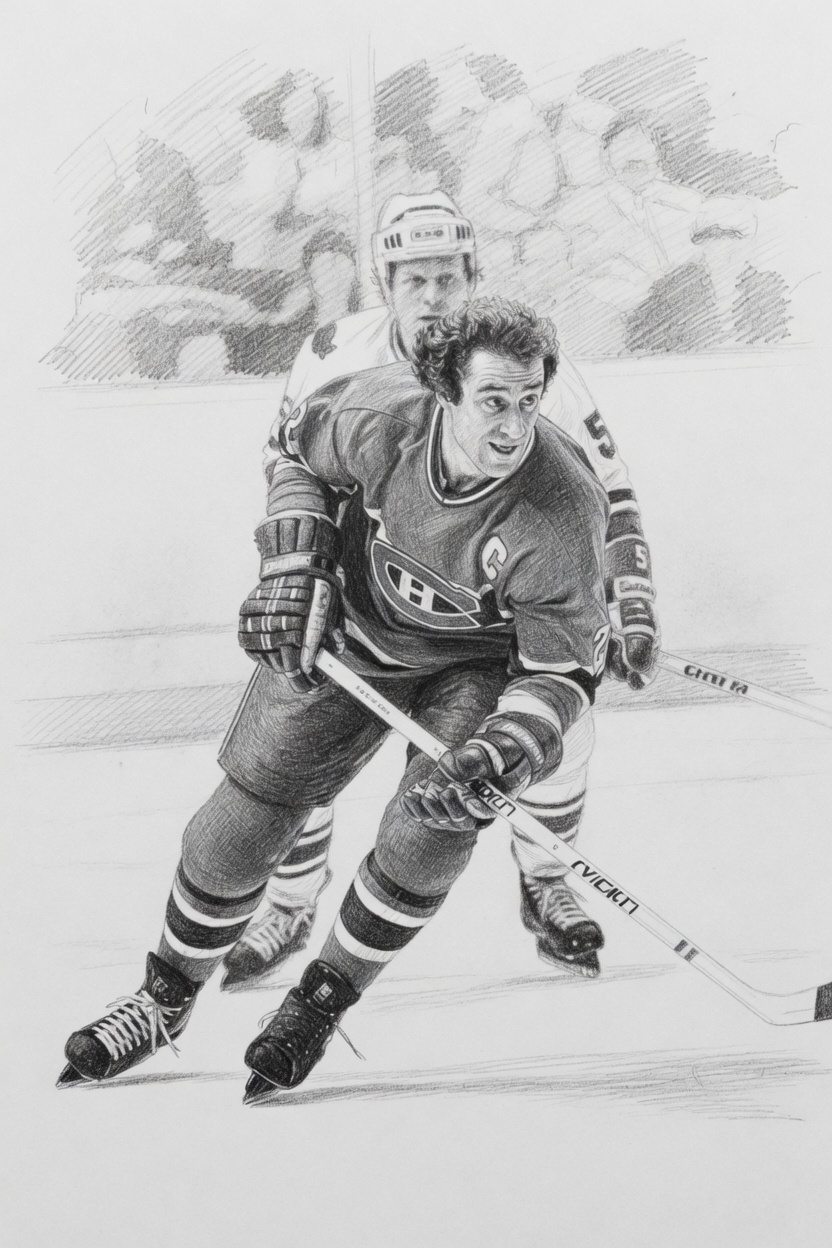
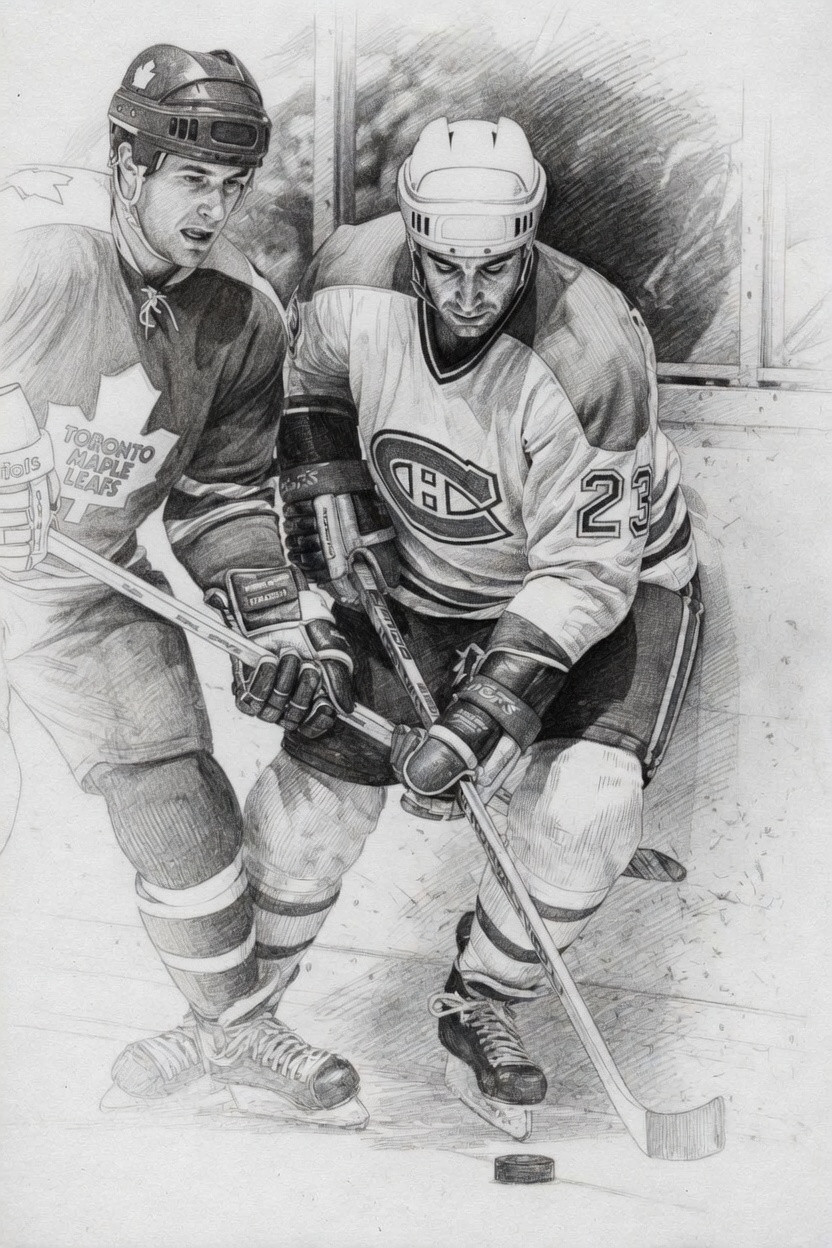
When you think about it, this makes sense. How is hockey actually played? What does a defensive forward actually do? If he dives in on the forecheck, mucks the puck out, and creates a chance, or steals the puck high in his own zone and turns the play around, he gets second assists: he’s not a defensive forward, he’s a two-way forward. Defensemen, by virtue of their position and ice time, make many more key defensive plays than forwards do. This is how you like it, because once the key defensive play is made you’d like there to be forwards who have conventional puck-possession skills available to turn defense into offense, not your left winger swinging behind his own net to run the rush through a defenseman. A good defensive centre wins faceoffs, but that doesn’t figure into most advanced statistics and wouldn’t help left-winger Gainey anyway. The defensive forward, at his best, prevents the other team’s transition: the key defensive play doesn’t hit the highlight reel because it’s made in the neutral zone. But then what? A dump-in and a line change, or a scoring chance (and if he’s generating plenty of those he shows up, again, not as a defensive forward but a two-way one). How much is that worth? Advanced metrics say not a lot.

Hockey-Reference keeps a statistic called “Point Shares,” which they describe as “an estimate of the number of [team] points contributed by a player,” made up of adding separately-calculated offensive and defensive point shares2. It is one of the few advanced-feeling statistics available in any form for this era, though it should be taken with six or seven large grains of salt. An ordinary Hart Trophy-winning season over Gainey’s career was about 14 Point Shares; the really good ones (Gretzky and Lemieux) start at 16.8. In short, by the Point Shares system Bob Gainey’s entire Hall-of-Fame career was worth about as much to the Habs as 140 games of Gretzky or Lemieux was worth to the Oilers or Penguins. Bob Gainey is 872nd all-time in career NHL point shares by a forward3. In career point shares per 82 games Gainey is tied for 1,011th all time among forwards with 500 GP or more with 1.90; dead even with Ethan Moreau. I saw quite a lot of Ethan Moreau and he was not a Hall of Fame player exactly. They are both a bit behind Zack Kassian, and a bit ahead of Bob Probert. Only five forwards in the Hockey Hall of Fame have worse point shares per 82 games played than Bob Gainey and all were pre-Depression players inducted for their work in other leagues4. A median Hall-of-Fame forward has 7.72 point shares per 82 games, which is Daniel Sedin, Bryan Trottier, Jari Kurri territory. The Hall-of-Famer closest to Gainey who had an NHL career is Guy Carbonneau, who ranks 873rd all time at 2.76 PS/82GP: even he is 0.8 win shares/82 games better than Gainey. To Point Shares, Bob Gainey is by far the least-qualified Hall of Fame forward in NHL history.

“Perhaps defensive point shares are undervalued for forwards,” the devil advocates. There certainly are problems with defensive point shares, and they aren’t the statistic I’d choose if I could help it, but most criticism seems like trying to stick up for conventional wisdom over what other statistics also tell us about the value of defensive forwards. Maybe an elite defensive forward really isn’t worth a fraction of an ordinarily decent third-pairing defensive defenseman; but he’s probably still worth less. He plays less and doesn’t have as big an impact. However good a defensive forward is, he’s less effective defensively than a guy who can’t check but rags the puck, because the other team definitely doesn’t score then. But let’s grant the benefit of the doubt and try to compare Gainey against his peers rather than Wayne Gretzky or a defenseman.

When you look at Gainey’s neighbourhood of career point shares/82GP, you see a good many defensive forwards: not just Moreau but Shaun Van Allen, Rob Niedermayer, Steve Ott, P.J. Axelsson, Kris Draper, Brian Skrudland, Marty Reasoner, Jim and Nic Dowd; players you remember, though I doubt you ever put them on your Hall-of-Fame ballot. Bob Gainey accumulated 67.29% of his point shares for his defense, which is the 143rd highest all-time, though above him are dozens of indisputably bad players who had long careers. Taking 15 career point shares as the point where, over 500 NHL games, you can call yourself a hockey player5, here are the 50 most defensive forwards of all time6:

Player From To GP OPS DPS PS PS/82GP %PS DPS
Doug Jarvis 1975–76 1987–88 964 1.6 14.2 15.9 1.35 89.31%
Tom Fitzgerald 1988–89 2005–06 1097 1.9 13.4 15.3 1.14 87.58%
Radek Faksa 2015–16 2025–26 765 2.2 13.1 15.3 1.64 85.62%
Daniel Winnik 2007–08 2017–18 798 3.2 14.9 18.1 1.86 82.32%
Colton Sissons 2013–14 2025–26 755 2.9 13.2 16.1 1.75 81.99%
Gaétan Duchesne 1981–82 1994–95 1028 5.1 18.2 23.2 1.85 78.45%
Ian Laperrière 1993–94 2009–10 1083 4.0 14.2 18.2 1.38 78.02%
Brian Skrudland 1985–86 1999–00 881 4.4 15.4 19.8 1.84 77.78%
Jody Hull 1988–89 2003–04 831 3.4 11.8 15.2 1.50 77.63%
Dave Lowry 1985–86 2003–04 1084 4.0 13.2 17.2 1.30 76.74%
Cal Clutterbuck 2007–08 2023–24 1064 6.0 16.4 22.3 1.72 73.54%
Kris Draper 1990–91 2010–11 1157 7.1 19.2 26.3 1.86 73.00%
John Marks 1972–73 1981–82 657 6.3 16.2 22.5 2.81 72.00%
Paul Gaustad 2002–03 2015–16 727 4.7 11.3 16.0 1.80 70.63%
Casey Cizikas 2011–12 2025–26 978 6.2 14.9 21.1 1.77 70.62%
Bobby Gould 1979–80 1989–90 697 4.7 11.2 15.9 1.87 70.44%
P.J. Axelsson 1997–98 2008–09 797 5.4 12.8 18.2 1.87 70.33%
Jordan Martinook 2014–15 2025–26 797 5.7 13.0 18.6 1.91 69.89%
Adam Lowry 2014–15 2025–26 844 7.1 15.9 23.0 2.23 69.13%
Brad Richardson 2005–06 2021–22 869 6.0 13.2 19.3 1.82 68.39%
Claude Lapointe 1990–91 2003–04 879 5.2 10.8 16.0 1.49 67.50%
Bob Gainey 1973–74 1988–89 1160 8.8 18.1 26.9 1.90 67.29%
Floyd Curry 1947–48 1957–58 601 5.5 11.3 16.8 2.29 67.26%
Jesper Fast 2013–14 2023–24 703 6.4 12.8 19.2 2.24 66.67%
Jim Dowd 1991–92 2007–08 728 5.3 10.6 15.9 1.79 66.67%
Brad May 1991–92 2009–10 1041 6.0 11.1 17.1 1.35 64.91%
Greg Gilbert 1981–82 1995–96 837 7.1 13.0 20.1 1.97 64.68%
Mike Grier 1996–97 2010–11 1060 10.0 18.2 28.2 2.18 64.54%
Vernon Fiddler 2002–03 2016–17 877 6.4 11.6 18.0 1.68 64.44%
Manny Malhotra 1998–99 2014–15 991 7.5 13.4 20.8 1.72 64.42%
Bob Kelly 1970–71 1981–82 837 6.8 12.3 19.1 1.87 64.40%
Shaun Van Allen 1990–91 2003–04 794 7.1 12.8 19.9 2.06 64.32%
Richard Park 1994–95 2011–12 738 6.0 10.6 16.6 1.84 63.86%
Marty Reasoner 1998–99 2012–13 798 6.4 11.3 17.7 1.82 63.84%
Dominic Moore 2003–04 2017–18 897 7.1 12.0 19.2 1.76 62.50%
Dave Reid 1983–84 2000–01 961 8.8 14.3 23.0 1.96 62.17%
Nick Cousins 2014–15 2025–26 722 6.3 10.2 16.5 1.87 61.82%
Mike Keane 1988–89 2003–04 1161 11.6 18.7 30.3 2.14 61.72%
Kelly Miller 1984–85 1998–99 1057 10.7 17.0 27.7 2.15 61.37%
John Madden 1998–99 2011–12 898 11.8 18.7 30.5 2.79 61.31%
Bob Errey 1983–84 1997–98 895 8.3 12.6 20.9 1.91 60.29%
Rob Niedermayer 1993–94 2010–11 1153 11.3 17.1 28.4 2.02 60.21%
Steve Ott 2002–03 2016–17 848 7.8 11.8 19.6 1.90 60.20%
Lou Angotti 1964–65 1973–74 653 6.1 9.1 15.2 1.91 59.87%
Darren Helm 2007–08 2022–23 823 8.6 12.8 21.4 2.13 59.81%
Ethan Moreau 1995–96 2011–12 928 8.7 12.8 21.5 1.90 59.53%
Alex Iafallo 2017–18 2025–26 663 10.9 15.3 26.1 3.23 58.62%
Kyle Brodziak 2005–06 2018–19 917 9.6 13.6 23.2 2.07 58.62%
Chris Neil 2001–02 2016–17 1026 7.4 10.4 17.8 1.42 58.43%
Marty Pavelich 1947–48 1956–57 633 8.9 12.5 21.4 2.77 58.41%

If you suspect I picked 50 players because I wanted to get Ethan Moreau and Kyle Brodziak on the list, you know me too well. There is nothing here to distinguish Gainey from dozens of useful plugs. Ignoring Gainey for the moment the best player on the list was probably one of John Madden, Rob Niedermayer, or Kris Draper: they were all good, they won Cups, you were pleased when your team had them in their primes, but really? We’re talking about the Hockey Hall of Fame here.

In career defensive point shares, Gainey is tied for the 250th-best forward in NHL history with Lars Eller7. Gainey’s DPS/82GP of 1.278 is 472nd or so all time among forwards with at least 500GP, hanging around with Radek Dvořák, Olli Jokinen, Stephane Richer, and Darren Helm; well below Dean McAmmond, Todd Marchant, and Doug Weight. Bet you had no idea the late-’90s Oilers were such killer defenders. The top five: Connor McDavid, Nathan MacKinnon, Pavel Datsyuk, Sebastian Aho, and Brad Marchand8. Defensive point shares, then, seem to have a recency bias we should accommodate. Bob Gainey’s salad days were the 1980s, the worst era in hockey history to be a defensive anything. It is only appropriate to put him in his era and see if he stands out among his contemporaries.

If we omit Mark Howe9, then in forward defensive point shares per 82 games during the 1980s, Bob Gainey is… 18th. Here’s the top 35:

Player From To GP DPS DPS/82GP Goals Pts +/-
Wayne Gretzky 1979–80 1989–90 847 20.8 2.01 677 1979 +576
Mike Bossy 1979–80 1986–87 599 13.8 1.89 451 909 +286
Brian Propp 1979–80 1989–90 804 16.5 1.68 372 861 +301
Bryan Trottier 1979–80 1989–90 814 16.5 1.66 345 929 +284
Jari Kurri 1980–81 1989–90 754 15.2 1.65 474 1043 +373
Guy Carbonneau 1980–81 1989–90 622 12.5 1.65 165 409 +150
Mats Näslund 1982–83 1989–90 617 11.7 1.55 243 612 +123
Rick Middleton 1979–80 1987–88 659 12.2 1.52 319 710 +145
Charlie Simmer 1979–80 1987–88 591 10.9 1.51 310 638 +127
Gaétan Duchesne 1981–82 1989–90 673 12.2 1.49 131 321 +82
Keith Crowder 1980–81 1989–90 662 12.0 1.49 223 494 +131
Mario Tremblay 1979–80 1985–86 512 9.1 1.46 168 389 +102
Ric Seiling 1979–80 1986–87 580 10.3 1.46 140 307 +84
Alan Haworth 1980–81 1987–88 524 9.1 1.42 189 400 +62
Ilkka Sinisalo 1981–82 1989–90 526 9.1 1.42 199 409 +132
Dale Hunter 1980–81 1989–90 762 13.1 1.41 205 636 +133
Brent Sutter 1980–81 1989–90 611 10.5 1.41 262 547 +133
Bob Gainey 1979–80 1988–89 711 12.2 1.41 155 324 +111
Ken Linseman 1979–80 1989–90 772 13.2 1.40 244 746 +192
Mike Foligno 1979–80 1989–90 819 14.0 1.40 320 662 +91
Gilbert Perreault 1979–80 1986–87 518 8.7 1.38 212 563 +60
Barry Pederson 1980–81 1989–90 618 10.3 1.37 227 627 +69
Mike Gartner 1979–80 1989–90 850 14.1 1.36 449 889 +60
Bengt-Åke Gustafsson 1979–80 1988–89 629 10.4 1.36 195 554 +45
Steve Larmer 1980–81 1989–90 647 10.5 1.33 298 678 +111
Mike Krushelnyski 1981–82 1989–90 593 9.6 1.33 188 445 +182
Bobby Gould 1979–80 1989–90 697 11.2 1.32 145 304 +40
Dave Taylor 1979–80 1989–90 738 11.7 1.30 323 831 +108
Joe Mullen 1981–82 1989–90 646 10.2 1.29 341 723 +105
Bobby Smith 1979–80 1989–90 811 12.8 1.29 298 858 +42
Doug Gilmour 1983–84 1989–90 534 8.3 1.27 199 530 +53
Doug Jarvis 1979–80 1987–88 644 10.0 1.27 97 268 +60
Tim Kerr 1980–81 1989–90 574 8.9 1.27 353 626 +101
John Tonelli 1979–80 1989–90 832 12.9 1.27 291 736 +194
Steve Payne 1979–80 1987–88 543 8.4 1.27 205 426 +36

18th is good, but not extraordinary: the top 14% of our sample of by-definition usually-good players10, but not to defense what Mike Bossy was to shooting. It’s above many recognized defensive forwards like Bobby Gould, Doug Jarvis, and (further down the list) Greg Adams and Rich Sutter. It’s above Troy Murray and Craig MacTavish, to whom we previously begged comparison. It’s quite a lot better than Mark Messier, Steve Yzerman, and Ron Francis, to name but a few. That defensive point shares put somebody with as few points as Gainey so far up the list looks good on the statistic, as well as the player.

However, it is an odd group. Right at the top you have Wayne Gretzky and Mike Bossy, Gretzky because he was the best and Bossy because he was superb and retired before he slowed down. Then it’s a step down before you reach, erm, Brian Propp. But Propp was a tremendous all-round forward and is probably underrated by history so let’s ignore that and move on to extremely good players who combined scoring with defensive excellence (Trottier and Kurri), then Carbonneau, a defensive forward who could score a bit. Then another step down to Mats Näslund, the Jari Kurri of the Hall of Very Good, and from there we start seeing some kinda odd names, guys who lacked important dimensions. Charlie Simmer was not, as far as I’m aware, regarded as a defensive stalwart at all; Rick Middleton was, but hardly in the Gainey class. Now we’re 0.5 below Gretzky, and the numbers continue to sag until we reach Gainey, in a good position but hardly one that says “dominance.”

Gretzky’s 20.8 DPS during the decade ranks behind 65 defensemen, and Gretzky is the only forward who beats so much as a single 500GP blueliner. That may be too far, but it’s in the spirit of Skytte’s modern analytics.

Gainey is in some odd company. His immediate neighbours are not bad, Brent Sutter, Gainey, and the Rat would be quite a line if Brent would play right wing, but below Gaétan Duchesne? Really? I don’t think I’d ever heard of Ilkka Sinisalo; maybe Hockey Reference sneaks that name into their tables to ensure nobody pulls their data without credit. He’s awfully close to Gilbert Perreault and Mike Gartner, superb forwards who only saw their own blue-line when they lined up for the anthems. How do you rate Bob Gainey as so elite a defensive forward that it makes up for his marginal offense? Not like this.

Looking at Gainey’s point shares, it is striking that they show a pretty reasonable aging curve, allowing that Gainey is universally acknowledged to have aged well: it has the shape a real statistic should have. I am inclined to trust them insofar as saying that if they don’t show Gainey as being the Gretzky of defensive forwards, he probably wasn’t. However, defensive point shares for forwards show some flakeiness even comparing contemporary players. Unfortunately other advanced statistics like GAR or anything Corsi/Fenwick-related are not available for the era, so it’s the best we have. Maybe we can try to pick Gainey out the old-fashioned way. We know he didn’t score much; if he still put up tremendous plus/minuses over his long career, that is at least a data point.

Gainey’s Habs were almost always very good. They won four Stanley Cups in a row. Each of those four years the Canadiens had the league’s best defense, and each of those four years Gainey was around, or a bit below, the team median’s forward in plus/minus. He stood out neither positively nor negatively. Though it was a coincidence, as the award was just being introduced, the year Gainey won his first Selke was also the year the Habs stopped winning Cups, the year their defense was no longer first, and the year Gainey’s plus/minus was second-worst among the team’s regular forwards, better only than his linemate Doug Jarvis. They were still a great team; you can’t pick Gainey out as great on it.

1981–82 was Gainey’s best year, as a component of team success: he had his second-best offensive and point-share numbers and had the second-best forward plus/minus on the best defensive team in the league, though that happened because of a couple career years by goaltenders Rick Wamsley and Denis Herron. The next year their goalies returned to normal and the Habs failed to win the division. 1983–84 was the first year Gainey led Montreal forwards in plus/minus; the Habs finished five games below .500. The next year young players started to turn things around, headlined by Chris Chelios, and in 1985–86 Patrick Roy turned up. They won Gainey his fifth Cup and his only one as captain; not a great team in the regular season and Gainey was their third-best forward in plus/minus, but in the playoffs Patrick Roy suddenly turned into Patrick Roy, Steve Smith eliminated the Oilers, and the Cup parade followed the usual route.

After this the Habs were properly good again and Gainey fell right back to the median-or-a-bit-worse plus/minus level where he belonged. Montreal reliably had good to great defense, for which Gainey deserves his share of the credit, though probably Roy, Ken Dryden, Chelios, Larry Robinson, Guy Lapointe, Serge Savard, and even Carbonneau and Mats Näslund deserve more. The better Gainey’s statistics looked relative to the team, the worse the team was. It is, once again, impossible to pull out any possible conception of Gainey as by far the best-defending forward to ever live based off anything the record shows us.

Gainey did have other qualities defensive statistics miss. He was healthy and effective for over a decade; availability counts. He was a leader. He was a career Hab; living history on the most historic of teams. That Bob Gainey made a locker room with so much talent a positive place to play, and that his steadfast presence and endless effort gave the Canadiens a winner’s aura like the Forum ghosts, helped the Habs win. Nobody ever went into Montreal thinking “great, we’re against Gainey, he can’t score in a shoebox” because while it was true Gainey gave them such a hard time that he was no fun to play against. All of these things matter. Just because Bob Gainey was not a star, let alone Hockey Hall of Fame quality, doesn’t mean he wasn’t worth his place in the lineup on an all-time great team.

No NHL team has ever been perfect; try to put together four puck possession lines and your fourth line is probably garbage defensively and just mediocre enough offensively to get killed by anyone good. In the real world, a grinding line can be the best way to use talent you can actually obtain: three guys who’ll change the energy of the game, maybe one of them can fight and one of them can kill penalties, and at least your fourth line will be more than the ones you want to play least. With a really good grinding line, it looks fantastic. Gainey, Doug Jarvis, and Yvon Lambert go out for some crummy own-zone draw, Jarvis (probably) wins it, they hack the puck into squares in the corner for ninety seconds, the Forum goes wild, someone gets it out to the neutral zone, Lafleur flies over the boards, dipsy-doodles by everybody, and scores before he’s finished his cigarette. Coaches didn’t have the ability to measure what that meant then; we can’t measure it accurately for Gainey’s era now, though we can say that we know what a great defensive forward is worth in today’s game and it hasn’t changed all that much.

A player known for his limited offensive production once described himself this way: “No way am I the best player in the world when you look at talent and pure ability and finesse. The goal of the game is goals, and I don’t score that many. But, if you make the team better, then you also are performing an important role.” That player was, of course, Bob Gainey. It’s suitably understated. Bob Gainey was performing an important role and a great team would have been less great without him, the same as a dozen other players over those glorious years who don’t belong anywhere near the Hockey Hall of Fame without buying a ticket.

And it’s interesting, when Gainey was a successful general manager in Dallas, how little patience he had for Bob Gainey-type players: sure, Guy Carbonneau was there, but he was a bit of a special case. Otherwise, if a Todd Harvey or a Blake Sloan or a Roman Lyashenko turned up he’d be traded as soon as it was obvious what he was, while Gainey loaded up on some of the best real two-way forwards of the era: Jere Lehtinen, Jamie Langenbrunner, Brenden Morrow. Smart hockey man, everyone always gave Gainey that.

You’d take Bob Gainey on your hockey team; you shouldn’t take him much further.

  1. All statistics from Hockey-Reference.com, unless otherwise stated.
  2. They also publish a full article on how they are calculated.
  3. As of April 15, 2026 but really who cares?
  4. Rusty Crawford (38 NHL GP) and Tommy Smith (10 NHL GP) played in the NHA; Jack Walker (84 NHL GP) and Barney Stanley (1 NHL GP) were Pacific Coast/Western Canadian Hockey League players. Even the Europeans who had short NHL careers in their thirties, Makarov and Nedomansky, are miles ahead of Gainey.
  5. Source: “I dunno, when I looked at the spreadsheet it seemed about right.”
  6. Honourable mention: Jay Pandolfo, who had 16.5 defensive point shares over his 899 NHL games but -4.7 offensive point shares for a disqualifying 11.8 total. Of the 77 NHL seasons where a forward had at least 1.5 DPS with a non-positive OPS, Pandolfo had four. We only get the relevant statistics late in his career but he started in his own zone two-thirds of the time and predictably got smoked on the Fenwicks. Never took a penalty, either. The most Lou Lamourello player who ever Lou Lamourelloed. Kirk Maltby, Stéphane Yelle, and Trevor Lewis fell into the same 15+ career DPS, negative OPS bucket but only Pandolfo did so in style. Most forwards who had negative OPS and long careers were, as you’d expect, goons, but the Pandolfo types are more interesting: Val Fonteyne, the least-penalized player in big league history, had a -8.8 career OPS.
  7. Mark Howe not included, though to be honest at this scale I stopped caring about whether absolutely everybody on the list played a bit of D.
  8. Excluding Mark Howe, Dit Clapper, Ebbie Goodfellow, and Doug Mohns for having spells as defensemen. Babe Siebert, who spent six of his 15 NHL seasons on defense, is tenth all-time. This emphasizes the colossal difference in defensive point shares between forwards and defensemen: in DPS/82GP the distance between Mark Howe (1st, 5.649) and Dit Clapper (2nd, 3.889) is greater than the difference between Connor McDavid (4th, 2.668) and Kirk Muller (600th, 0.802) after whom my spreadsheet stops caring.
  9. Who was a defenseman for most of, but not all, the 1980s
  10. This method excludes forwards who, say, played five years in the ’80s and five in the ’90s. 500 GP is an arbitrary number. The method of calculating defensive point shares changed in the mid-’80s when shots against data became available. All these arguments have merit, but I am not worried about placing Gainey’s forward-defense precisely in the most accurate spot for his generation, but whether it was so extraordinary that it jumps off the page positively in the way his offense does negatively.

Leave a Reply

Your email address will not be published. Required fields are marked *