Skip to content

How Good Was the WHA: Major League Teams

We’ve seen that the calibre of the World Hockey Association’s top stars was high enough to call the WHA major league hockey. But hockey is not a superstar game. J. C. Tremblay was a great player; him and five AHLers make a good AHL defense. Your team would get smoked by the worst team in the NHL in a seven-game series and nothing Tremblay could do would make much difference. How can we judge how good the actual teams, from Bobby Hull down to the worst fourth-line goon, actually were compared to the NHL?

Just on the off chance a young person is reading this, I’ll tell you something old WHA fans know: the one way you must not answer this question is by looking at what the four WHA teams accepted into the NHL did there. The NHL-WHA merger is often called a “surrender,” where the NHL teams ruthlessly pillaged the WHA of their talent. It was a bit better than that; the WHA teams were permitted to keep three to four players officially, and in practice kept many more as the NHL’s hard line softened once it was official that they’d actually have to share a business with these guys. True, there was some lingering NHL spite: making the WHA teams pick last in the Entry Draft rather than first, and denying Wayne Gretzky the Calder trophy on the grounds that he already had major-league experience. This did not wind up hurting that much: of the four Hall-of-Famers selected in the first round in 1979, two went to WHA teams (Michel Goulet to the Nords and Kevin Lowe to the Oilers), and Gretzky’s legacy is fairly safe. They lost most of their top stars, but not all of them, and the NHL honoured Gretzky’s personal services contract with Peter Pocklington rather than fight it. They were more like “expansion teams plus” than true expansion teams. Only the Quebec Nordiques finished last in their division their first year in the NHL, and they weren’t a bad last. However, what they weren’t was representative of the teams as they played in the WHA.

Going through each player on each roster would be more noise than signal. If you can compare half-century-old third-liners across two different leagues statistically and come out with a comprehensible result you are a better man than I. In baseball you can look at a guy who hit .280 and the pitching he faced and say something; in hockey ice time matters and we don’t know it. There isn’t enough video for even objective comparisons, and who’d have the time to watch it if there was? What we want is a corpus of how WHA teams played against NHL teams, or teams that NHL teams can otherwise be compared to; very fortunately, we have it.

The acid test to determine how the WHA compared to NHL teams would be head-to-head games. 68 or so1 such games took place in September and October exhibitions; that they happened at all is an implicit recognition of the WHA’s major league credentials, and that the WHA finished with a winning record must seal it. Granted, the arrangement of the games was flattering to the WHA. Take a look at Appendix 1 if you want the game results, with as much data as I could dredge up on the details. The WHA usually (but not always!) had its stronger teams against usually (but not always!) middling or bad NHL teams, and almost always the WHA team was at home. These were preseason games where the roster quality was naturally mixed. Both the WHA and the NHL teams did preseason things, swapping goalies and trying out nobodies, but the WHA teams tended to take them more seriously than the NHL teams, playing purely for a preseason tuneup and better gate receipts then they’d get at home. When we have records, the NHL teams generally ran out good, solid preseason lineups, not farm teams in the big team’s sweaters.

While from context we can say that the WHA record wasn’t as good as it looked, it was certainly of major league standard. Home ice advantage was stronger then, which makes sense because travel was such a pain: let’s say that home teams on average took 60% of the points, and that every game was “home” for the WHA: both oversimplifications but good enough for napkin math. Figuring out what “the WHA cared more” was worth has to be subjective, so we won’t even try yet but we’ll bear it in mind. In their 68 exhibition games, spread over four seasons, the WHA had a winning record: 34 wins, 27 losses, and 7 ties; they took 75 out of a possible 136 points, or 55.15%. Normalizing that to “neutral site” means about a .450 record; incontestably major league. If a .200 record, which is about about the “ordinarily terrible NHL team” limit of the era, is the end of what you’d consider “major league performance” (and it’s as good a number to work with as any)2, you’d need to halve the WHA’s neutral-site winning percentage based off intangibles, and I don’t think the historic record supports that.

The WHA’s worst team ever was the 1974–75 Michigan Stags/Baltimore Blades, who posted a record of 21-53-4. With the exception of Marc Tardif, who was only there for a third of the season, and goalie Gerry Desjardins, who played 331 NHL games, most of their players were nobodies. Even so, go through them player-by-player and you’ll see a lot of guys who, whatever they were in the WHA (and it usually wasn’t much), were very good minor-leaguers. It was a team of AAA and AAAA guys with zero star power and a ton of off-ice problems (thus, “Michigan Stags/Baltimore Blades”). They’d have won any minor league; they got killed in the WHA. Most had at least modest major league careers outside Michigan/Baltimore. Certainly several were sub-major league talents but that was not the rule; they were really bad, but still a cut above the minor league level.
Old WHA players liked to say that the WHA was actually getting better relative to the NHL, year over year until the merger. To some degree this is probably a subjective bias. Did André Lacroix think the 1978–79 WHA was better than 1972–73 because he just had a lot less tread on his tires? Whether it was better relative to the NHL or not it was certainly better relative to him. On the other hand, the exhibition record tends to back the idea up. The WHA’s performance against the NHL did improve over time. By the end, more of the WHA’s talent was young than it had been. In the WHA’s first year their top 20 scorers ranged in age between 23 (Terry Caffery) and 35 (Pie McKenzie) with 27-year-old Lacroix leading the field. In their last, only Lacroix (33), Serge Bernier (31), and Dave Keon (38; bit embarrassing) were over 30. The leading scorer was 22-year-old Réal Cloutier. The youngest top-scorer of 1972–73, Caffery, was a one-hit wonder; five of the top 20 in 1978–79 were younger than Caffery had been and the youngest, 18-year-old Wayne Gretzky (3rd), went on to a serviceable pro career.

Not that young players racing up the scoring charts is necessarily a good sign, but in this case it was. Cloutier went from 129 points on a good WHA team to 89 points on a bad NHL team, and had a better season later. Kent Nilsson went from 107 points in Winnipeg to 93 points in Atlanta, which adjusted for scoring levels is close to the same number. Morris Lukowich’s 63 goals and 99 points was a dead fluke, he would have regressed in any league, but even so he had 74 points in the NHL the next year. Of the young guns only Peter Marsh really failed to find some immediate NHL success, but he still had a 278-game NHL career and, with 43 goals (23 on the power play) and 23 assists supporting Robbie Ftorek on the Cincinnati Stingers, was not really a specimen of sustainable WHA success either. I forgot to mention Gretzky; he won the Art Ross Trophy.

Nine teenagers played in the WHA in their final season: Wayne Gretzky, Michel Goulet, Mark Messier, Rick Vaive, Mike Gartner, Craig Hartsburg, Gaston Gingras, Pat Riggin, and John Gibson3. Gretzky, Goulet, Messier, and Gartner are in the Hockey Hall of Fame; of them all except Goulet had more points as major league sophomores than as rookies, and Goulet was close, exactly as you’d expect from maturing teenagers in the big leagues. Vaive and Hartsburg were All-Stars, Gingras was a solid player, Riggin was a pretty good goalie who won a Jennings Trophy and finished third in the Vezina, and only Gibson (who played nine WHA games) was anything like a bust. The previous year they had Ken Linseman, who never won a personal award probably because nobody could stand playing against him but was extremely good. The NHL didn’t play 19-year-olds at the time so the WHA had little competition, and indeed hoovering up so much young talent was part of the WHA’s strategy to force a merger, but that’s still a great hit rate. Even the most famous WHA teen “bust,” Pat Price, was a fine player who got in over 900 big-league games: he came into the WHA as a 19-year-old in 1974–75 hyped as the next Bobby Orr, but turned out to be the first Jay Bouwmeester instead.

If your league is steadily, reliably competitive with a major league, and stocked with talent that promptly proved itself in an acknowledged senior major league, your league is a major league; when NHL teams played minor league teams in exhibition games in that era, as they sometimes did, the minor-league teams got beat. No number of asterisks changes that, no amount of home-ice advantage and greater incentive would give any collection of American Hockey League teams a winning record over any collection of National Hockey League teams over sixty-eight games.

The matter is closed here, quite frankly. The World Hockey Association teams were major league. But we can and shall go on.

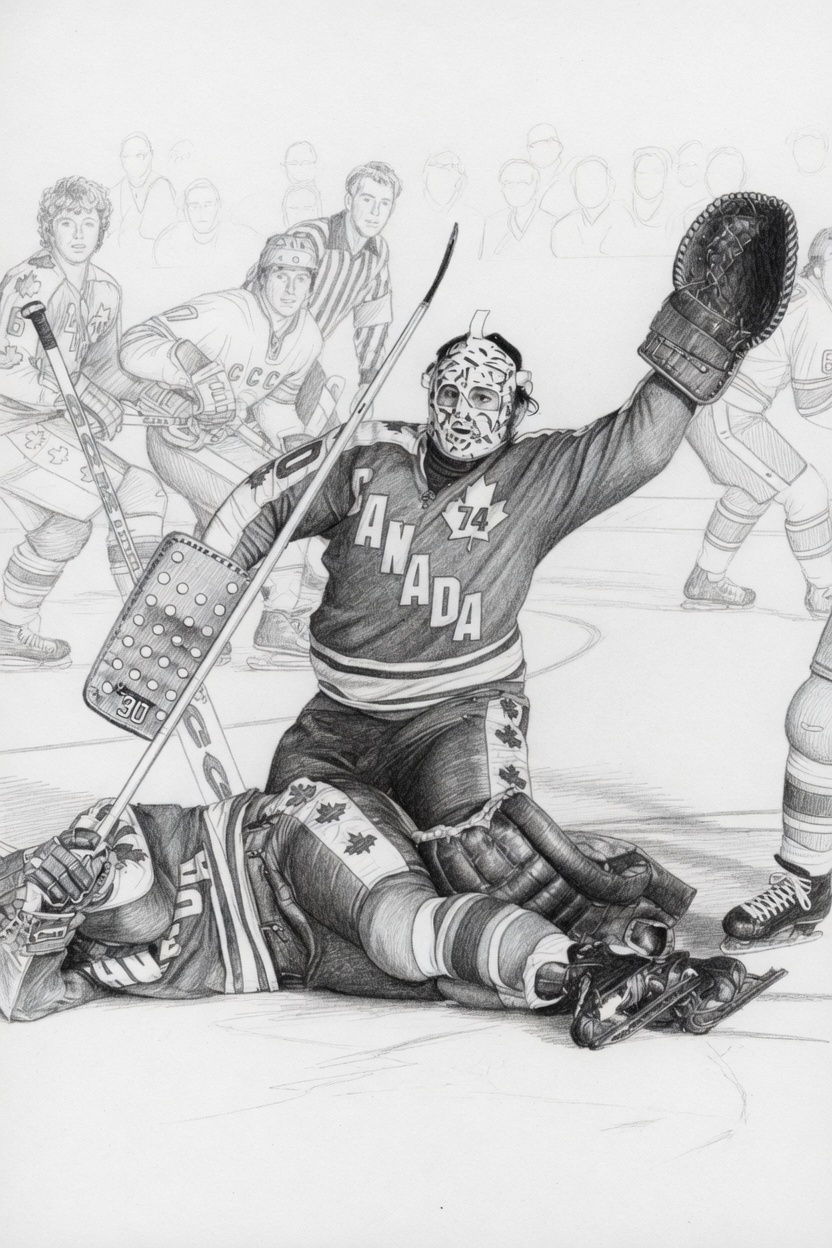
In 1974 the WHA arranged a “Summit Series” of Canadian WHA stars against the Soviet Union. This was the best Soviet team available, while the WHA Canada roster was mostly old and past it; 46-year-old Gordie Howe tied for second in Canadian scoring. As you’d expect the Soviets handily won the series, four wins to one with three ties. But the games were generally tight. Canada outshot the USSR in three of eight games, and a fourth was even (see appendix 2 for the details). The superior play of Vladislav Tretiak, as in 1972, made the rest of the Soviets look better than they were. Unlike in 1972 the Soviets were the better team. Pat Stapleton, who played in both 1972 and 1974, thought both the Russians and the Canadians were better-prepared this time and the series was closer than it looked4. André Lacroix felt that Canada was underprepared, with a short training camp and no exhibitons before the series, whereas the Soviets had spent months together and were of course professionals in all but name5. It was still a credible performance against a Soviet team of very high standard; in international play Canada (both versions) and Czechoslovakia were the only ones who could even give the Soviets a game6.

Many of the WHA’s best games were against Russian opposition. On January 5, 1978, the Winnipeg Jets beat a “Soviet Nationals” team 5-3. Bobby Hull had three goals and an assist, Ulf Nilsson had two goals and two assists, and Winnipeg outshot the Soviets 31-247. It was the WHA’s only victory in a six-game series and the Soviet team was excellent; ten of those players8 would beat the NHL All-Stars in a three-game series the next year. Some other games had at least momentary interest: Edmonton outshot the Soviet Union 38-25, helped by score effects after the Soviets had a 3-0 lead by 5:16 in the second. Dave Dryden perpetuated the family tradition of getting schooled by Vladislav Tretiak as Edmonton lost 7-2. The Jets once challenged the Montreal Canadiens for the Stanley Cup, a challenge that was ignored as Canada’s hockey trophy had long ago been officially stolen by the treasonous NHL9, and based off the Russian results it might have been interesting10.

Starting in December 1976 WHA teams recorded a 14-4-2 against touring Czechoslovak national teams of decidedly mixed strength11 at a time when Czechoslovakia was clearly the third-best team in world hockey. A “Soviet All-Stars” team, good but not the best available, beat the WHA teams four wins to one with a tie in 1978–79, but the games were generally tight, then Dynamo Moscow, the lesser Moscow club team but still one with several internationals, lost 3 of 4 to WHA teams and all three to the 1979 WHA All-Stars.

In short, at a time when the Soviet Union’s best players were competitive with the NHL’s best players, could generally beat Czechoslovakia, and waxed everybody else except by fluke, the WHA was less competitive but still solid against the Soviet Union’s best players, could generally beat Czechoslovakia, and waxed everybody else except by fluke. In even shorter short, the World Hockey Association was a major league in every test, team against team, that you can contrive.

Appendix 1: NHL-WHA exhibition games

The team’s regular-season finish that year in its respective division or league is given in parentheses, and when I can give any other information on the players in the game, I do so12.

Overall I counted 68 games, with the WHA posting a record of 34-27-7.

1974

WHA record: 2-5-0

Houston Aeros 5 [Larway 2, Popiel, Preston, Hinse] (53-25-0, 1st WHA West), St. Louis Blues 4 [Ogilvie, Plager 2, Wensink] (35-31-14, 2nd NHL Smythe)
Houston’s goalscorers were all regulars. Don Larway wasn’t much of a goalscorer but played full-time for four WHA seasons and never in the NHL. Poul Popiel was their leading blueliner and had a decent NHL career. André Hinse had a couple good years on Gordie Howe’s line but was nothing without him, and Rich Preston never bothered the record-trackers but had a really solid WHA and NHL career until 1987. Ron Grahame, in the Houston goal, was WHA goalie of the year. For St. Louis, Barclay Plager was team captain and a four-time All-Star defenseman, though a two-goal game was a good haul for him. Brian Ogilvie was a part-timer. Josh Wensink was a 21-year-old sophomore who spent the year in the minors and didn’t break in for his brief full-time NHL career for another three years. St. Louis’s goalie was 21-year-old John Davidson, their starter if they had one.
New England Whalers 2 [Blackburn, Charlebois] (43-30-5, 1st WHA East), Philadelphia Flyers 4 [Schultz 2, Sirois, Barber] (51-18-11, 1st NHL Patrick)
Played in Quebec City, for some reason. Philadelphia had a 4–0 lead 12:03 into the second before letting New England make a respectable score of it. I can’t imagine Killer Schultz had many two-goal games in his day but this was one of them. Bill Barber was of course a very, very good NHL player. Bob Sirois had a very modest career as an NHL part-timer while the rosters were diluted. Bobby Clarke played and had an assist. New England’s Don Blackburn had a minuscule NHL career until the WHA-led talent dilution made him a sort-of-regular for a couple years starting at age 34, and Bob Charlebois was a very minor big-league winger notable for not much except possibly the nominative inspiration for a fictional defenseman who hailed from, if I can read the card here, Moose Jaw, Sask-at-chew-an; Slap Shot inspiration Ned Dowd played against Charlebois in the NAHL. No information on the goaltenders.
Atlanta Flames 3 (34-31-15, 4th NHL Patrick), Winnipeg Jets 1 (38-35-5, 3rd WHA Canadian)
Winnipeg’s goal was by Ron Ashton, and if you haven’t heard of him, fair enough.
San Diego Mariners 4 (43-31-4, 2nd WHA West), California Golden Seals 3 (19-48-13, 4th NHL Adams)
Minnesota North Stars 5 (23-50-7, 4th NHL Smythe), Toronto Toros 3 (43-33-2, 2nd WHA Canadian)
Vancouver Canucks 4 (38-32-10, 1st NHL Smythe), Edmonton Oilers 3 (36-38-4, 5th WHA Canadian)
Pittsburgh Penguins 5 [DeBenedet, Lalonde 3, Apps] (37-28-15, 3rd NHL Norris), Cleveland Crusaders 3 [LeDuc, Clearwater, McDonough] (35-40-3, 2nd WHA East)
Cleveland had a 2–0 lead ten minutes into the first before the game got away from them. In the second Pittsburgh was down 2–1 when blueliner Steve Durbano, who accumulated the frankly amazing total of 1,127 penalty minutes in 220 NHL games, took over. Durbano was, by all accounts, a competent enough player and also a lunatic; he tried to turn round this preseason game by punching everything that moved, finishing the game with three minors, two majors, a 10-minute misconduct, and a game misconduct. Hey, it worked. In the third, the game got away from everybody with fights starting at seventeen seconds and continuing until what seems to have been a line brawl at 15:22; four guys got tossed for that out of six ejections in the game. Among the goalscorers, Pittsburgh’s Nelson DeBenedet was basically a minor-leaguer, Ron Lalonde played seven NHL seasons because somebody had to, and The Other Syl Apps was actually pretty good, though that was not a nice name to live up to. Cleveland’s three were all regulars; LeDuc and McDonough were their two leading scorers that season. Shots were 49–21 Pittsburgh; neither team played their regular goalie. Durbano would play briefly in the WHA with the Birmingham Bulls, and they deserved each other.

1976

WHA record: 3-9-1

Some WHA records add up to 80 games played and others to 81 because the Minnesota Fighting Saints folded mid-season.

Birmingham Bulls 7 (31-46-4, 5th WHA East), Atlanta Flames 6 (34-34-12, 3rd NHL Patrick)
Houston Aeros 1 (50-24-6, 1st WHA West), Pittsburgh Penguins 5 (34-33-13, 3rd NHL Norris)
Calgary Cowboys 3 (31-43-7, 5th WHA West), Pittsburgh Penguins 7 (34-33-13, 3rd NHL Norris)
Winnipeg Jets 5 [Hedberg 2, Hull, Sullivan, Ruhnke] (46-32-2, 2nd WHA West), Pittsburgh Penguins 3 [Larouche, Burrows, Kelly] (34-33-13, 3rd NHL Norris)
If Anders Hedberg and Bobby Hull need an introduction to you I can’t imagine you scrolled this far, and Peter Sullivan was a modest player who had a couple good WHA years. Kent Ruhnke was a plug. For Pittsburgh. Pierre Larouche was probably their best player at the time, Dave Burrows was a regular, and Battleship Kelly was easily one of the two best NHL forwards of the era named “Bob Kelly.” Winnipeg’s goaltender was Joe Daley, their regular and an ex-Penguin; Pittsburgh used Denis Herron, the less-used of their platoon though decent for the era. Winnipeg outshot Pittsburgh 34-22.
Edmonton Oilers 1 (34-43-4, 4th WHA West), Pittsburgh Penguins 3 (34-33-13, 3rd NHL Norris)
Indianapolis Racers 1 (36-37-8, 3rd WHA East), Washington Capitals 2 (24-42-14, 4th NHL Norris)
Winnipeg Jets 6 (46-32-2, 2nd WHA West) [Hedberg, Lindh 2, Lindstrom, Hull, DeBaisio], St. Louis Blues 2 (32-39-9, 1st NHL Smythe) [Butler, Berenson]
More than 10,000 fans came to Winnipeg Arena to see the St. Louis Blues. In 1976. A fracas at 14:29 of the first saw three misconducts handed out, including to St. Louis’s leading scorer that year Bob MacMillan; St. Louis’s Jerry Butler had an 11-year NHL career and was good enough to tie the game at 1 before the Jets took charge. Yes, the other Blues goalscorer was Red Berenson, 37 years old at the start of the year and the team’s fourth-leading scorer at the end of it. St. Louis goalie Ed Staniowski was entering his second NHL season as a platoon guy and played seven years in the show with a save percentage below .870 for no reason I ever figured out. Heavens but the Smythe Division was garbage. For the Jets Daley started in goal again and, besides the famous guys, Willy Lindström was just about to have his breakout year in a fine career and Mats Lindh demonstrated that just because you were Swedish and the Jets signed you doesn’t mean you were any good. I suppose “DeBaisio” must be a typo for Brian DeBiasio, who never played major league hockey.
Edmonton Oilers 3 (34-43-4, 4th WHA West), Pittsburgh Penguins 7 (34-33-13, 3rd NHL Norris)
Cincinnati Stingers 2 (39-37-5, 2nd WHA East), Washington Capitals 3 (24-42-14, 4th NHL Norris)
Edmonton Oilers 4 (34-43-4, 4th WHA West), St. Louis Blues 5 (32-39-9, 1st NHL Smythe)
Houston Aeros 4 (50-24-6, 1st WHA West), Atlanta Flames 8 (34-34-12, 3rd NHL Patrick)
Indianapolis Racers 4 (36-37-8, 3rd WHA East), Pittsburgh Penguins 6 (34-33-13, 3rd NHL Norris)
The Pittsburgh Penguins played six exhibitions against WHA teams in ten days with some brutal travel, going 5-1-0.
New England Whalers 2 (36-40-6, 4th WHA East), New York Rangers 2 (29-37-14, 4th NHL Patrick)

1977

WHA record: 13-6-2

There were eight teams in the WHA this season in one division; in addition, a Soviet select team and a Czech select team played eight games each that counted in the standings because that’s how the WHA rolled.

New England Whalers 2 (44-31-5, 2nd WHA), Chicago Black Hawks 2 (32-29-19, 1st NHL Smythe)
New England Whalers 5 (44-31-5, 2nd WHA), Washington Capitals 4 (17-49-14, 5th NHL Norris)
Winnipeg Jets 1 [Moffat] (50-28-2, 1st WHA), Minnesota North Stars 2 [Fairbairn, Eriksson] (18-53-9, 5th NHL Smythe)
One of the worst NHL teams ever beating by far the best WHA team of the day, on the road, in the most discreditable result to the WHA of the whole exhibition series. Winnipeg outshot the North Stars 38–22 but the young Minnesota goaltending duo of Paul Harrison and Pete LoPresti stood on their heads until Roland Eriksson scored the winner at 4:47 of overtime. Eriksson played in the All-Star Game that year, signed as a free agent with the Canucks for the next season, and apparently instantly got terrible, being released from Vancouver, signing with WHA Winnipeg, doing no better, and going back to Sweden to finish his career. There is a story there, if we knew it. Paul Fairbairn, the other Minnesota scorer, was on his way down with most of the rest of the North Stars, though he was a real player once. Lyle Moffat kicked around for a few WHA seasons and came to the NHL with the Jets, but wasn’t much of a player.
Birmingham Bulls 0 (36-41-3, 6th WHA), Atlanta Flames 3 (34-27-19, 3rd NHL Patrick)
New England Whalers 7 (44-31-5, 2nd WHA), New York Rangers 4 (30-37-13, 4th NHL Patrick)
New England Whalers 0 (44-31-5, 2nd WHA), Boston Bruins 5 (51-18-11, 1st NHL Adams)
Minnesota North Stars 3 [Talafous, Pirus, Maxwell] (18-53-9, 5th NHL Smythe), Winnipeg Jets 4 [Hedberg, Hull, K. Nilsson 2] (50-28-2, 1st WHA)
Sweet revenge for the Jets on the road, though it wasn’t easy as Minnesota outshot them 33–26. In the second Minnesota had a 15–6 shooting edge but young Jets backup goalie Markus Mattsson kept Minnesota out, Kent Nilsson scored twice for Winnipeg and that’s your ballgame. All three Jets scorers are quite well-known. Mattsson never really seized a chance in North America and though his numbers weren’t bad overall he seems to have had the bad habit of showing up on game recaps in embarrassing ways. For Minnesota, Dean Talafous was a regular and kept an NHL job for a while even as the number of major league teams started going down again, Alex Pirus was a young fill-in player of the sort 18-53-9 teams have, and Bryan Maxwell somehow had a fairly long career despite never, as far as I can tell, having a season when the coach trusted him at all.
Edmonton Oilers 3 (38-39-3, 5th WHA), St. Louis Blues 2 (20-47-13, 4th NHL Smythe)
New England Whalers 5 (44-31-5, 2nd WHA), Atlanta Flames 4 (34-27-19, 3rd NHL Patrick)
Houston Aeros 3 (42-34-4, 3rd WHA), Atlanta Flames 5 (34-27-19, 3rd NHL Patrick)
Winnipeg Jets 6 [Clackson, Labraaten, K. Nilsson, Hull, U. Nilsson, Hedberg] (50-28-2, 1st WHA), St. Louis Blues 2 [Masters, unknown] (20-47-13, 4th NHL Smythe)
Yves Bélanger, in goal for the Blues, played three NHL games that season and maybe here we see why; shots were 39–25 Winnipeg. “Masters” is Jamie Masters, who did not play in the NHL that year but did a few other times for St. Louis. The only other Blues to show up on the game summary are Rick Bourbonais, who played his last 31 of 71 career NHL games that season, and Garry Unger, who was at least a real member of the team. I do not get the impression the Blues took this one quite seriously.
Winnipeg Jets 3 [Lindstrom, Hedberg, Green] (50-28-2, 1st WHA), St. Louis Blues 0 (20-47-13, 4th NHL Smythe)
From the Keystone Centre in Brandon, Manitoba! Ted Green was 37 years old with a plate in his head when he scored that goal. St. Louis outshot Winnipeg 27–17 but Ed Staniowski was bad as usual while Daley and Mattsson split the shutout for Winnipeg. Once again, one is left wondering how seriously St. Louis was treating this Manitoba road trip, though Unger at least played again.
Washington Capitals 2 [Charron, Picard] (17-49-14, 5th NHL Norris), Cincinnati Stingers 4 [Ftorek, Stoughton, Sobchuk 2] (35-42-3. 7th WHA)
This game is not in Big Bucks and Blue Pucks. Washington blueliner Robert Picard was about to enter the first of his 13 NHL seasons as a 20-year-old, and Guy Charron was a journeyman who exploited overexpansion to be Washington’s first “scoring star.” Both Capitals goalies were regulars for Washington that year. As for Cincinnati, Robbie Ftorek was an excellent player, and 22-year-old Mike Liut was a rookie but became a very solid pro goalie, Blaine Stoughton had a very weirdly-shaped career where he was a bona fide WHA star for a hot minute until he stopped, then went to the NHL and had a couple pretty good seasons. Dennis Sobchuk was only 24 but his best years were already behind him. It was a strange time to play pro hockey.
New England Whalers 9 (44-31-5, 2nd WHA), Pittsburgh Penguins 0 (25-37-18, 4th NHL Norris)
Birmingham Bulls 0 (36-41-3, 6th WHA), St. Louis Blues 4 (20-47-13, 4th NHL Smythe)
Quebec Nordiques 5 (40-37-3, 4th WHA), New York Rangers 5 (30-37-13, 4th NHL Patrick)
Edmonton Oilers 5 (38-39-3, 5th WHA), Detroit Red Wings 4 (32-34-14, 2nd NHL Norris)
New England Whalers 4 (44-31-5, 2nd WHA), Atlanta Flames 3 (34-27-19, 3rd NHL Patrick)
Edmonton Oilers 2 (38-39-3, 5th WHA), Cleveland Barons 4 (22-45-13, 4th NHL Adams)
Winnipeg Jets 1 [Bergman] (50-28-2, 1st WHA), Detroit Red Wings 0 (32-34-14, 2nd NHL Norris)
Thommie Bergman, and yes that was his legal name, actually broke in with the Red Wings before Winnipeg started scooping every Swede in sight and he almost-inevitably joined them. While no Borje Salming, Bergman had a pretty useful career. Joe Daley picked up the shutout as the Jets outshot Detroit 33–19; the Red Wings started regular goalie Jim Rutherford and a number of other full-time players who showed up on the penalty sheet. This may have been the most complete WHA performance against NHL opposition ever, pending discovery of more information on the New England – New York Islanders game in 1978. Detroit wasn’t great but they weren’t bad, Rutherford almost stole it for them, but the Jets kept calm control.
Quebec Nordiques 5 (40-37-3, 4th WHA), Washington Capitals 1 (17-49-14, 5th NHL Norris)

1978

WHA record: 16-7-4

All WHA teams except Indianapolis played 80 games by once again playing regular-season contests against Czech and Soviet selects and once, for some reason, Finland (Edmonton won 8-4). This is the only year where every WHA team played at least one NHL opponent, and every WHA team picked up a win.

New England Whalers 5 (37-34-9, 4th WHA), Washington Capitals 2 (24-41-15, 4th NHL Norris)
Winnipeg Jets 2 [Guindon, Gray] (39-35-6, 3rd WHA). St. Louis Blues 2 [Hammarstrom, Federko] (18-50-12, 3rd NHL Smythe)
God knows how the Blues got worse since the previous season but they did. This year, though, we see some serious Blues all over the scoresheet such as Inge Hammarström (entering his last NHL season), Bernie Federko (entering his third and about to break out), in the penalty summary Brian Sutter, and Larry Patey, a defensive forward who almost never played for a defensively competent team, as third star. The Jets were starting to age out; we see Bobby Guindon again here the year he turned into a pumpkin, and John Gray was entering his last pro season at age 29. Shots were 27–27. No information on the goalies.
Winnipeg Jets 3 [K. Nilsson 3] (39-35-6, 3rd WHA), Colorado Rockies 5 [Pierce 2, Paiement, Kitchen, Skinner] (15-53-12, 4th NHL Smythe)
Colorado had a 3–0 lead at 17:12 of the first and outshot Winnipeg 29–23. Kent Nilsson’s hat trick made him second star behind Colorado’s Larry Skinner who had a goal and three assists and never became an NHL regular, not even for the Colorado Rockies. Mattsson seems to have had a rough night in net for the Jets but played the full hour, while the Rockies split the net between Michel Plasse, one of their platoon duo, and third-stringer Doug Favell. Randy Pierce, the two-goal man, had a couple full-time seasons when the Rockies were really bad and survived long enough in their minor league system to make the move to New Jersey. Mike Kitchen was playing regularly, and fans of the era will know Wilf Paiement, whose career had already about peaked by this time, aged 23.
Quebec Nordiques 3 (41-34-5, 2nd WHA), Colorado Rockies 2 (15-53-12, 4th NHL Smythe)
Two games in two nights for the Rockies, who were bad enough when they were rested.
New England Whalers 5 (37-34-9, 4th WHA), New York Islanders 2 (51-15-14, 1st NHL Patrick)
The Islanders weren’t the Islanders yet but they were getting awfully close, and the Whalers, relying too-heavily on a 38-year-old (Dave Keon), a 41-year-old (Pie McKenzie), a 50-year-old (Gordie), and a forward who turned out to be a better defenseman (Mark), were an okay team but I think it is fair to say “past their window.” Even their arena was falling apart; the Whalers had to start their season, and probably play this game, in Springfield, Connecticut. There’s no detailed information at all, but this must have been a great one for the rooters who made it.
Birmingham Bulls 4 (32-42-6, 6th WHA), Atlanta Flames 2 (41-31-8, 4th NHL Patrick)
Another big upset win for the WHA we know nothing about. Birmingham was the archetypal late WHA team: their best players were teenagers (Rick Vaive, Michel Goulet, Craig Hartsburg) and old guys who had never actually been that good (Paul Henderson, Ernie Wakely), and most of the roster had one eye back towards the Chrysler plant. Atlanta was a good team with bad luck; murderous division and no real stars but a solid lineup from top to bottom.
Winnipeg Jets 2 [Hull 2] (39-35-6, 3rd WHA), New York Rangers 5 [U. Nilsson, Esposito, Hickey, Polis 2] (40-29-11, 3rd NHL Patrick)
Ulf Nilsson and Anders Hedberg signed with the Rangers from the Jets in the summer of 1978; no sign of Hedberg on the stat sheet but Ulf played a first-star game with a goal and an assist. You see Bobby Hull up there for the Jets, you see Ulf, who was no Hall-of-Famer but was a really good player until his knees ran out, you see Phil Esposito, Pat Hickey was a real player and had a good full season for the Rangers, and Greg Polis was a three-time All-Star, though those were his first three NHL seasons when the Pittsburgh Penguins had to send somebody I guess. As much star power as you could ask for what must have been an emotional game for the 10,000 fans. Joe Daley played the whole game in goal for Winnipeg, though he was just about finished as a player, while the Rangers split the nets between platoon-guy-who-played-a-bit-more John Davidson and third-stringer Doug Soetaert.
Quebec Nordiques 4 (41-34-5, 2nd WHA), Washington Capitals 7 (24-41-15, 4th NHL Norris)
Quebec Nordiques 5 (41-34-5, 2nd WHA), Minnesota North Stars 2 (28-40-12, 4th NHL Adams)
New England Whalers 5 (37-34-9, 4th WHA), Washington Capitals 1 (24-41-15, 4th NHL Norris)
Second game in two nights for the Capitals.
Winnipeg Jets 4 [Gray, Sullivan, Lindstrom, K. Nilsson] (39-35-6, 3rd WHA), New York Rangers 7 [U. Nilsson 2, Polis, Duguay, Tkaczuk, Vickers, Esposito] (40-29-11, 3rd NHL Patrick)
Second verse, same as the first. Winnipeg got a 2–0 lead midway through the first before Ulf clawed one back for the Rags, then in the second New York put six goals past Joe Daley on 17 shots. Markus Mattsson held the fort in the third and the Jets’ remaining Swedes picked up a couple consolation goals but it was too little, too late. For the new Rangers on the list, Ron Duguay was a quality everyday player entering his sophomore season, Walt Tkaczuk was a really nice veteran Ranger contributor, and while Steve Vickers wasn’t much of a player he was at least a regular. The Jets are all familiar names again. Rangers goaltending was Davidson and Soetaert as in game one.
Detroit Red Wings 7 (23-41-16, 5th NHL Norris), New England Whalers 5 (37-34-9, 4th WHA)
50-year-old Gordie Howe loses a shooting gallery game to the Dead Things at the Olympia. It was a chance to see the Howes more than it was a hockey game; 14,000 Red Wings fans greeted Gordie with a seven-minute standing ovation, and another six-minute ovation when he scored a consolation goal for New England in the third, assisted by Mark and Marty13. However, no detailed record is available.
Edmonton Oilers 4 (48-30-2, 1st WHA), Minnesota North Stars 3 (28-40-12, 4th NHL Adams)
Quebec Nordiques 3 (41-34-5, 2nd WHA), Pittsburgh Penguins 0 (36-31-13, 2nd NHL Norris)
Edmonton Oilers 5 (48-30-2, 1st WHA), Vancouver Canucks 3 (25-42-13, 2nd NHL Smythe)
The first of many.
Quebec Nordiques 5 (41-34-5, 2nd WHA), Chicago Black Hawks 2 (29-36-15, 1st NHL Smythe)
While it’s outside of the article scope to go into this, how on Earth do you win an NHL division with 29 wins?
Minnesota North Stars 5 (28-40-12, 4th NHL Adams), Winnipeg Jets 5 (39-35-6, 3rd WHA)
In Duluth.
Birmingham Bulls 3 (32-42-6, 6th WHA), St. Louis Blues 4 (18-50-12, 3rd NHL Smythe)
New England Whalers 4 (37-34-9, 4th WHA), Chicago Black Hawks 4 (29-36-15, 1st NHL Smythe)
Indianapolis Racers 4 (5-18-2, 7th WHA, folded mid-season), St. Louis Blues 1 (18-50-12, 3rd NHL Smythe)
Wayne Gretzky’s professional debut. Although few details are available, people auctioning off an old ticket stub for this game say Gretzky had an assist in the only ever battle between The Two Teams You Kinda Forget He Played For. This is where we mention the great pub trivia fact that Gretzky’s first major league goal was against the Edmonton Oilers.
Edmonton Oilers 3 (48-30-2, 1st WHA), Minnesota North Stars 5 (28-40-12, 4th NHL Adams)
Quebec Nordiques 4 (41-34-5, 2nd WHA), New York Rangers 1 (40-29-11, 3rd NHL Patrick)
Les Nords played six games in twelve days against NHL opposition, going 5-1-0.
Cincinnati Stingers 6 (33-41-6, 5th WHA), Pittsburgh Penguins 4 (36-31-13, 2nd NHL Norris)
Edmonton Oilers 6 (48-30-2, 1st WHA), Colorado Rockies 4 (15-53-12, 4th NHL Smythe)
Winnipeg Jets 6 (39-35-6, 3rd WHA), Minnesota North Stars 5 (28-40-12, 4th NHL Adams)
New England Whalers 4 (37-34-9, 4th WHA), New York Rangers 4 (40-29-11, 3rd NHL Patrick)

Appendix 2: 1974 “Summit Series”

Team rosters. Players in italics played in the 1972 Summit Series14.

Canada G Gerry Cheevers, Don McLeod, Gilles Gratton. D Rick Ley, Brad Selwood, J. C. Tremblay, Marty Howe, Pat Price, Pat Stapleton, Rick Smith, Paul Shmyr, Al Hamilton, Barry Long. F Bobby Hull, Frank Mahovlich, Paul Henderson, Gordie Howe, Mark Howe, Serge Bernier, Rejean Houle, Marc Tardif, Jim Harrison, Bruce MacGregor, Ralph Backstrom, Andre Lacroix, Johnny McKenzie, Tom Webster, Mike Walton.

Tremblay and Hull would have played for Canada in 1972 if they had not signed with the WHA before the series started.

Soviet Union: G Vladislav Tretiak, Alexander Sedelnikov, Vladimir Polupanov. D Aleksandr Gusev, Vladimir Lutchenko, Yuri Liapkin, Valeri Vasilyev, Gennadi Tsygankov, Viktor Kuznetsov, Aleksandr Filippov, Aleksandr Sapelkin, Yuri Shatalov, Juri Fiodorov. F Valeri Kharlamov, Alexander Yakushev, Sergei Kapustin, Aleksandr Volchkov, Yuri Tiurin, Aleksandr Maltsev, Yuri Lebedev, Boris Mikhailov, Vladimir Popov, Vladimir Shadrin, Vladimir Vikulov, Viacheslav Anisin, Aleksandr Bodunov, Sergei Kotov, Konstantin Klimov, Viktor Shalimov.

Sedelnikov was a Soviet backup goalie in 1972 and did not play.

Games 1–4 (Canada; Quebec City, Toronto, Winnipeg, Vancouver):

Canada [McKenzie, Hull 2] 3–3 USSR [Lutchenko, Kharlamov, Petrov]. T: Cheevers (3GA, 25SV), Tretiak (3GA, 31SV)
Canada [Backstrom, Lacroix, Hull, Tremblay] 4–1 USSR [Yakushev]. W: Cheevers (1GA, 29SV). L: Tretiak (4GA, 29SV)
Canada [MacGregor, Webster, Henderson 2, Bernier] 5–8 USSR [Yakushev 3, Mikhailov, Vasilyev, Maltsev, Bodunov, Lebedev]. W: Tretiak (5GA, 29SV). L: McLeod (8GA, 31SV)
Canada [Gordie Howe, Hull 3, Mahovlich] 5–5 USSR [Vasilyev, Mikhailov, Yakushev, Maltsev, Gusev]. T: Cheevers (5GA, 23SV), Tretiak (5GA, 23SV)

Games 5–8 (Russia; Moscow)

USSR [Maltsev 2, Gusev] 3–2 Canada [Gordie Howe, Mark Howe]. W: Tretiak (2GA, 14SV). L: Cheevers (3GA, 24SV)
USSR [Mikhailov, Vasilyev, Anisin, Shatalov, Kharlamov] 5–2 Canada [Houle, Gordie Howe]. W: Tretiak (2GA, 27SV). L: Cheevers (5GA, 24SV)
USSR [Anisin, Tiurin, Gusev, Mikhailov] 4–4 Canada [Webster, Backstrom 2, Mark Howe]. T: Tretiak (4GA, 26SV), Cheevers (4GA, 17SV)
USSR [Yakushev, Shalimov 2] 3–2 Canada [Hull, Backstrom]. W: Sidelnikov (2GA, 22SV). L: Cheevers (3GA, 27SV)

  1. Not all sources agree with each other.
  2. The 1974–75 Washington Capitals posted a .131, and some of the early expansion teams might have been as bad if there wasn’t so much expansion all at once, so this is I think “responsibly favourable to the NHL.”
  3. Plus, though it goes against the spirit of the thing, Jari Kurri: a Finland selects squads played one game that counted in the regular season standings, losing 8-4 to the Edmonton Oilers, and Kurri appeared for Finland. Win a trivia contest with that against anybody, possibly including Jari Kurri.
  4. Murray Greig, Big Bucks & Blue Pucks (Toronto: Macmillan, 1997), 137.
  5. André Lacroix. After the Second Snowfall (self-published: Amazon, 2020), 147.
  6. This would imply that the 1970s Soviet league was a major league too. Since the league was so flagrantly divided between government-sponsored Moscow “haves” and a bunch of “have-nots” it’s not clear-cut, but I wouldn’t argue hard against it.
  7. Greig, 203.
  8. Tretiak, Kharlamov, A. Golikov, Babinov, Tsygankov, Balderis, Petrov, Mihailov, Vasiliev, and Kovin. Some of the players present in 1978 and absent in 1979, notably Slava Fetisov and Viktor Shalimov, would have made the 1979 team better but that’s the Soviets for you.
  9. Ed Willes. The Rebel League: The Short and Unruly Life of the World Hockey Association (Toronto: McClelland & Stewart, 2004), 206.
  10. In 1977–78 the Jets were one of four WHA teams to beat a “Soviet Stars” team over a ten-game tour, but unlike in January 1978 the “Soviet Stars” were decidedly understrength.
  11. The Stastnys were only there sometimes, Vladimir Dzurilla was only there when the Stastnys weren’t, and a roster isn’t even recorded for the final Czech team that did things like lose 10-2 to Birmingham.
  12. Game results from Greig, 208, except when listed. I simply have to add that, as far as I can tell, this is the book I have owned for the longest period of my life that I paid for with my own money; I seem to recall using it in a project in junior high school. Season standings from Hockey Reference. When I could find game summaries, usually from wha-hof.com, they are linked.
  13. Greig, 26
  14. Greig, 194.

Leave a Reply

Your email address will not be published. Required fields are marked *