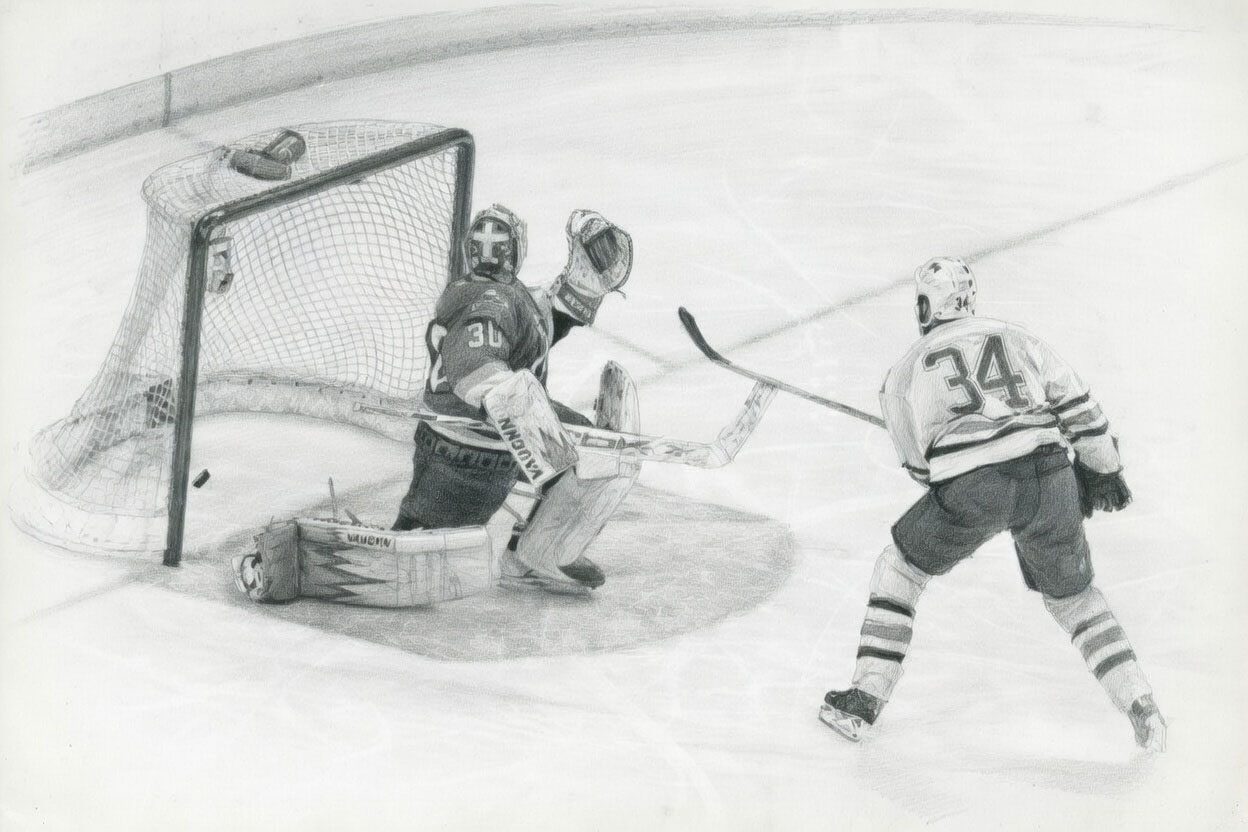
The 1981–82 Washington Capitals, 26-41-13, were not a great team. Last in the old Patrick Division, though being the early Capitals it was about their best squad yet. They were on the verge of making the playoffs, it showed in the underlying numbers, with their bit-better-than-median goals for and bit-worse-than-median goals against, but it was waiting to come together. They had a 22-year-old Mike Gartner, an 18-year-old Bobby Carpenter, a 23-year-old Bengt-Åke Gustafsson, and a few other young-ish players of reasonable quality. Their captain, Ryan Walter, was 23 and not too bad. So naturally their leading scorer was some guy named Dennis Maruk.
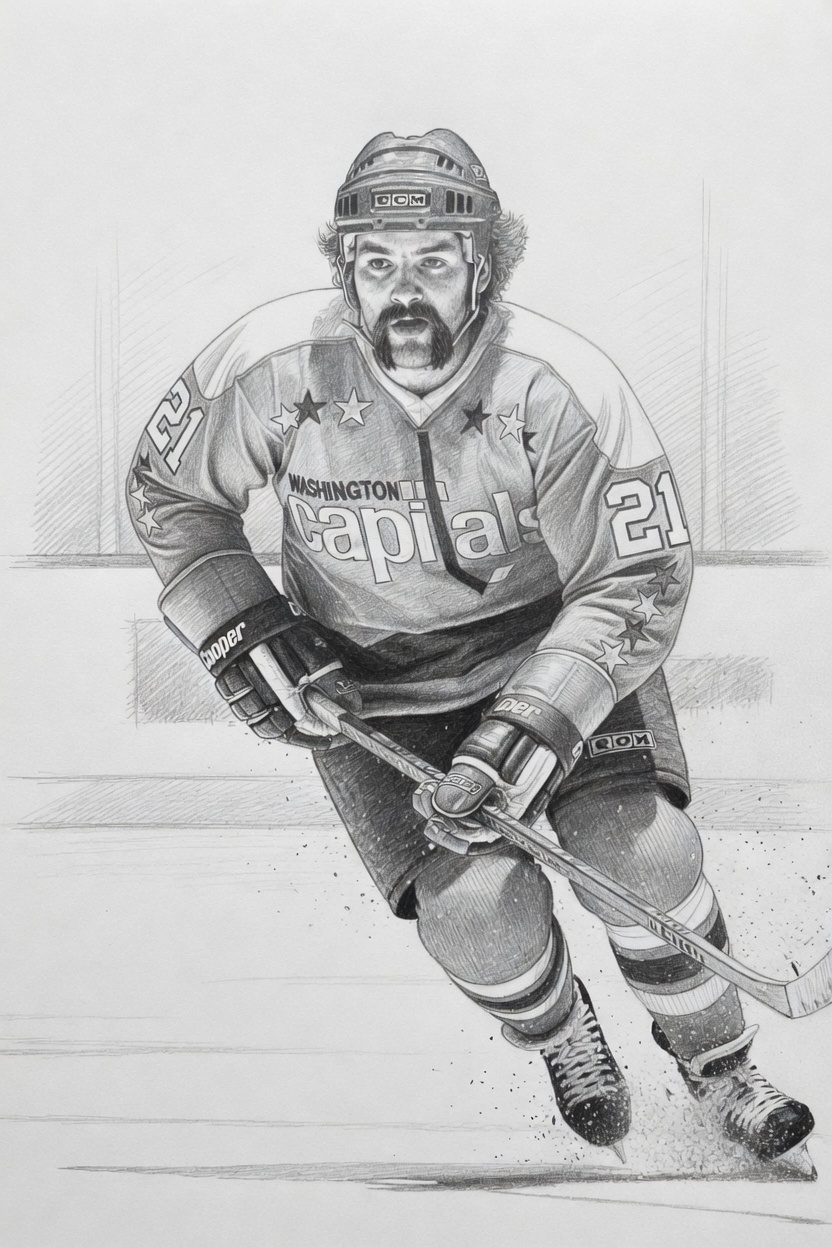
Not by a little bit. Walter was second on the team with 87 points, followed by Gartner with 80; Maruk had 136. He scored four hat tricks, he made the All-Star Game, he was fourth in the voting for the season-ending All-Star team at centre and seventh in voting on right wing, which says something, and sixth in the Hart. He finished fourth in the NHL that year in points, behind Wayne Gretzky, Mike Bossy, and Peter Šťastný; ahead of Bryan Trottier, Denis Savard, Marcel Dionne, Dino Ciccarelli, Glenn Anderson, Dale Hawerchuk, and Bernie Federko, to name only the Hall-of-Famers in the top 20. Third in goals with 60, behind Gretzky and Bossy. Sixth in assists, behind five Hall-of-Famers. Maruk and Bernie Nicholls are the only eligible players to have recorded a 60-goal season and not make the Hall of Fame and Nicholls got 30 assists from Gretzky. It was a killer year. Maruk’s mustache may be second only to Lanny McDonald’s in the era, and Lanny’s in the Hall of Fame too.
This was not Maruk’s only pretty good season; he was an All-Star in 1977–78 with the Cleveland Barons, because somebody had to be, and had another 50-goal season and a total of four 80-point seasons. Maruk actually outscored Gartner in each of the four full seasons they played together, and sure Gartner was young; it was four seasons over five years and it was still Mike Gartner. However, hanging out with Gretzky and Bossy was a one-off. 136 points was 29% better than his second-best career total. Sure, he scored 50 goals another time, but it was exactly 50, and his usual level was 30-odd.
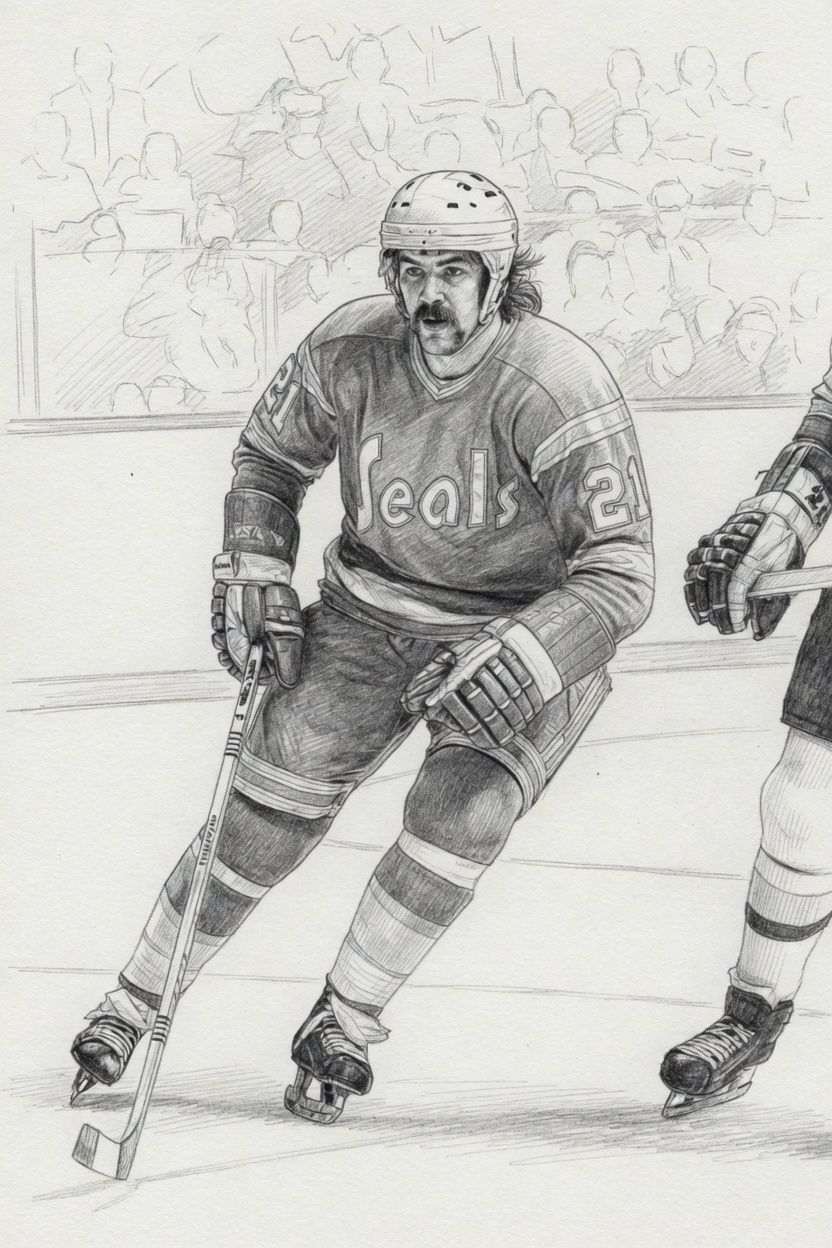
Maruk, as you might expect, was an interesting player. Hard-working, gritty, and built like Martin St. Louis. 5’8″ and 180 pounds of jets, hands, and sandpaper. As a junior, he led the London Knights in scoring twice, which was good enough to go in the second round of the 1975 NHL Entry Draft and wind up one of the five best players in the (mediocre) class. Unfortunately, he was selected by the California Seals. On the bright side that meant he went straight to the NHL; on the down side, he was a California Seal. It began a trend of being the key forward on dysfunctional teams that defined his career, both for good and ill.
His first season was an unqualified success, personally: second on the team in scoring behind Al MacAdam, which was good enough to get him third place in the Calder Trophy voting behind the New York Islanders’ Bryan Trottier and Chico Resch. Which was fair enough, Trottier had a great season (was a great player) and Resch was the 27-year-old All-Star goalie for a 42-21-17 team; it was a darned good third. The only issue was, as ever, that he was a California Seal. The Seals were a young, skilled team, in principle, but in practice most of them were not actually that skilled at all. They got beat in the alley and on the ice. They had no glaring weaknesses and not one single strength. They finished 27-42-11, then they moved to Cleveland1.
| Dennis Maruk | |||||||||||||
| Season | Team | League | Age | GP | G | A | Pts | +/- | SoG | SPCT | OPS | DPS | PS |
| 1975–76 | California | NHL | 20 | 80 | 30 | 32 | 62 | -6 | 233 | 12.9% | 4.1 | 1.3 | 5.3 |
| 1976–77 | Cleveland | NHL | 21 | 80 | 28 | 50 | 78 | 3 | 268 | 10.4% | 5.4 | 1.5 | 6.9 |
| 1977–78 | Cleveland | NHL | 22 | 76 | 36 | 35 | 71 | -26 | 198 | 18.2% | 5.7 | 0.4 | 6.1 |
| 1978–79 | Minnesota | NHL | 23 | 2 | 0 | 0 | 0 | -2 | 2 | 0.0% | -0.1 | 0.0 | -0.1 |
| 1978–79 | Washington | NHL | 23 | 76 | 31 | 59 | 90 | -14 | 189 | 16.4% | 6.4 | 0.5 | 6.9 |
| 1979–80 | Washington | NHL | 24 | 27 | 10 | 17 | 27 | 0 | 58 | 17.2% | 1.8 | 0.4 | 2.2 |
| 1980–81 | Washington | NHL | 25 | 80 | 57 | 40 | 97 | -6 | 242 | 20.7% | 7.2 | 1.0 | 8.2 |
| 1981–82 | Washington | NHL | 26 | 80 | 60 | 76 | 136 | -7 | 268 | 22.4% | 9.9 | 1.1 | 11.0 |
| 1982–83 | Washington | NHL | 27 | 80 | 31 | 50 | 81 | 0 | 185 | 16.8% | 4.8 | 0.6 | 5.4 |
| 1983–84 | Minnesota | NHL | 28 | 71 | 17 | 43 | 60 | -17 | 130 | 13.1% | 2.6 | 0.3 | 2.9 |
| 1984–85 | Minnesota | NHL | 29 | 71 | 19 | 41 | 60 | 0 | 126 | 15.1% | 2.8 | 1.0 | 3.8 |
| 1985–86 | Minnesota | NHL | 30 | 70 | 21 | 37 | 58 | 13 | 135 | 15.6% | 2.7 | 1.2 | 3.9 |
| 1986–87 | Minnesota | NHL | 31 | 67 | 16 | 30 | 46 | 4 | 144 | 11.1% | 2.1 | 0.9 | 3.0 |
| 1987–88 | Minnesota | NHL | 32 | 22 | 7 | 4 | 11 | 1 | 135 | 15.6% | 0.5 | 0.4 | 0.8 |
| 1988–89 | Minnesota | NHL | 33 | 6 | 0 | 1 | 1 | 0 | 6 | 0.0% | -0.2 | 0.1 | -0.1 |
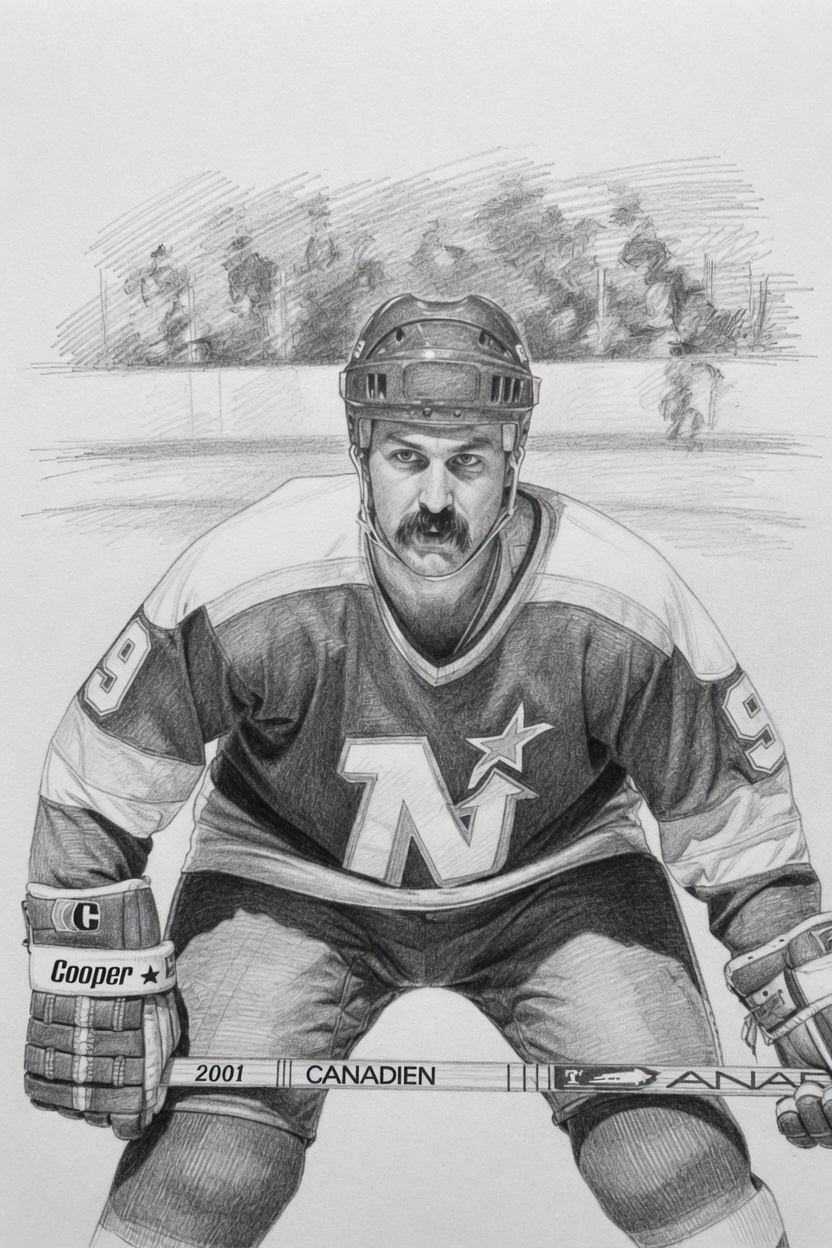
Maruk is the leading scorer in the history of the Cleveland Barons, with the princely total of 64 goals and 149 points in 156 games; he led the team in both categories both years, and he and MacAdam were the Barons’ only All-Star Game participants. When the Barons merged with the Minnesota North Stars for the 1978–79 season Maruk got all of two games in the Twin Cities before being traded for a first-round pick2. The Capitals won the trade, and any misery Maruk might have felt at being so quickly cast-off was probably not long-lived, for his personal success was close at hand, but team success definitely was not.
There is something of a chicken-and-an-egg question with young players in these situations. Do his teams lose because they tend to rely on players like Dennis Maruk, or do young players like Maruk learn bad habits by playing for losing teams? To hear Maruk tell it, decades later, his introduction to the NHL was essentially winning a contract by running fat veterans at training camp, then spending the regular season drinking every day with an occasional break to score a hat trick3, or in Cleveland not getting paid on time, whereupon the guys would go get wasted at the bar in the way you do when your job is about to go down the toilet, and then having to play two hours later anyway4. It was the ’70s, and the NHL could be like that then, but one gets the impression that playing in the California sun or an obviously-doomed Ohio suburb before 5,000 fans, then drinking with the happy opposition that probably beat you, did not form winning habits.
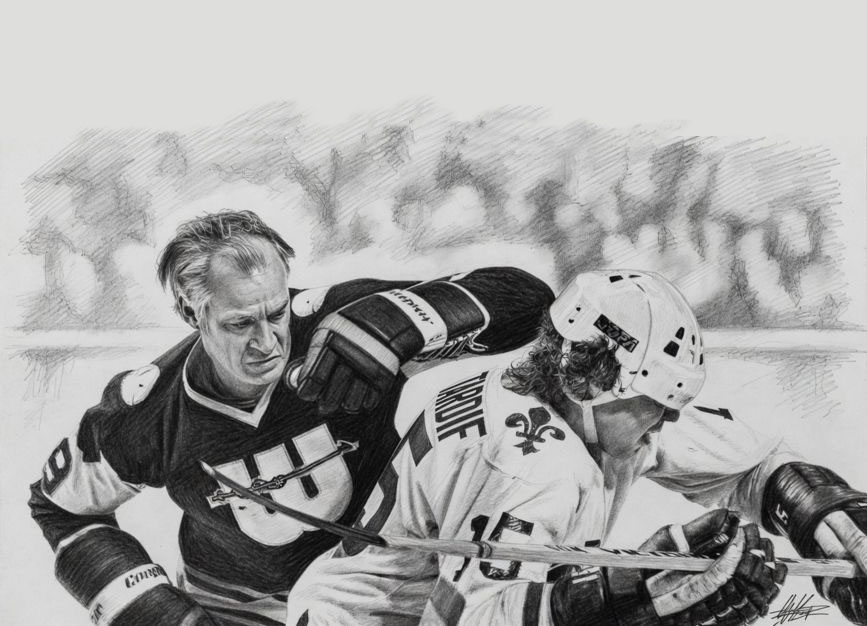
Maruk, though small, was gifted both physically and mentally. He skated hard, as little players have to, but he was also chippy: Hockeyfights.com tells us that he fought twelve times in his NHL career, including against Pat Boutette, the lightweight champion of the day, Mario Tremblay, who you might forget fought a lot long before he became a coach and started fighting his goalies, and legitimate light heavyweights John Gibson5, Glen Cochrane (twice!), and Darryl Sittler, who okay was not a heavyweight but was a lot bigger than Maruk and fought a fair bit if only to get Harold Ballard off his ass. He was willing to both pay the price and make others pay it. He was no Nail Yakupov, no source of complaint, entitlement, and wasted potential. Maruk griped sometimes, but never let that get in the way of doing the work. He had hockey skills all over. He could skate and shoot and play rough, but…

Enjoyed this? Subscriptions help support future pieces. Support the site