Skip to content

How Good Was the WHA: The Blueliners

It is unfair, and possibly actionable, to accuse me of quietly stealing article ideas from Twitter replies. Oh, no, I loudly and exuberantly steal ideas from Twitter replies; I dive on them with the frenzy of a pitbull given a steak. So when Andrew Cunningham replied to my first post on the WHA’s superstars suggesting that J. C. Tremblay was not really regarded as the WHA’s best defenseman at all, I at once saw “content.”

My opinion didn’t come from nowhere: Tremblay held the points record at the position and won two best-defenseman awards. But Mr. Cunningham suggested Barry Long, Kevin Morrison, Paul Shmyr, and Lars-Erik Sjöberg were better-regarded in their day than Tremblay. Sjöberg and Shmyr were each named defender of the year once, Long and Morrison were not. Tremblay and Morrison were at their best in the WHA’s earlier seasons; Sjöberg arrived and (apart from one fluke) Long peaked later, and Shmyr was outstanding throughout. Shmyr and Long had decent NHL careers apart from their WHA accomplishments, Tremblay was of course an All-Star, and Morrison and Sjöberg were in the NHL very briefly. Moreover, though Shmyr and Sjöberg were familiar names, Morrison I knew only from a few stories and Long not at all. They were all serious blueliners in the league and anybody who is quoting World Hockey Association facts from personal memory is a jewel to be cherished in 2026; I certainly couldn’t say he is right or wrong.

After all, such personal memories are the stuff history is made of. Statistics are great to fill in the gaps, but they don’t nearly tell everything. The World Hockey Association was, as we have now thoroughly established, major league hockey; yet it is major league hockey which is fading from memory without actually being nearly gone. Grabbing these stray 140-character thoughts, filling them with data, and transforming that into perspective is one of the great joys of life.

The World Hockey Association had more than its share of great characters and astonishing new talents, but day-to-day, most of its players were inevitably more like Barry Long. One of the two best hockey players of the era from Brantford, Ontario, Long put up with a typically protracted early-’70s minor league internship then spent five years in the NHL and five in the WHA. His first two NHL seasons were in Los Angeles, a mediocre team but one that did a decent job of defense-by-committee. Long, while not outstanding, contributed to what success they had. Jumping to the WHA, he had the misfortune of playing with the Edmonton Oilers when they were bad, putting up a frankly unspeakable -49 in 1975–76, worst in the league (second-, third-, and seventh-worst also being Oilers), one of the few worst marks in WHA history1. He was also -47 in his last fairly-full NHL season, though those Winnipeg Jets won nine games and it really wasn’t that bad for such a glue factory of a team. He had stats that stood out for good reasons, too: a 20-goal season and a 10-goal season, and his defensive reputation was solid. He was a member of the 1974 WHA Team Canada (though he did not play), appeared in four All-Star Games, and was twice a second-team All-Star.

Nicknamed “Marathon Man,” Long was known for four things: tirelessness, a big slap shot, blocking other people’s big slap shots, and skating like Bambi on ice. He retired due to a serious hand injury that doctors said was would risk amputation if he played on, but he was 33 by the end, on a lousy team, and minus a million; given the state of his hand it’s probably for the best nobody had to twist his arm to make him hang ’em up. His most notable achievement may be coaching the Winnipeg Jets to their best season ever: in 1984–85 the Marathon Man got a 43-27-10 season and one of two playoff series wins the NHL Jets ever had out of Dale Hawerchuk, Thomas Steen, Dave Babych, Paul MacLean, and 20-odd guys it’s better not to think about. The next year the Jets started 19-41-6; Long was fired and never coached again.

Here are Long’s career major league statistics, the WHA numbers are adjusted to match the NHL scoring level for that season as described earlier, which to remind you are indicated in italics.

Barry Long
Season Team League Age GP G A Pts
1972–73 Los Angeles NHL 24 70 2 13 15
1973–74 Los Angeles NHL 25 60 3 19 22
1974–75 Edmonton WHA 26 78 19 37 56
1975–76 Edmonton WHA 27 78 9 29 38
1976–77 Edmonton WHA 28 2 0 1 1
1976–77 Winnipeg WHA 28 71 8 34 42
1977–78 Winnipeg WHA 29 78 6 20 26
1978–79 Winnipeg WHA 30 80 5 34 39
1979–80 Detroit NHL 31 80 0 17 17
1980–81 Winnipeg NHL 32 65 6 17 23
1981–82 Winnipeg NHL 33 5 0 2 2

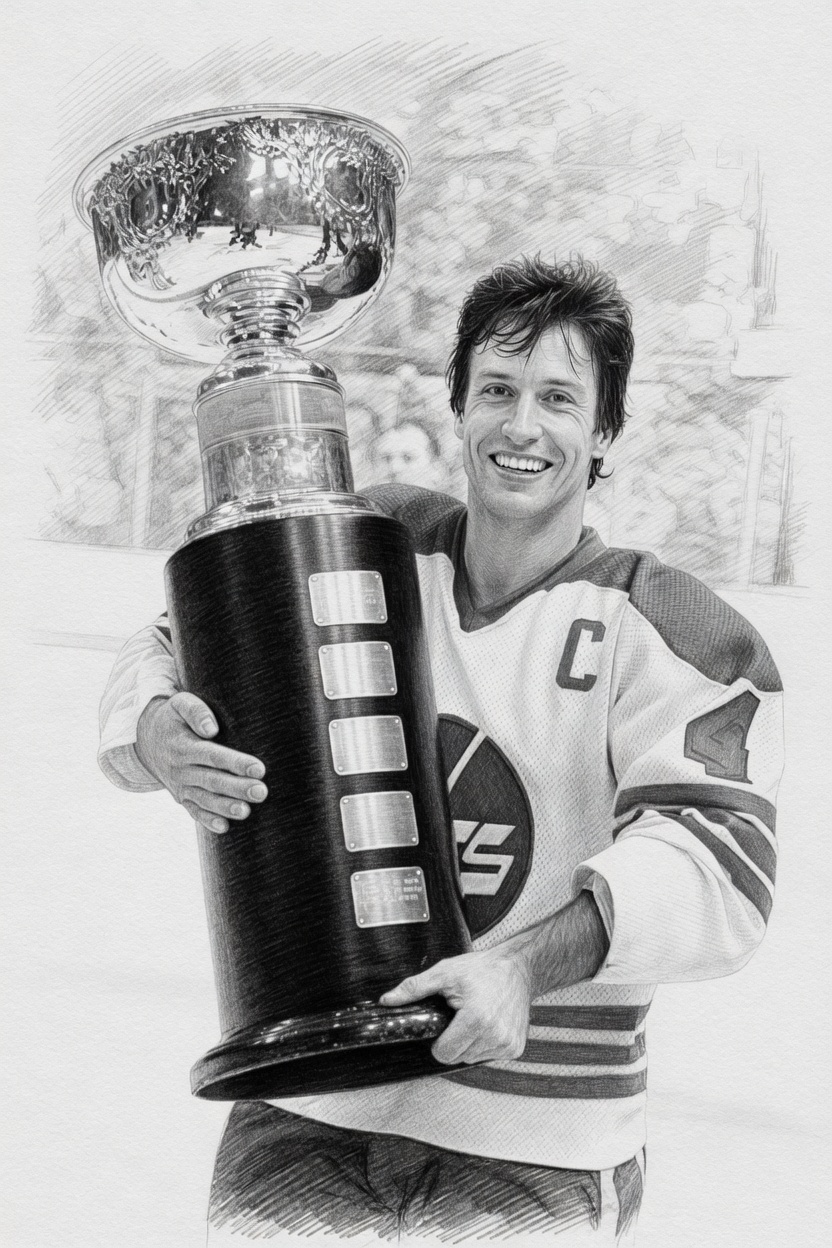
It is difficult to paint Long as the best WHA defenseman, but he was a more-than-decent player, a minor star. He was only really “physical enough,” and even as a WHA All-Star had a modest opinion of his own powers: he credited his minor league stint in Portland with teaching him how to actually carry the puck out of his own zone2. He was the best defenseman on the Oilers when they were awful, but not dramatically so; scoring 20 goals doubled both his next-best season and his career shooting percentage3. In Winnipeg he was seldom the best defenseman they had, though he was a regular and helped them win. His finest hour was probably with the 1978–79 Jets. Anders Hedberg and Ulf Nilsson were on Broadway, Bobby Hull and Sjöberg were hurt almost all year, but Long carried the mail on the blueline and seems to have been respectable, then when Sjöberg returned for the playoffs it was enough to claim the last WHA championship over some other Brantford kid and the Edmonton Oilers. Those Jets were the second-worst defensive team in the World Hockey Association, and it was the scoring depth that carried them through, but Long did his bit. He reminds me of Eric Brewer: bigger guy for the era but not particularly physical (while not exactly soft), could log serious minutes, offensive gifts not really as impactful as it seemed they ought to be, a poor number one D but a good number two or three, took a star turn here and there but mostly just played the game well. Brewer looked better on his feet though.
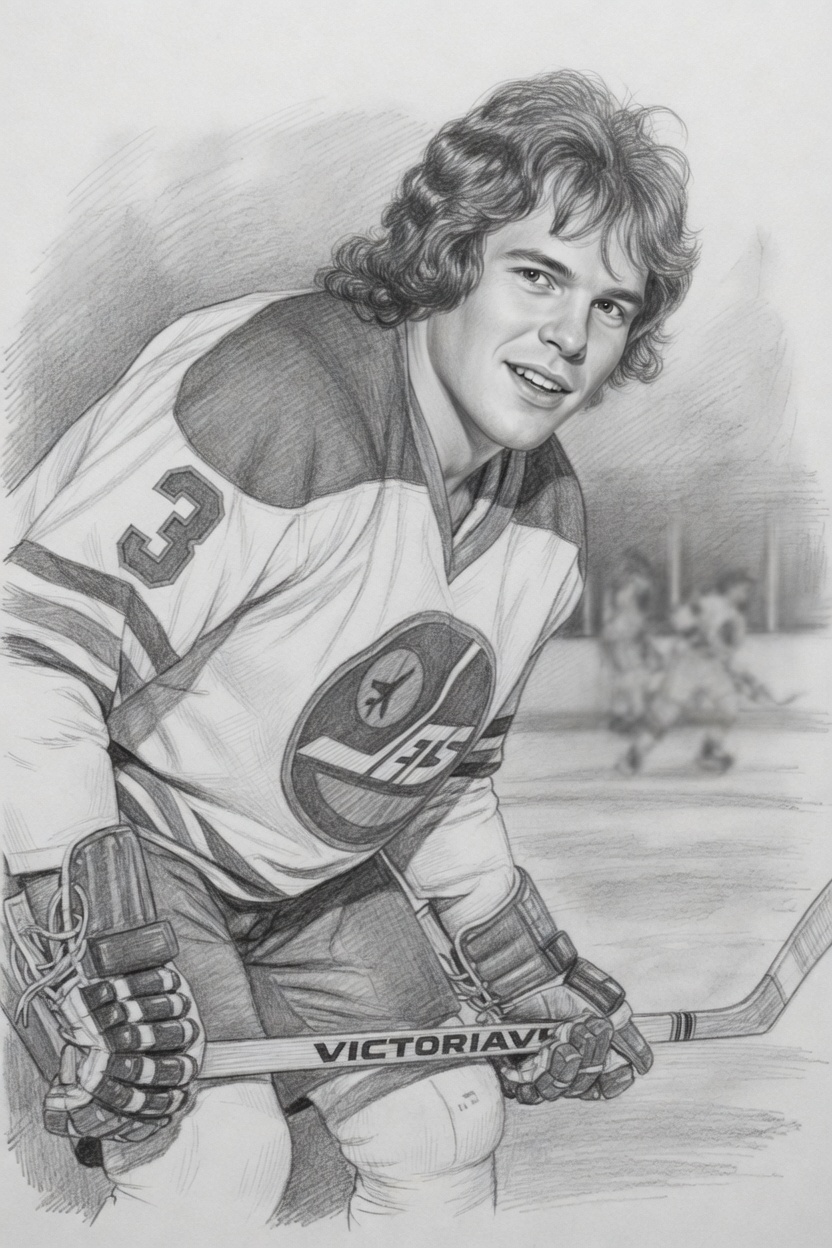
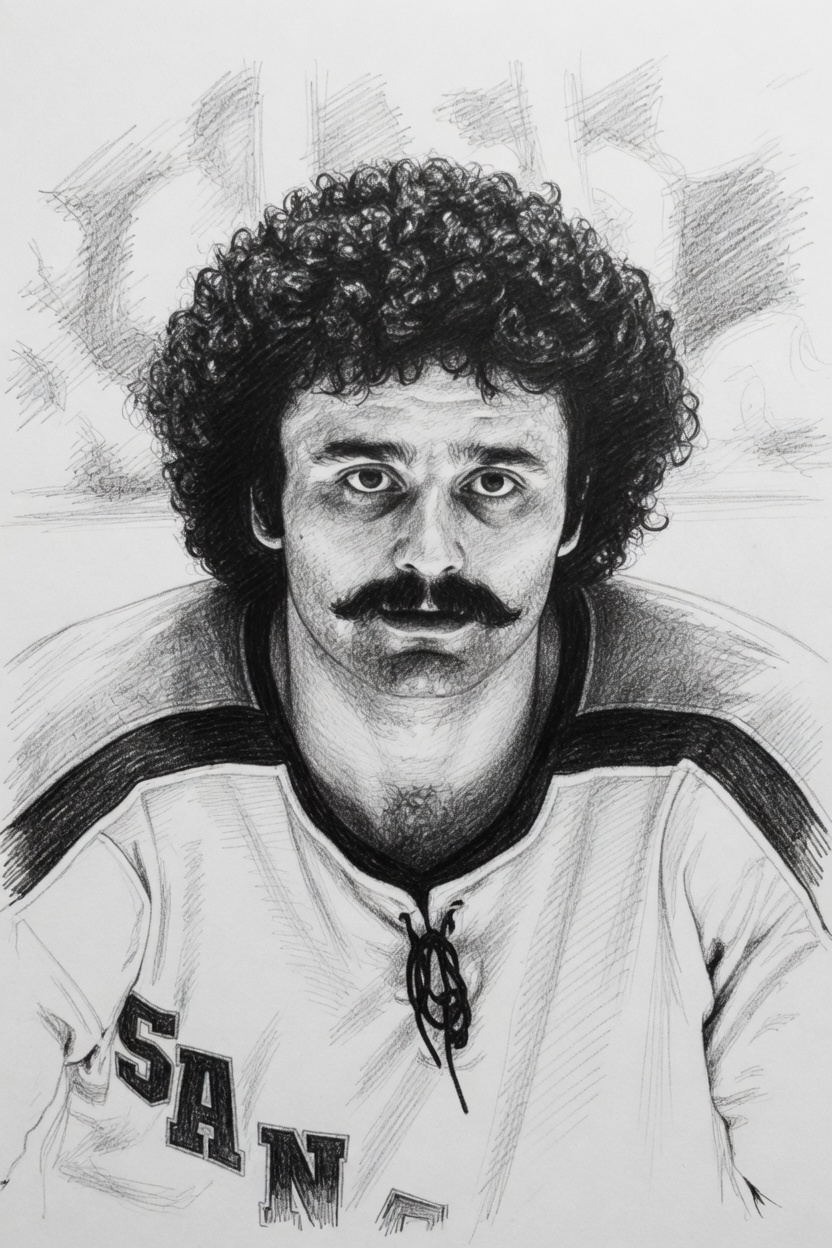
Kevin Morrison, on the other hand—if I wrote a book on the WHA, he’d be on the cover. There are two types of hockey fan: those who thought of one video when they read the name “Kevin Morrison” and those who did not, so if you are the second, you owe yourself a minute of Morrison fighting Steve Durbano from the penalty box. Morrison’s Indianapolis Racers against the Birmingham Bulls, the hockey bullies of all time who’d have beaten the Conn Smythe-Don Cherry-Bobby Clarke All-Stars hollow in the alley (and gotten killed on the ice). Steve Durbano, as I have had occasion to mention, was legitimately crazy, not hockey crazy. After, this being the Birmingham Bulls, a brawl in a brawl-filled game, Durbano was on his way to the sin bin when he took one of his turns and blew past the timekeeper’s bench to fight Morrison in the opposite penalty box. Durbano is skating on ice, Morrison is standing a step up on wood, everybody knows what’s about to happen including the bright-eyed linesman who leaps into the box to restrain Morrison before he does it; every single person in the rink knows except for Steve Durbano, who fights through the ref and the other lino only for Morrison, the instant Durbano is in reach, to drop the lunatic with a right cross.

Kevin Morrison might be the ideal WHA player. He scored in buckets, three 20-goal seasons and a 17. He had an incredible mustache and an even better afro. He had no meaningful NHL career. He set up Wayne Gretzky’s first pro goal. He didn’t fight often in the WHA, but when he did, people remembered it. Because this video is such a classic, and Morrison was a big fighter in the minors, people seem to assume he was an enforcer. Well, he had a 300-PIM season in the Eastern League but I think my grandma had a 300-PIM season in the Eastern League; it was how you said hello there. He was never top ten in penalty minutes in a WHA season and once the goon parade really started in 1975 he was no longer top 50. By the end he was being penalized about as often as Marc Tardif. Kevin Morrison was unquestionably a hockey player, if one who could crank Steve Durbano given a chance.

Kevin Morrison
Season Team League Age GP G A Pts
1973–74 New York/New Jersey WHA 24 78 21 38 59
1974–75 San Diego WHA 25 78 19 57 76
1975–76 San Diego WHA 26 80 20 39 59
1976–77 San Diego WHA 27 75 7 27 34
1977–78 Indianapolis WHA 28 75 14 34 48
1978–79 Indianapolis WHA 29 5 0 2 2
1978–79 Quebec WHA 29 27 2 5 7
1979–80 Colorado NHL 30 41 4 11 15

He was also, as a player, sadly short-lived, battling upper body injuries his entire career until he broke down. A lot of enforcers who start out on the blue line move to the wing as they climb the ladder; Morrison went the other way, starting as a left winger and becoming a defenseman late in his minor league career because it was good for his gifts, and from there he was the best defenseman on every team he played for except when Paul Shmyr was around. He was a square of a man, measured 5’11” or 6’0″ depending on how the afro was doing and more than two hundred pounds of Nova Scotia rock, who could hit, fight, and shoot; a player, in short, pretty much born to have shoulder problems. This is going to sound stupid, because it is, but the best comparison I can think of is Wendel Clark: Clark made the position move the other way but they had the same body shape, good fists, loved to shoot, slowed down their fighting as they got legitimately good (Morrison more than Clark), and got hurt. Clark was better, but in Morrison’s too-short prime, not all that much better.

Morrison is the all-time leading WHA scorer in defenseman goals, with 93, and fourth in points. In 1974–75, the year the WHA started counting, Morrison led all WHA defensemen in shots and was eleventh overall with 280. The next year he led all defensemen in shots again and was fifth overall; 334. In 1976–77 Morrison dropped to second among defensemen and 19th overall with 247 shots, but the shoulders were starting to get to him then and he led his whole lousy San Diego Mariners team. 206 shots in 1977–78 was again, second among defensemen and 20th overall, and afterwards he was hurt too often to play much. With 1,122 career WHA shots on goal, plus whatever he got in 1973–74 (and he scored 24 goals so let’s assume it was a bundle), Morrison must be the most-shooting defenseman in WHA history despite playing only 418 games. For sheer blueline production only J. C. Tremblay belongs in the argument with Morrison. Unlike Tremblay, Morrison was regarded as competent rather than exceptional defensively. Like Tremblay, Morrison was comfortable playing big minutes, though probably not as big. Unlike Tremblay, Morrison could skate. In hindsight he seems to have been a little underrated even at the time: one First-Team and one Second Team All-Star selection, two All-Star Games, no ’74 Summit Series; he was even left out of the All-Star Game the year he scored 24 goals. Skating aside, Barry Long looked really good in the uniform; Kevin Morrison looked like a friggin’ caveman, partied as hard as he played (and that was plenty hard), and drove a pink Cadillac while wearing a sleeveless suit. Long played in Edmonton and Winnipeg; Morrison played in Cherry Hill Arena, or San Diego trying to get Ray Kroc to pay his players in hamburger franchises, or Indianapolis the year they went broke. It is genuinely delightful that, though he still doesn’t get his due as a skill player, Morrison is well-remembered thanks to the loyalty of Atlantic Canada, his kayo of Durbano, and the Gretzky assist: he has given several interviews this century and comes off quite well-spoken4. André Lacroix, who seems to have had a good eye for talent, insisted Morrison was underrated. I agree with him.

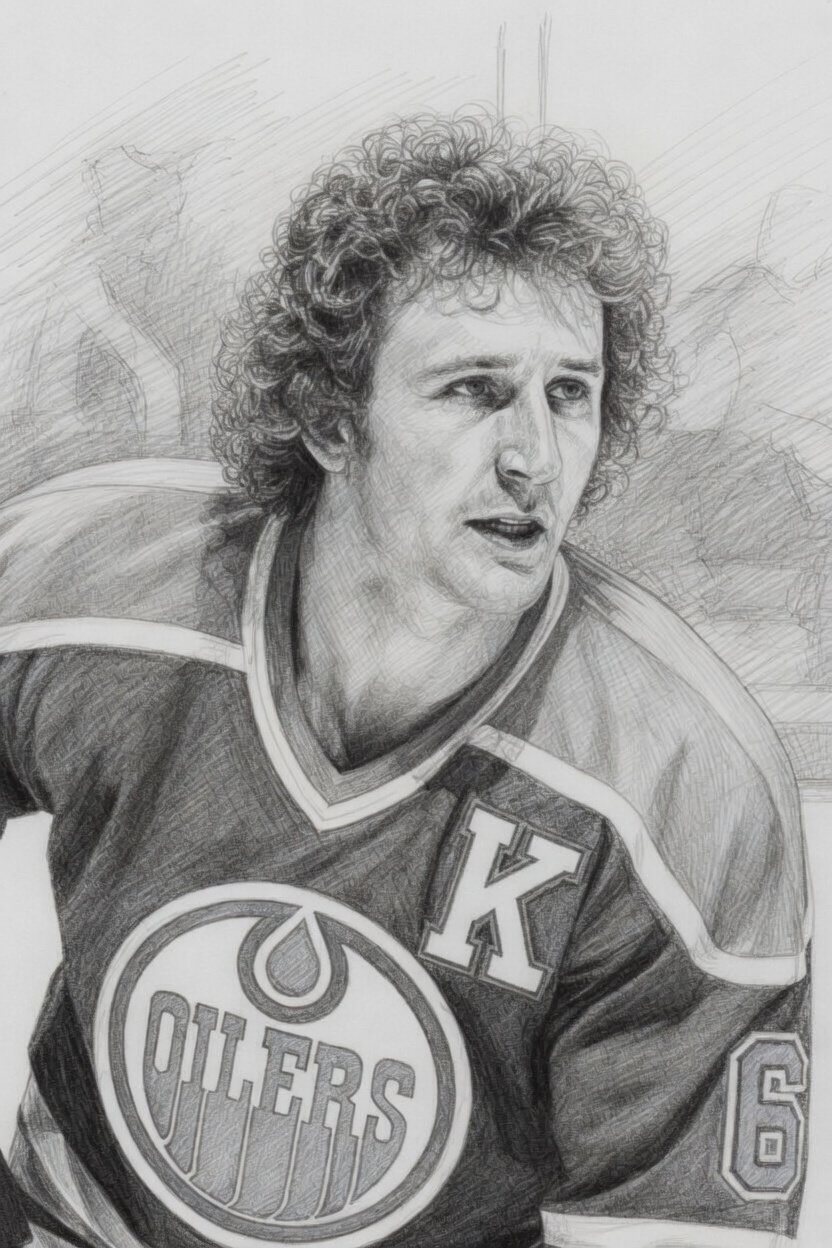
Paul Shmyr is remembered for two pieces of trivia: when he captained the Edmonton Oilers, he wore a Cyrillic K on his sweater rather than the usual C (though born in small-town Saskatchewan, Shmyr was of Ukrainian heritage5), and he somehow got along great with Charlie Finley, the owner of the California Golden Seals and one of the most difficult-to-deal-with owners in sports history6. He was also a genuinely outstanding WHA defenseman throughout the league’s history: three times a first-team All-Star and twice second-team, and a participant in every WHA All-Star Game except for 1978. He made WHA Team Canada for the 1974 Summit Series against the Soviets and was a late cut from the 1976 Canada Cup.

In an interview with Murray Greig, Shmyr treated his departure from the NHL rather casually; his investments were thriving and he was getting into big-time promotion in Vancouver, so why not move on?7 It’s the sort of thing a lot of players say after they wash out, but in Shmyr’s case it has a ring of truth. He was 36 years old after his final NHL season, on a Whalers team that despite an 18-year-old Ron Francis was going nowhere fast, and he was probably the Whalers’ second-best defenseman after Mark Howe though that wasn’t saying a lot8. He probably could have wrestled through another season for a team that finished 20 games below .500 and was only getting worse, but if he had another option he was smart to take it.

Paul Shmyr
Season Team League Age GP G A Pts
1968–69 Chicago NHL 23 3 1 0 1
1969–70 Chicago NHL 24 24 0 4 4
1970–71 Chicago NHL 25 57 1 12 13
1971–72 California NHL 26 69 6 21 27
1972–73 Cleveland WHA 27 73 5 39 44
1973–74 Cleveland WHA 28 78 11 27 38
1974–75 Cleveland WHA 29 49 6 13 19
1975–76 Cleveland WHA 30 70 5 40 45
1976–77 San Diego WHA 31 81 12 33 45
1977–78 Edmonton WHA 32 80 8 34 42
1978–79 Edmonton WHA 33 80 8 37 45
1979–80 Minnesota NHL 34 63 3 15 18
1980–81 Minnesota NHL 35 61 1 9 10
1981–82 Hartford NHL 36 66 1 11 12

For sustained excellence, Shmyr is probably the man to beat. He let his hair grow out a bit in the WHA but was otherwise an exception to the free-wheeling hard-partying hippie lifestyle that characterized so many players, though few of its very best ones. He was the tough, honest, blue-collar prairie boy through and through, hard-nosed, resilient, with no particular weaknesses in his game. As a pro, he captained in Cleveland, Edmonton, and Minnesota and Al Hamilton, who knew something of leadership and defense himself, called Shmyr “a terrific teammate” after his untimely death. Frankly it’s surprising how small he was, 5’11” wasn’t big even for the day, but people seemed hardly to notice. Until the injuries got to him he was good for a solid-as-clockwork 100 PIMs a year, neither seeking trouble nor avoiding it.

What stands out about Paul Shmyr is respect, both given and received. In his post-career interviews he went out of his way to say nice things about even some of his most miserable stops, and boy he had some stinkers. There’s an interesting story, and maybe it’s true and maybe it’s not: both Shmyr and André Lacroix played for the San Diego Mariners, owned by McDonald’s billionaire Ray Kroc. Lacroix, already established as the WHA’s best scoring centre, asked Buzzy Bavasi, who ran Kroc’s San Diego Padres and helped set up the hockey team, for a McDonald’s franchise. Bavasi turned Lacroix down flat; Reggie Jackson, he explained, hadn’t been able to get a McDonald’s franchise out of Ray Kroc, because Kroc did not mix business with sports9. When Shmyr joined San Diego he did business with Kroc’s son-in-law Ballard Smith, later president of the Padres, and Shmyr says that he was offered a McDonald’s franchise as part of his contract. Shmyr said no10.

In the NHL he wasn’t much of a scorer, but he didn’t get much of a chance, trying to break through past Pat Stapleton, Bill White, and Keith Magnusson on the Black Hawks when he was young, getting his first core run on the California Golden Seals (a hell of a place to make a living), and then returning to Minnesota and Hartford after the WHA folded, when he was slowing down. In the WHA he scored more but was never among the leading scoring blueliners. He was only twice in the top five, and both times were a tie. He was outscored by guys you’ve heard of and guys you haven’t; a useful contributor but he made his bones in his own zone. If there were few WHA players more like the WHA stereotype than Kevin Morrison, there were few less like it than Paul Shmyr.

Playing for Team Canada in 1974, Shmyr was one of the highlights of the WHA Canadian team in the first half of the series, putting on a solid defensive clinic. He was exposed more in the Moscow games on the big ice, and ran into trouble, but still emerged with his reputation improved. It got Shmyr a try-out for the full Canadian team in the 1976 Canada Cup, one of only three WHA players to get a look11 and while he was cut, that was an almost impossible blueline: Guy Lapointe, Bobby Orr, Denis Potvin, Larry Robinson, Serge Savard, Carol Vadnais, and Jimmy Watson. Myself, I’d take Shmyr over Watson, but Watson was bigger and a fair bit younger, and at least as good offensively; guy hardly played anyway. Canada allowed ten goals in seven games and it was only that many because Rogie Vachon had a couple rough nights in net that Canada won anyway12. No shame in not cracking that group.

One WHA defenseman who did play in the 1976 Canada Cup was Lars-Erik Sjöberg, one of the many Winnipeg Jets Swedes that made them the best team in the second half of the WHA’s history. Sjöberg was the Swedish captain and led them through a rough tournament while himself being overshadowed by a monster performance by Börje Salming. Nevertheless Sjöberg managed three assists (all first assists of Salming goals) and was not considered one of the reasons Sweden disappointed. It sums up Sjöberg in a way: leadership, quiet effectiveness, table-setting for better players, and consistency.

Lars-Erik Sjöberg
Season Team League Age GP G A Pts
1974–75 Winnipeg WHA 30 75 6 49 55
1975–76 Winnipeg WHA 31 81 5 33 38
1976–77 Winnipeg WHA 32 52 2 34 36
1977–78 Winnipeg WHA 33 78 9 33 42
1978–79 Winnipeg WHA 34 9 0 3 3
1979–80 Winnipeg NHL 35 79 7 27 34

Sjöberg is a difficult player to get a solid read on. He came to North America when he was already in his thirties, and lost pretty much a full season to injury in what was already a brief career. Interestingly, when he did play, his offense tracked very well with Shmyr’s season to season despite being a year older, and while a -33 in his only NHL season looks terrible, Sjöberg was only the third-worst defenseman on his team and was way ahead of, for example, Barry Long. He actually led the Jets’ blueline in even strength points, although Craig Norwich scored more points overall. That was a terrible team, and Sjöberg doesn’t exactly emerge with his halo shining more brightly because of it, but as age 35 seasons on cellar-dwellers go, it could have been a lot worse and suggested he possessed obvious good NHL skills, or had in his prime.

Two-thirds of Sjöberg’s pro career was in Sweden. Breaking in with Leksands as a teenager, playing a bit role as they finished second in the old Swedish first division, he spent a few years there before a spell at Djurgårdens. Two more seasons in Leksands followed, where he won a title and was named Swedish league MVP, followed by five years at Västra Frölunda where his team was runner-up for the second time. Swedish domestic hockey for this era is hard to figure13. Teams played about 21 games, and sometimes a few more in the playoffs. They had promotion and relegation but regarded parity as a Soviet plot; in 1966–67 Avesta BK went 1-20-0 with a -105 goal difference, and in 1971–72 Surahammars IF went 0-18-2 with a -113 goal difference. There were usually a couple first-division teams with one win all season; strong teams played so few competitive games that you probably had to be there to know who was good.

The people who were there liked Lars-Erik Sjöberg a lot. His stats are nothing special but who even knows what that means? What we know is that at age 23 Sjöberg played every game for Sweden at the 1968 Grenoble Olympics; he recorded no points but Sweden finished a credible fourth behind the big favourites and had some good results. Fourth place at the 1972 Olympics was, by contrast, slightly disappointing: Canada boycotted the tournament and Sweden managed to tie the Soviet Union; they would have won silver if they hadn’t lost to archrivals Finland on the final day. Sjöberg was again omnipresent, recording a goal and an assist. He medalled four times at the World Championships and was named best defenseman in 1974, a tournament that the NHL seriously scouted as the European era began to take off. The Minnesota North Stars held Sjöberg’s rights and were said to be interested, but couldn’t come to terms with his size: he was a fairly solid 5’8″, but 5’8″ nevertheless, he’d played hurt in the tournament and the North Stars were sure more was coming.

Winnipeg’s man in Stockholm was an orthopedic surgeon named Dr. Jerry Wilson. Wilson had played hockey, including three games with the Montreal Canadiens in the 1950s, but when knee and shoulder injuries cut his career short he got his medical degree at the University of Manitoba, and later went to Sweden on a research grant. Though not officially representing the Jets he had contacts there, and it just so happened that one of his research assistants, or subjects, was a highly-rated Swedish winger by the name of Anders Hedberg. Attending some of Hedberg’s games with Djurgårdens, Wilson was quickly convinced the best Swedish league players were up to major league standards, and when the Jets asked Wilson if he happened to have seen any hockey players while he was over there, Hedberg gave Wilson the names of AIK’s Ulf Nilsson and Lars-Erik Sjöberg. The Jets were lucky: Hedberg would have preferred to play in the NHL if anywhere, but he and Wilson hit it off. Nilsson missed the 1974 world championships with a drug suspension and thus missed his chance to impress, and Sjöberg was both banged up and a small 30-year-old. So the Jets got all three14.

The Jets’ Swedes were an immediate sensation. Bobby Hull, Nilsson, and Hedberg finished second, fourth, and seventh in WHA scoring in the Swedes’ first season in North America. Paired mostly with Mike Ford, an ordinary talent, Sjöberg had 60 points, compared to 113 points over his entire twelve-season Swedish league career, tying for the fourth-highest scoring defenseman on the circuit with future teammate Barry Long. Somehow, the Jets missed the playoffs: apart from Hull, the Swedes, and a reasonably decent if erratic goalie in Joe Daley, the Jets really didn’t have much else. The next year Winnipeg found and developed some depth, the Hot Line was just as good if not better, and they won their first WHA championship.

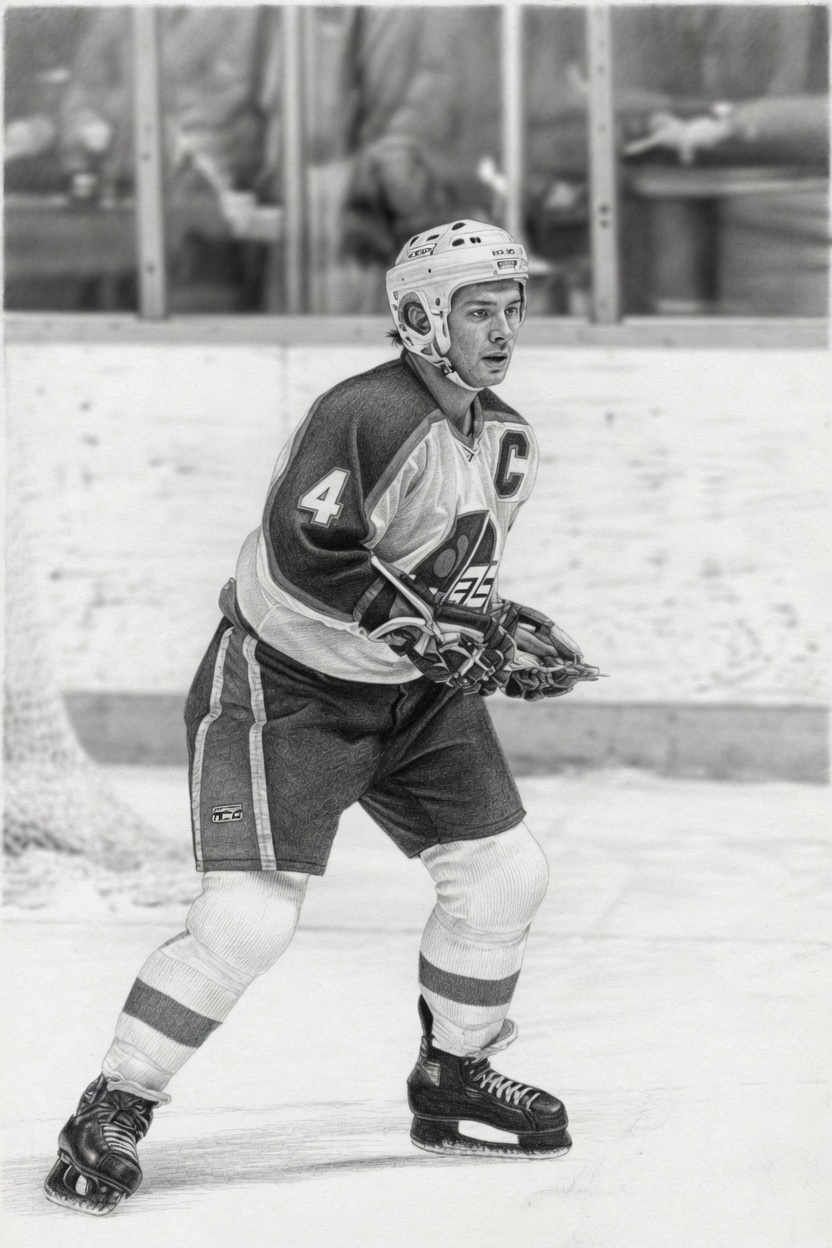
Production-wise, Sjöberg’s first WHA season was by far his best. It’s not to be wondered at: he was six years older than Nilsson and seven years older than Hedberg, by the time he reached Manitoba Sjöberg’s physical gifts were already declining. He was a superb skater until the very end of his career, not merely quick but agile and canny, and his hockey IQ was enormous. Like many small defensemen, he hit surprisingly hard and knew just how to get leverage. His passing was excellent, though his shot was not, and he was the very beau ideal of the man to start the torrential rush that made the WHA Jets famous. The North Stars, and many scouts, had been convinced Sjöberg would get hurt in North America: eventually they were right, two of his six seasons in North America were seriously affected by injury, but when healthy he was worth it. It makes Sjöberg sound like the Swedish J. C. Tremblay, but Sjöberg’s superior skating and hitting meant he actually played very differently. Sjöberg was electric and recognizable; think of Brian Rafalski. Tremblay you couldn’t always figure out how he did it, you just knew that he did. Tremblay was even older and regularly outscored Sjöberg when they were in the same league; Sjöberg was a more natural leader, the classic “captain type,” who got the “C” along with his luggage at Winnipeg International Airport. Sjöberg and Houston’s Ted Taylor were the only men to captain multiple WHA champions, and only Sjöberg captained three.

Was Sjöberg the best defenseman in WHA history? Maybe he could have been if he’d come to North America when he was 25 instead of 30; give him Paul Shmyr’s games and he’d have been a monster. Then again, he’d already proved himself against top-flight international competition, he didn’t need the WHA to show him what really good forwards looked like, and the grind of long, physical seasons did wear him down. Sjöberg was probably better than Shmyr, who was very good indeed, but a bit less durable. He was considerably better defensively than Morrison, considerably worse offensively, did more things, and lasted longer. Everything Sjöberg did, J. C. Tremblay did better, except skate. Everything Barry Long did, Lars-Erik Sjöberg did better, except shoot and be tall.

So who was the WHA’s best defenseman? I’m not sure, I wasn’t there. Twist my arm and I stick with Tremblay, but boy there were some gems.

  1. -49 is the fourth-worst season of which we have a record, the worst with an exclamation mark being Paul Curtis on -63 in 1974–75. However, plus/minus is not available for the first two seasons and I bet somebody was below -49 in at least one.
  2. Murray Greig, Big Bucks & Blue Pucks (Toronto: Macmillan, 1997), 49.
  3. His teammate Ken Baird is listed as a defenseman that season in the encyclopedias and scored 30, but Baird was also a sometimes left winger, probably because he couldn’t check his coat; we’ll never get a breakdown of how many games Baird spent where at this time of life.
  4. There is a story in these interviews which sounds too good to be true about an underage Gretzky drinking Morrison’s Alexander Keith’s; I swear I have read it before in an Oilers book and it was certainly before these articles were published.
  5. Shmyr wore a “C” rather than a “K” when he captained anywhere else. It is difficult not to see the hand of marketing here: sincere though Shmyr must have been, the Edmonton area has long had a large Ukrainian population and it would have done ticket sales no harm to call attention to a co-ethnic leading the team.
  6. Greig, 132.
  7. Greig, 134.
  8. Howe was traded to Philadelphia for Ken Linseman and a basketful of garbage that summer.
  9. André Lacroix, After the Second Snowfall (self-published: Amazon, 2020), 166–167.
  10. Ed Willes, The Rebel League: The Short and Unruly Life of the World Hockey Association (Toronto: McClelland & Stewart, 2004), 116.
  11. With Bobby Hull and, technically, Marc Tardif, whose concussion prevented him from actually taking part.
  12. Vachon had a very good tournament overall, of course.
  13. Sjöberg left for North America just before the Elitserien put Swedish hockey on the more professional footing it maintains today.
  14. Willes, 175–77.

Leave a Reply

Your email address will not be published. Required fields are marked *