Skip to content

How Good Were the Hanson Brothers?

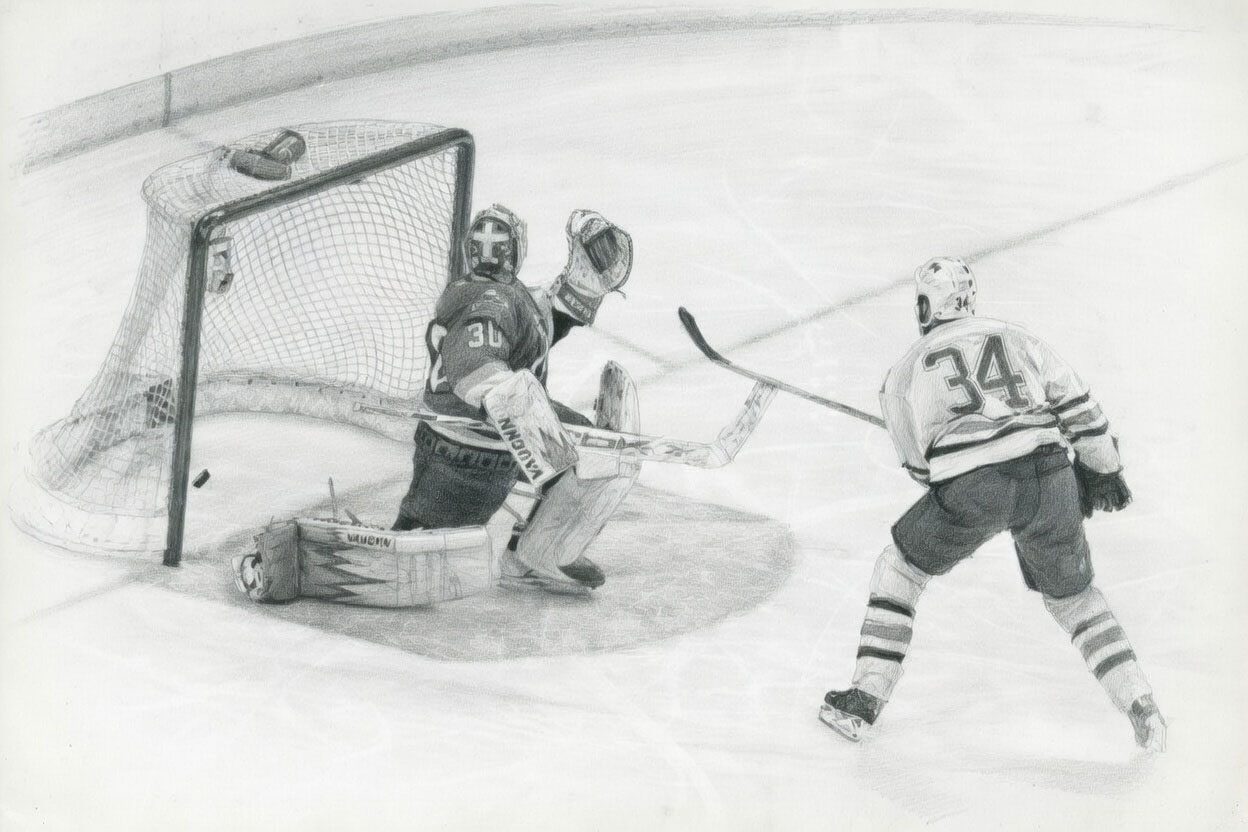
My favourite minor scene in Slap Shot comes right before that guy bellowing “you goons, you can’t skate” throws his keys. The three bespectacled ruffians score a fine team goal, the guy beans Jeff, and more movie magic happens as the Hanson brothers climb into the stands to beat the tar out of every opposing fan who crosses their fists, including coincidentally the right one.

I like it because Slap Shot is fictional[citation needed] but the cast was as legitimate as some of the stories. Michael Ontkean looks credible as the skilled Ned Braden because he was a quality NCAA scorer who could have played senior hockey if he’d wanted to (glad though we Twin Peaks fans are that he didn’t). The camera sensibly doesn’t show the other real actors trying anything more ambitious than skating in circles or dumping the puck in, but between Ontkean, the Hansons, and the famous parade of goons in the final game we see guys who could have been, and often were, paid to play hockey in real life, firing gloves off and having stick fights. A movie of minor-leaguers who could play pretty well playing pretty well is not interesting; a movie of minor-leaguers who could play pretty well hammering a drunk guy into the boards until he wets himself definitely is, but just once in a while the movie calls attention to the fact that these players are not actually jokes. The Hansons’ goal is the best-looking hockey play in the movie, which is what you’d expect because they were the best hockey players.

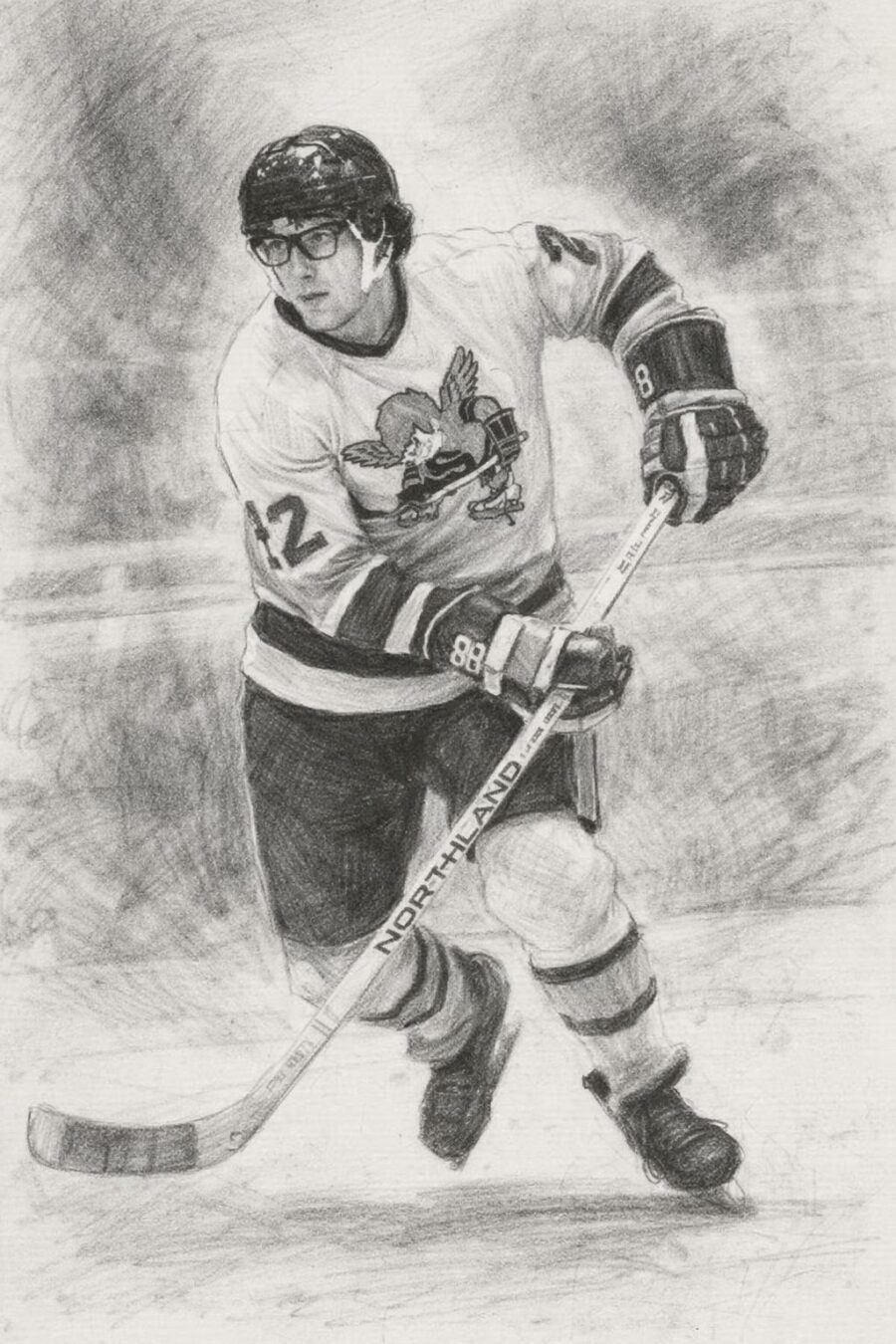
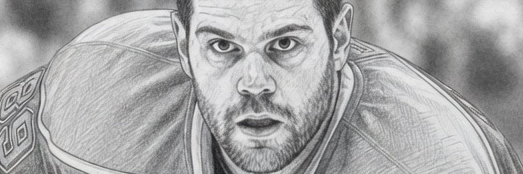
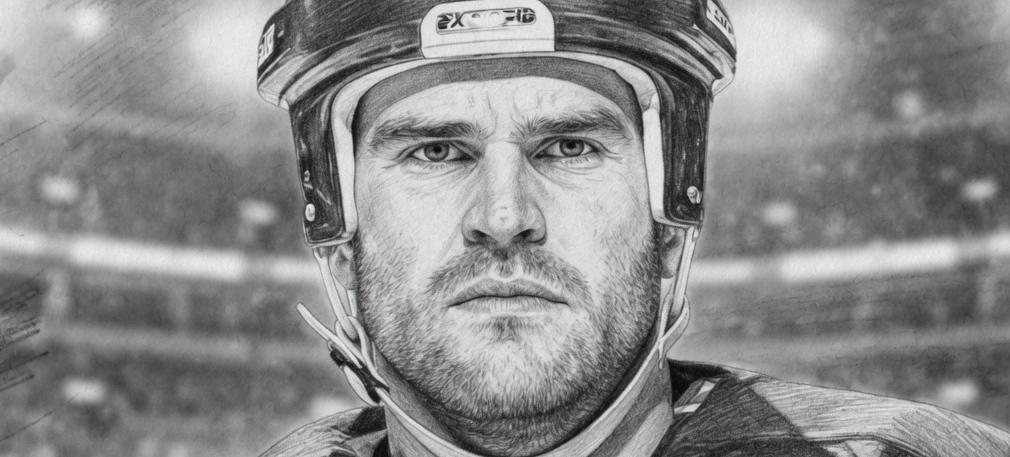
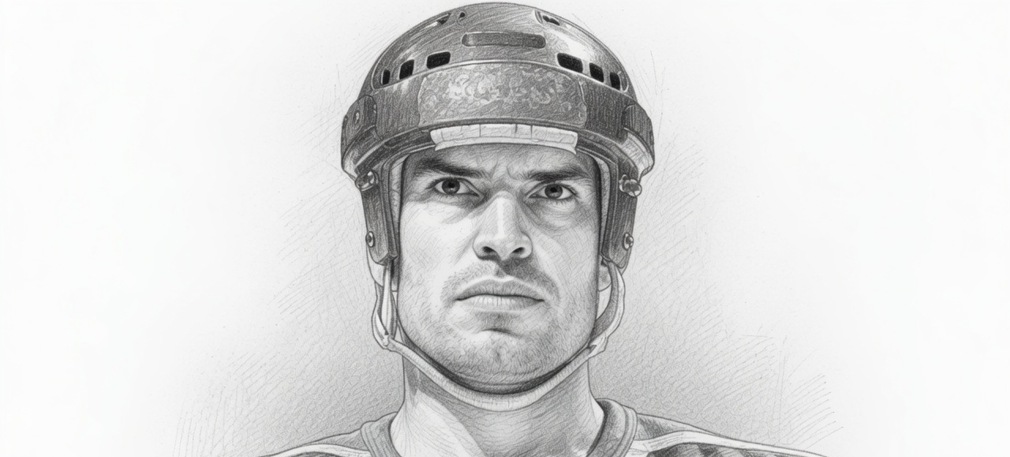
The Hanson Brothers, registered trademark, are Steve Carlson, Jeff Carlson, and Dave Hanson, who replaced Jack Carlson in the movie because Jack missed filming to play major league hockey. Slap Shot gave them a stylized but reasonable portrayal. Slap Shot is the all-American hockey movie, with its dying mill town, its fashion shows, and its empty old rinks, and all four “Hanson brothers” are American. Jack Carlson and Dave Hanson were definitely goons, but Steve Carlson was a skill player, and Jeff was a well-rounded minor pro. The fictional Hanson Brothers were never more at home than punching people in half-empty arenas; the real foursome, like in that one scene, showed spots of ability. All got at least a cup of coffee in the big leagues and three of the four had a sort of career. Heck with it, it’s April 1, let’s capture the spirit of the thing. How good were the Hanson Brothers?

It’s not easy to disentangle legend from history when talking about the World Hockey Association, or Slap Shot for that matter, but the most credible version of the Hanson story is this: the first incarnation of the WHA’s Minnesota Fighting Saints1 was largely a salon of courteous old Golden Gophers, twenty Ned Bradens coached by Harry Neale rather than Reg Dunlop. They finished a game above .500 in the WHA’s 1972–73 inaugural season, went out in the playoffs with a whimper, and nobody much cared. Ted Hampson, an old elegant defenseman for six NHL teams, won the most gentlemanly player award. But the GM, Glen Sonmor, was an old goon and when the Pacifist Saints didn’t catch on in the Twin Cities nobody had to twist his arm to make him add muscle.

Starting in 1973–74 the Fighting Saints emphasized the first word more than the second. Established tough guys like Gord Gallant and John Arbour turned up, while new scoring star Mike “Shakey” Walton was very happy to fight himself. The most famous fighters of all arrived by fluke. As a public relations stunt, the Fighting Saints held open tryouts before the season. Such tryouts happen today, you pay some nominal fee, they give you a jersey, you scrimmage with some plumbers while the coaches scroll Tik-Tok, and then you go home. Like these, Minnesota’s camp was a PR stunt, but as happens just often enough to make the stunt work, a player somehow caught the team’s eye. In this case three players wearing huge, black-rimmed safety glasses (yes, those are authentic, until as established pros the Carlsons could afford contacts). Jack Carlson had a small reputation in Minnesota junior hockey, Steve and Jeff were totally unknown, but the unit punched its way through the open tryout hard enough that they got an invite to an expanded camp for legitimate pro prospects. They punched their way through that too, then punched their way through the main team training camp, and while they were sent to senior hockey for some seasoning, the Fighting Saints knew they had something2.

In 1974–75 Jack Carlson, aged 21, got his first call-up to the now very aptly-named Fighting Saints. The WHA’s “Killer” Carlson was not a 5’10” nebbish-looking actor like Slap Shot‘s Jerry Houser, but a 6’3″, 200-pound slab of muscle whose real nickname, “The Big Bopper,” might have been even better than fiction. Besides him Minnesota had Arbour, Gallant3, Ron Busniuk, Bill Butters, and Curt Brackenbury putting on the foil (in Brackenbury’s case, literally until the WHA brought in a rule against it). Bill Goldthorpe, the real Ogie Ogilthorpe, joined for the playoffs and picked up 25 PIMs in three games. Butters, Brackenbury, and Carlson made up the “BBC Line,” sent out for the playoffs to jump the gentlemanly Larry Pleau’s New England Whalers scoring line; the goons won the brawl but lost the game and the series. The BBC Line stayed together to the tune of 613 combined penalty minutes in 176 games in 1975–76, then the Fighting Saints missed one payroll too many and folded. It was the ’70s.

A funny thing happened on the way to infamy. Brackenbury was a cementhead, with some offensive touch for his role but an overall minus. Butters could work his own zone a bit but really wasn’t a lot better, but Jack Carlson could kinda play. He picked up 36 WHA goals and 87 points in 272 games, and did it respectably: averaging 1.28 shots per game and a 10.4% shooting percentage despite seeing zero power play time and usually going out with the grinders. His best major league year was with the 1977–78 New England Whalers. It was a good fit for Carlson, the Whalers were as tough as anybody but not a team of goons, and Jack chipped in nine goals and 29 points with a +9 in 67 games of fourth-line duty. In the playoffs he was a scratch nearly as often as not but managed a couple points and a +4 that was one off the team lead. He was still one of the younger regulars on the team, the same age as Marty Howe, but when he wasn’t called on to fight Carlson was already a useful depth player. After that his back started to flare up badly, leading to spinal fusion surgery that took him out for the 1979–80 season, and he was never quite the same afterwards but had proven some quality.
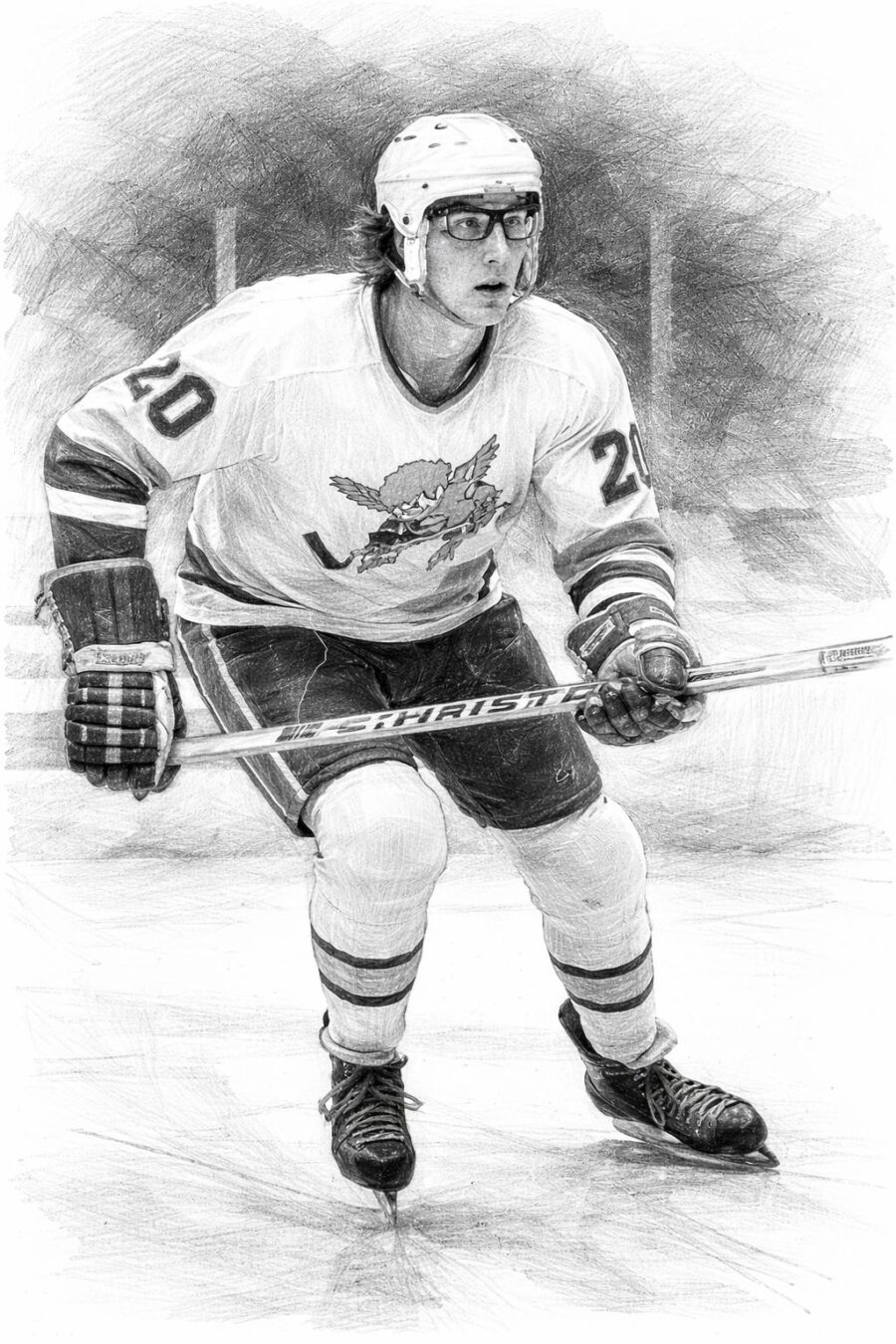
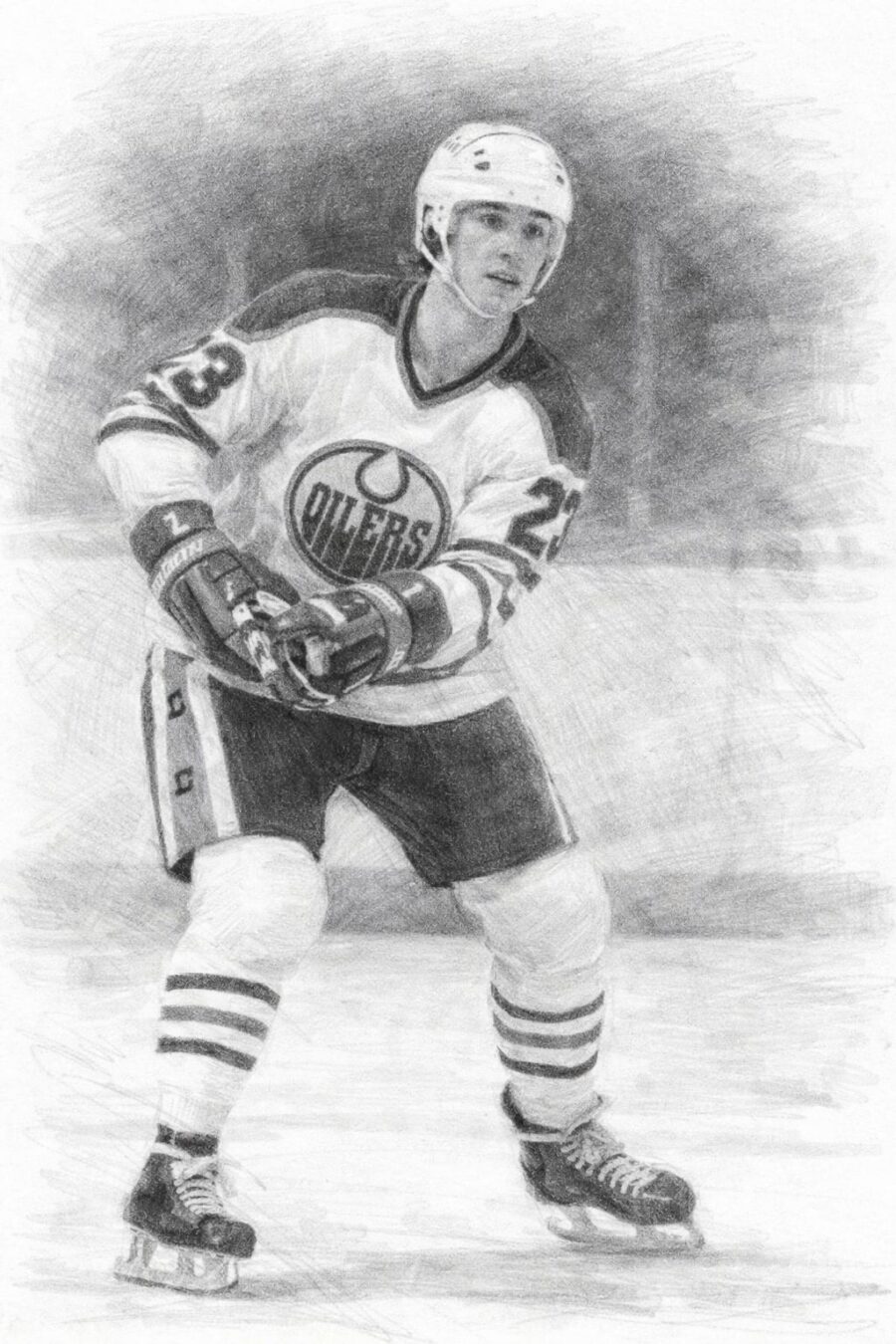
A lot of goons have That One Season where they get a bit too much ice time, shoot 20% or something way above their real level, score 15 goals, and convince everybody (mostly themselves) that they’re secretly power forwards. Think Tie Domi in the early 2000s, Georges Laraque in 2000–01, Dave Schultz in 1973–74. For every Chris Simon, a goon who low-key could play some hockey, there are five Bob Proberts who nearly scored 30 once and wasted a decade of the Detroit Dead Things’ time trying to do it again. Jack Carlson never had that outlier season. However, he hung around, with steady sort-of performance that marked him out from the Brackenburys and the Goldthorpes. Always a few more goals than you’d think, usually a better plus-minus than the other plugs. He made it to the NHL despite his back and the usual concussion trouble. The 1980–82 North Stars were a decent team and Carlson’s numbers were the worst of their regular wingers, but by no means embarrassing, and he got some power play time. Carlson then went to St. Louis in the waiver draft, where on a lousy team he seems to have fought less and was a somewhat useful depth guy. Had he stayed healthy, Jack Carlson would have had a decent career; as it was he played 272 games in the WHA and 232 in the NHL. There are four types of enforcer: enforcers who can’t play at all, enforcers who don’t hurt their teams, good players who can fight, and Gordie Howe. Jack Carlson was in the second category, a reasonable depth player for the era.

By reputation, Jack’s younger brother Steve was the skilled one of the three. Steve was tough but without big penalty minute totals and made his living playing a game that was recognizably ice hockey. Unfortunately his skill was AAA quality. A lanky guy, who never seemed to quite eat enough to pack his 6’3″ frame, he stands out in pictures of the Carlsons like Ned Braden on the Charlestown Chiefs. He stands out, too, on the scoring record of the 1974–75 Johnstown Jets that inspired them: Steve led the team by 24 points as a 19-year-old, and he and his brother Jack were the only ones at the point-per-game mark on a team that, in good movie style, finished middle-of-the-pack in the regular season then won the championship. Steve’s scoring was his primary contribution but his truculence helped turn the Jets season around when, with brother Jeff and defenseman Guido Tenesi, he led a charge into the stands in Utica to fight a group of abusive fans (an incident that made its way to the screen)4.

The old NAHL was a poor league, but the Jets had a few players: apart from the Carlsons and Dave Hanson the success stories were goalie Jean-Louis Levasseur, who “everyone knows” inspired Denis Lemieux in Slap Shot and played 86 major league games, and defenseman Pat Westrum, who squeezed out 237 WHA games as a third-pairing sort on fighting teams because he was tough but spent less time in the box than his partner so you could put him on the penalty kill5. None of them were great, and the first indications were that Steve was a notch above that level.

He was, but only one notch when he had to be two. Steve’s career major league year was 1978–79 with the WHA Edmonton Oilers, scoring 18 goals and 40 points, but with a shooting percentage over 25% it was a fluke and he never approached that standard again. The 1979–80 Los Angeles Kings had a great first line and almost nothing else, so they gave Steve a good look. With 21 points and a -7 in 52 games, Carlson was by no means the worst of the bunch, but even that 21 points flattered him (he took the fewest shots of any Kings forward who played at least 41 games) and nobody saw anything to get excited about. He spent the rest of his career in the AHL and CHL, where he provided good second-line scoring. A few NHL-level talents went by Steve’s Baltimore Skipjacks over the waning years of his career; Carlson fell into the minor-league pattern of ceding ice time to the real pro prospects while playing out of love and hoping for a break. He played with the Skipjacks until 1987, sliding down the depth chart as he got old6. His last year was alongside Alain Lemieux, who wore #33 presumably because he was half the player his brother was: the second-best Lemieux brother had 97 points at age 25, the second-best Carlson had 25 points at age 31. I don’t believe that Steve Carlson, the “skilled” brother, was even as talented as Jack: Steve took fewer shots than Jack did and based on anecdata appears to have had “better” ice time throughout his career. Steve was healthier and had one visually impressive season because of better luck, that’s all. Neither was at all bad. NHL teams have used much worse players than Steve Carlson for full seasons; usually, ironically enough, inspired by Slap Shot.

While Jeff Carlson was undoubtedly the worst player of the bunch, his movie fame probably suggests a different player than reality. His limited skills got him into all of seven major league games, which even in the most-diluted talent era in hockey history is seven more games than you or I played. His ten-season pro career was otherwise entirely in the minors, usually the low minors, with no sign he deserved much better. He was, then, the most Hanson-esque of the Carlsons, but at his level he was a contributor. For the 1977–78 Phoenix Roadrunners of the Pacific Hockey League, Jeff was fourth in team scoring and earned a look from the AHL’s Springfield Indians. Moving to the IHL after the PHL folded, he was a competent second/third-line winger with credible and consistent scoring numbers, and while his PIMs were always high they never led. This was when the IHL was trying to shake off the label of “low minors,” but Jeff Carlson played with very few future major leaguers and never obviously outperformed any; while “a serviceable minor-league power forward who made the team better” is all he ever was, he was at least that. He was a better player than Bill Goldthorpe, but a worse fighter. He was a better player than Ned Dowd, the genteel McGill graduate who inspired his sister to write Slap Shot. He was probably not as good as Curt Brackenbury, and definitely wasn’t as good as Connie Madigan, the famous “Mad Dog Madison” of the film who would have played 500 NHL games if he’d been ten years younger. Not a big-league player, really, but his game rather than his fists did the talking at the level he was qualified for.

That leaves Dave Hanson, the accidental brother who gave them their name and appeared in the movie when Jack Carlson was busy playing hockey. Like Jack, Hanson was definitely an enforcer, and unlike the Carlsons, Hanson was a defenseman. He also averaged half a point per game in the WHA, which was not at all bad even for the league and the era. Hanson played two major league seasons as nearly a full-time player, 1977–78 and 1978–79, both in Birmingham, and both times he was statistically close enough to third in points-per-game on his team by a defenseman. The first year his +/- was well above the team median, the second year well below, so call that a wash. He also averaged 4.83 penalty minutes a game, which might say more about how he played. We euphemistically call players who show up on the stats sheet for all sorts of reasons “high-event.” Dave Hanson was a great high-event player.

This makes it surprisingly difficult to assess Hanson’s career. Like the Carlson Brothers, Hanson came up via the Johnstown Jets to the Minnesota Fighting Saints, with plenty of minor-league stops along the way; while never Bobby Orr he was consistent with both stick and fist, seemingly on the second pairing of every team at every level, one of those Best Supporting Actor types. He saw eight games over two seasons with the Folding Saints before they did their thing and Hanson crawled from the wreckage to play in for one game with the New England Whalers and spell with their minor league partners in Rhode Island.

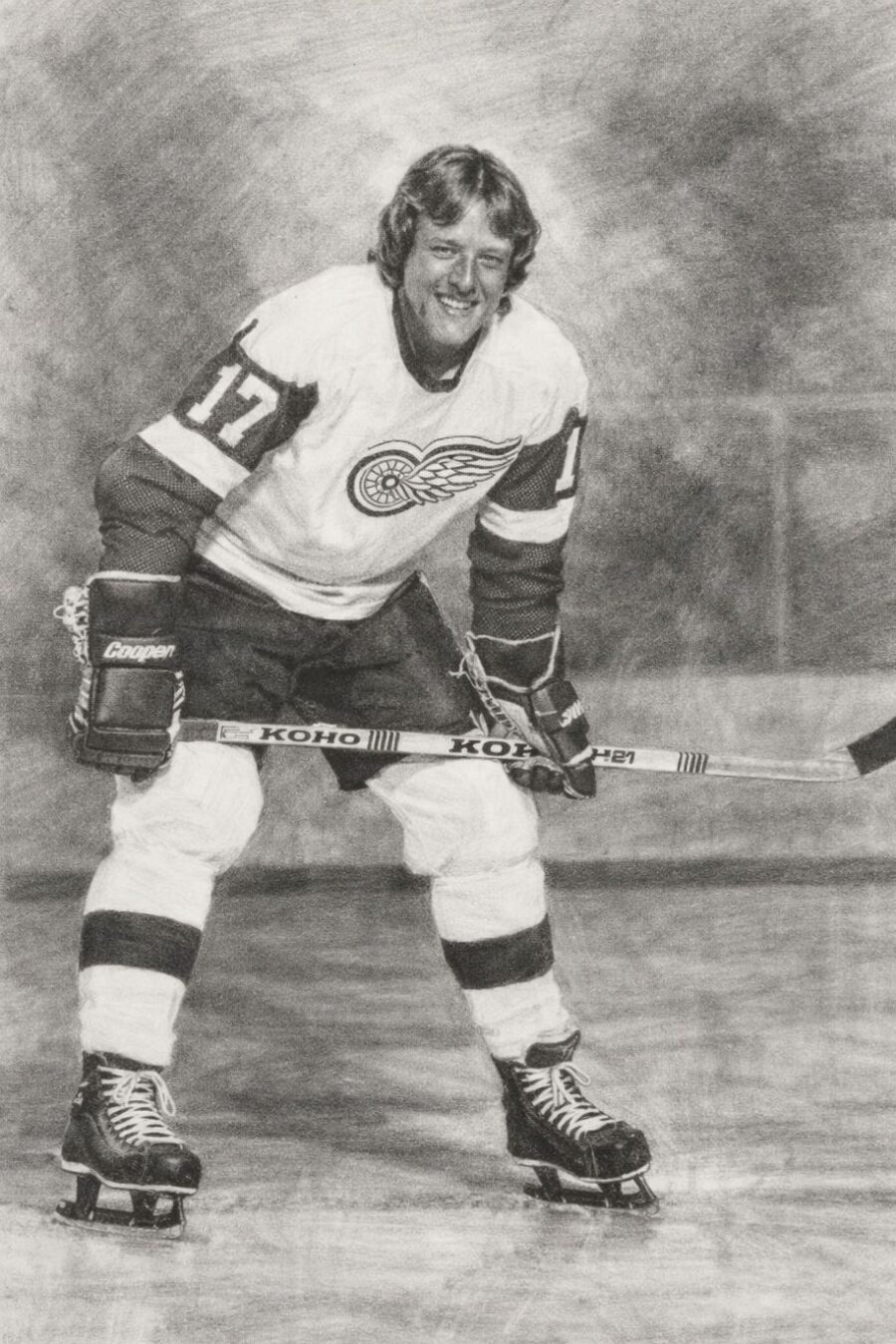
1977–78 was a strange year for Hanson, showing at once why he didn’t stick in the NHL and why he might have. He signed first with the Detroit Red Wings, where he played eleven games with zero points and a -1. Worse, he was pointless in 15 with Detroit’s Central Hockey League team, a team where the real defensive prospects were all managing to put up points and Hanson was not. It was a failed audition; the Red Wings sent Hanson back to the WHA. Specifically, to the Birmingham Bulls, the deadliest killing team that ever was.

Birmingham’s head coach and GM was Glen Sonmor, the man who built the Brawling Saints. For a man to assemble one such team might be circumstance, but two is a pattern, and Sonmor was exactly the sort of coach you’d expect for such a collection. Just one story: when the Birmingham Bulls faced the Winnipeg Jets in the first round of the 1978 playoffs it was already news that Anders Hedberg and Ulf Nilsson would be leaving the Jets to join the New York Rangers after the season. Winnipeg euthanized the Birmingham pitbull in an eventful but non-competitive five games, after which Sonmor called Hedberg and Nilsson “not only great hockey players, but smart. Smart because they’re leaving Winnipeg. Winnipeg is one of the places I’m happiest to leave too.”7

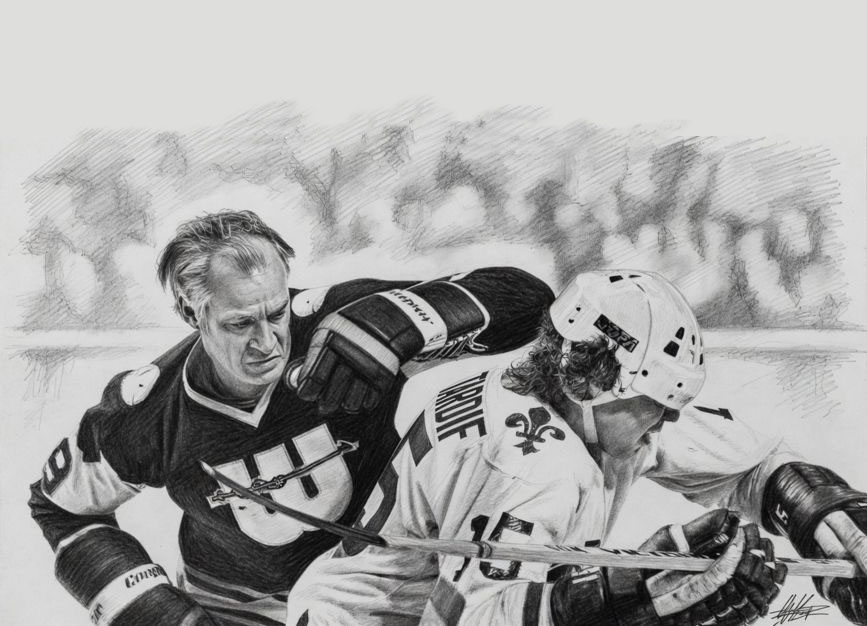
That was the series where Hanson was involved in one of the most famous incidents in WHA history. Hanson got into it with 39-year-old legend Bobby Hull, and after the standard ’70s exchange of charges and elbows the two squared off. Hanson was above Hull’s class in this regard if no other, but the Winnipeg crowd was mad for Bobby, and they went wild until they went suddenly, shockingly still and Hanson realized that in the clinch he had pulled off Hull’s toupee8. It is tragic there is no video of this, though there is a photo of the aftermath. Referee Bill Friday gave Hanson an extra two minutes rather than the usual misconduct for hair-pulling because it was not technically Hull’s hair, Hanson apologized to Hull next time they lined up, Hull took it well, the Jets won 9–39.

Those Birmingham Bulls could ice a line of hate that must be the most horrifying in big league history. Centre: Ken Linseman, only 19 but still Ken Linseman. 126 PIM in 71 games. Wing: Frank “Seldom” Beaton, whose early nickname of “Never” had been modified by this time but was still a cement-handed ruffian in every sense of the word (279 PIM in 56 games) and Gilles “Bad News” Bilodeau, aptly-named because he was a really awful hockey player and a worse man to cross (258 PIM in 59 games; -14). Defense: Steve Durbano, who probably had actual mental problems: intermittently rather talented until he inevitably stopped trying, caring, or thinking and already past it at age 26 but a real terror (284 PIM in 45 games; -12), and Dave Hanson, who as discussed could actually play this game but spent too much time in the sin bin to try very often (241 PIM in 42 games; 23 points and +10). Even their goalies combined for 48 penalty minutes. When Ken Linseman is the gentleman on your grinding line you should feel shame.

Most Bulls goons were total wastes as players or, at best, Steve “pretty-good-when-on-his-meds” Durbano. Linseman of course was superb, even at 19, but he wasn’t a goon, he was the Rat. Otherwise Hanson stands out as a legitimate hockey player, better than the rest of the thugs and a competent WHA point producer. He was fifteenth in the league that season in points-per-game among defensemen who played at least as many games as he did; this was an eight-team league more-or-less10 so we are in second-pairing territory. +10 tied for 18th among defensemen in the league and third among Bulls defensemen with Rod Langway, who played nearly a thousand NHL games, and Jim Turkiewicz, who was no Langway but still had a longer major league career than Hanson and was paid for talent rather than toughness. Hanson’s shots-per-game was rather poor, if you care about that from your blue line, and he never scored a powerplay goal as a major leaguer which might mean he was never used there or he wasn’t successful. None of this was extraordinary; all of it was perfectly major league standard even apart from the fighting.

By 1978–79 the bullying Bulls had worn out their welcome and were mostly off to greener pastures, the minors, or possibly prison. Hanson was, again, respectable. Those Bulls had an incredible amount of young big-league talent: Rick Vaive, Michel Goulet, Craig Hartsburg, Rob Ramage, and Gaston Gingras would all play over 450 NHL games and Goulet went to the Hall of Fame. Unfortunately their good players were too young, and their players in their prime were not very good, so they played poorly. Manson sagged to a -8, poor even for a Bull, but finished thirteenth in points-per-game for WHA defensemen (minimum 50 GP) essentially even with Gingras. Gingras was 19, a legitimate prospect, while Hanson was 24 and probably as good as he’d ever get. That probably accounts for the rest of the story. Hanson had not distinguished himself from the very young players he shared the blueline with, but his leadership qualities had been noticed. Maybe, when the WHA folded and two more teams’ worth of jobs disappeared, he could have clung on somewhere, but he could just as easily not have and that’s what happened. The Minnesota North Stars took a flyer on Hanson in 1979–80. The team was pretty good and Hanson wasn’t, but while time-on-ice numbers are not available for that era Hanson lost about 70% on his usual major league penalty-minutes-per-game, suggesting he either developed a deep conviction of works salvation or he was never on the friggin’ ice. It hardly matters: the North Stars waived him in June and the Red Wings, perhaps thinking fondly of his positive influence in the locker room, claimed him, waived him again, and stashed him in the minors for the rest of his career.

You have to feel for Hanson. Not for the hard-luck 37-game NHL trial; many players get as much, most get less. But Hanson was uniquely overshadowed by both Slap Shot and the terrors of the Birmingham Bulls. When people remember Hanson it is for pulling Bobby Hull’s rug off, or for his film career; memories of what Dave Hanson was actually like on the ice seem to have been obliterated. It’s all Slap Shot and its consequences; it’s all the 497 WHA penalty minutes with the 53 WHA points totally forgotten.

He played the position hardest to assess by conventional statistics. Yet what we can see, which is not nothing, say that Hanson must have been some kind of a legitimate player. Not enough to force his way into the NHL for the long haul. No coach ever stayed awake nights trying to work Sven Butenschön into his lineup, even though he was a player lots of teams had a use for from time to time, and the same is true of Dave Hanson. In Hanson’s era careers were short, player movement was easier than before but still not as easy as now, and the contraction of major league hockey from a high of 32 teams to 21 in 1979–80 put a lot of equivalently-talented players into the same lifeboat as him. He also took way too many penalties; a goon is all well and good but averaging nearly a major a game is pushing it. His was not a tragic story. With better luck he would have hung around the NHL until 1983 or so; with worse luck he would have played 500 AHL games in the Original Six era and nobody would remember his name. He can have few complaints. But he can have some.

Two marginal, but fairly legitimate, major-leaguers (Jack and Dave Hanson), a minor-leaguer who in an ordinary era would have played 7 games for New Jersey or somebody and been forgotten (Steve), and a guy who was perfectly talented in the low minors but never merited better (Jeff). Is that what you think of when you think of the Hanson Brothers? Stylized reality would have worked, three Jason Bonsignores who looked good in the uniform, but in fact the three Hanson Brothers and the bonus Carlson brother were players you could recognize from the movie, just… less exaggerated and better. Which is rather pleasing.

  1. I cannot stop myself from telling you this: the Minnesota Fighting Saints’ logo, of a bratty young boy-angel gliding down the ice looking ready to slash Valeri Kharlamov, was ripped off paid homage to by the AJHL’s Spruce Grove Mets when they moved to St. Albert and became the Saints. Doug Messier, team czar, knew all about the WHA; you may recall his son Mark played there. The twenty-first-century St. Albert Saints ditched that logo for a less interesting one, but when they moved back to Spruce Grove they kept the Saints name and brought the Fighting Saints logo back. As the Spruce Grove Saints. Now in the BCHL. That’s hockey.
  2. Ed Willes. The Rebel League: The Short and Unruly Life of the World Hockey Association (Toronto: McClelland & Stewart, 2004), 88–89.
  3. Until he was released during the playoffs for missing curfew and, in his fury, sucker-punching coach Harry Neale in the team hotel; see Willes, 101–102.
  4. Murray Greig. Big Bucks & Blue Pucks (Toronto: Macmillan, 1997), 222.
  5. Winger Wayne Bianchin had already played 67 NHL games and would play 209 more, but he was in Johnstown for like two weeks. Centre Gary Gambucci, another short-time Jet, played two seasons each in a depth role with both the North Stars and the Fighting Saints. Defenseman Francois Ouimet had 25 more WHA games left in him. Jean Tetreault, the team’s third-leading scorer, had played six WHA games with the Vancouver Blazers and would play three more the next season with the Fighting Saints but that’s it.
  6. Well, “’80s Old,” which is to say 30.
  7. Willes, 212.
  8. Willes, 210.
  9. No word on whether Hanson incredulously asked Hull “why do you wear that rug?!”; probably for the best as not even Bobby Hull had the right to call Dave Hanson “chickenshit.”
  10. Don’t ask.

Leave a Reply

Your email address will not be published. Required fields are marked *