Skip to content

The Brilliant Flash of Dennis Maruk

The 1981–82 Washington Capitals, 26-41-13, were not a great team. Last in the old Patrick Division, though being the early Capitals it was about their best squad yet. They were on the verge of making the playoffs, it showed in the underlying numbers, with their bit-better-than-median goals for and bit-worse-than-median goals against, but it was waiting to come together. They had a 22-year-old Mike Gartner, an 18-year-old Bobby Carpenter, a 23-year-old Bengt-Åke Gustafsson, and a few other young-ish players of reasonable quality. Their captain, Ryan Walter, was 23 and not too bad. So naturally their leading scorer was some guy named Dennis Maruk.

Not by a little bit. Walter was second on the team with 87 points, followed by Gartner with 80; Maruk had 136. He scored four hat tricks, he made the All-Star Game, he was fourth in the voting for the season-ending All-Star team at centre and seventh in voting on right wing, which says something, and sixth in the Hart. He finished fourth in the NHL that year in points, behind Wayne Gretzky, Mike Bossy, and Peter Šťastný; ahead of Bryan Trottier, Denis Savard, Marcel Dionne, Dino Ciccarelli, Glenn Anderson, Dale Hawerchuk, and Bernie Federko, to name only the Hall-of-Famers in the top 20. Third in goals with 60, behind Gretzky and Bossy. Sixth in assists, behind five Hall-of-Famers. Maruk and Bernie Nicholls are the only eligible players to have recorded a 60-goal season and not make the Hall of Fame and Nicholls got 30 assists from Gretzky. It was a killer year. Maruk’s mustache may be second only to Lanny McDonald’s in the era, and Lanny’s in the Hall of Fame too.

This was not Maruk’s only pretty good season; he was an All-Star in 1977–78 with the Cleveland Barons, because somebody had to be, and had another 50-goal season and a total of four 80-point seasons. Maruk actually outscored Gartner in each of the four full seasons they played together, and sure Gartner was young; it was four seasons over five years and it was still Mike Gartner. However, hanging out with Gretzky and Bossy was a one-off. 136 points was 29% better than his second-best career total. Sure, he scored 50 goals another time, but it was exactly 50, and his usual level was 30-odd.

Maruk, as you might expect, was an interesting player. Hard-working, gritty, and built like Martin St. Louis. 5’8″ and 180 pounds of jets, hands, and sandpaper. As a junior, he led the London Knights in scoring twice, which was good enough to go in the second round of the 1975 NHL Entry Draft and wind up one of the five best players in the (mediocre) class. Unfortunately, he was selected by the California Seals. On the bright side that meant he went straight to the NHL; on the down side, he was a California Seal. It began a trend of being the key forward on dysfunctional teams that defined his career, both for good and ill.

His first season was an unqualified success, personally: second on the team in scoring behind Al MacAdam, which was good enough to get him third place in the Calder Trophy voting behind the New York Islanders’ Bryan Trottier and Chico Resch. Which was fair enough, Trottier had a great season (was a great player) and Resch was the 27-year-old All-Star goalie for a 42-21-17 team; it was a darned good third. The only issue was, as ever, that he was a California Seal. The Seals were a young, skilled team, in principle, but in practice most of them were not actually that skilled at all. They got beat in the alley and on the ice. They had no glaring weaknesses and not one single strength. They finished 27-42-11, then they moved to Cleveland1.

Dennis Maruk
Season Team League Age GP G A Pts +/- SoG SPCT OPS DPS PS
1975–76 California NHL 20 80 30 32 62 -6 233 12.9% 4.1 1.3 5.3
1976–77 Cleveland NHL 21 80 28 50 78 3 268 10.4% 5.4 1.5 6.9
1977–78 Cleveland NHL 22 76 36 35 71 -26 198 18.2% 5.7 0.4 6.1
1978–79 Minnesota NHL 23 2 0 0 0 -2 2 0.0% -0.1 0.0 -0.1
1978–79 Washington NHL 23 76 31 59 90 -14 189 16.4% 6.4 0.5 6.9
1979–80 Washington NHL 24 27 10 17 27 0 58 17.2% 1.8 0.4 2.2
1980–81 Washington NHL 25 80 57 40 97 -6 242 20.7% 7.2 1.0 8.2
1981–82 Washington NHL 26 80 60 76 136 -7 268 22.4% 9.9 1.1 11.0
1982–83 Washington NHL 27 80 31 50 81 0 185 16.8% 4.8 0.6 5.4
1983–84 Minnesota NHL 28 71 17 43 60 -17 130 13.1% 2.6 0.3 2.9
1984–85 Minnesota NHL 29 71 19 41 60 0 126 15.1% 2.8 1.0 3.8
1985–86 Minnesota NHL 30 70 21 37 58 13 135 15.6% 2.7 1.2 3.9
1986–87 Minnesota NHL 31 67 16 30 46 4 144 11.1% 2.1 0.9 3.0
1987–88 Minnesota NHL 32 22 7 4 11 1 135 15.6% 0.5 0.4 0.8
1988–89 Minnesota NHL 33 6 0 1 1 0 6 0.0% -0.2 0.1 -0.1

Maruk is the leading scorer in the history of the Cleveland Barons, with the princely total of 64 goals and 149 points in 156 games; he led the team in both categories both years, and he and MacAdam were the Barons’ only All-Star Game participants. When the Barons merged with the Minnesota North Stars for the 1978–79 season Maruk got all of two games in the Twin Cities before being traded for a first-round pick2. The Capitals won the trade, and any misery Maruk might have felt at being so quickly cast-off was probably not long-lived, for his personal success was close at hand, but team success definitely was not.

There is something of a chicken-and-an-egg question with young players in these situations. Do his teams lose because they tend to rely on players like Dennis Maruk, or do young players like Maruk learn bad habits by playing for losing teams? To hear Maruk tell it, decades later, his introduction to the NHL was essentially winning a contract by running fat veterans at training camp, then spending the regular season drinking every day with an occasional break to score a hat trick3, or in Cleveland not getting paid on time, whereupon the guys would go get wasted at the bar in the way you do when your job is about to go down the toilet, and then having to play two hours later anyway4. It was the ’70s, and the NHL could be like that then, but one gets the impression that playing in the California sun or an obviously-doomed Ohio suburb before 5,000 fans, then drinking with the happy opposition that probably beat you, did not form winning habits.

Maruk, though small, was gifted both physically and mentally. He skated hard, as little players have to, but he was also chippy: Hockeyfights.com tells us that he fought twelve times in his NHL career, including against Pat Boutette, the lightweight champion of the day, Mario Tremblay, who you might forget fought a lot long before he became a coach and started fighting his goalies, and legitimate light heavyweights John Gibson5, Glen Cochrane (twice!), and Darryl Sittler, who okay was not a heavyweight but was a lot bigger than Maruk and fought a fair bit if only to get Harold Ballard off his ass. He was willing to both pay the price and make others pay it. He was no Nail Yakupov, no source of complaint, entitlement, and wasted potential. Maruk griped sometimes, but never let that get in the way of doing the work. He had hockey skills all over. He could skate and shoot and play rough, but…
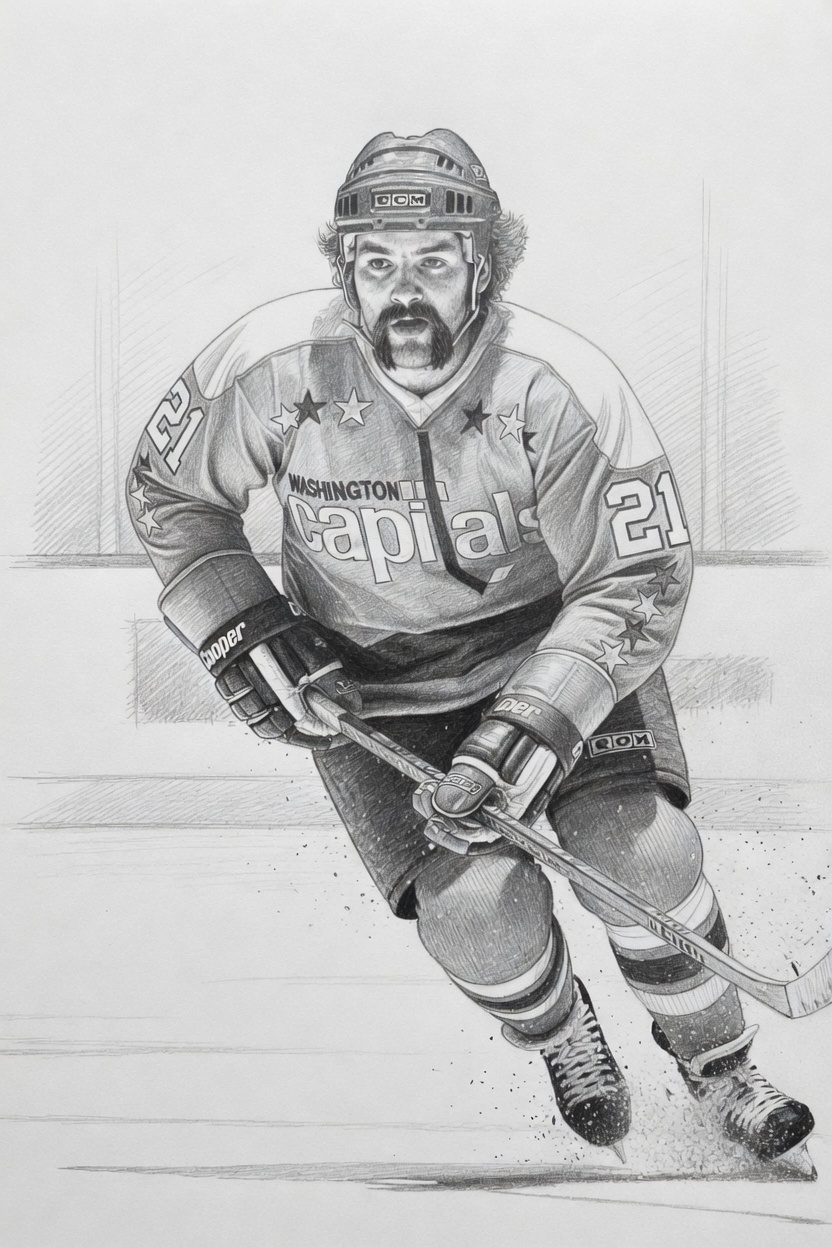
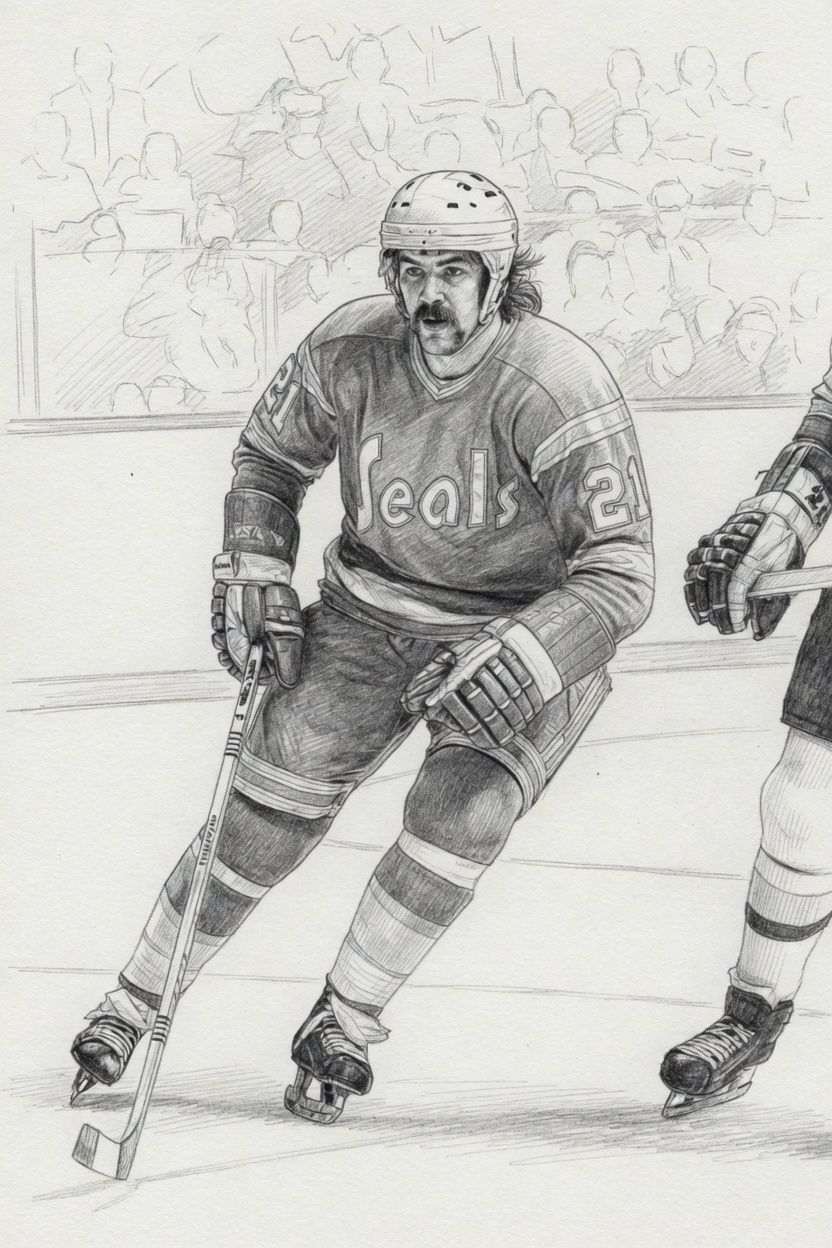
The knock on Maruk was always that he didn’t play for the team, he played for Dennis Maruk. It must have been a bit unfair. Purely selfish give-me-my-stats players don’t bother mucking it up with the agitators and fighting twelve times when they weigh less than the goalie’s equipment bag. They don’t put the work in, which even his enemies agreed Maruk did, year after year for losing teams with little recognition. But it was a consensus opinion, and it came from somewhere.

Maruk spent seven seasons in the NHL before he was on a team good enough to win even 30 games. In those seven seasons he played for five different head coaches: Jack Evans, Harry Howell, Danny Belisle, Gary Green, and Bryan Murray6. Evans was the nice guy who always finished last, Howell had been a great player, but at the time was the team’s GM and didn’t want to coach at all, Belisle coached all of 96 NHL games and lost most of ’em; the sort of coach who would miss the team’s flight because he was half in the bag7. Green was Danny Belisle without the colour. Some of them were smart hockey guys, some went on to success in minor-league coaching or broadcasting or what-have-you, but Maruk didn’t have what you’d call a real NHL coach until he’d been in the league for 435 games.

Maruk had trouble playing tight systems? No kidding; every system he’d ever played in had been a loser, smashed together until it was torn apart for another losing idea. Maruk could think the team’s success had more to do with Dennis Maruk than the team? His teams were terrible and he was the best thing on them; it was pretty substantially true! Mario Lemieux put up with six losing seasons before Bob Johnson and Scotty Bowman came along; his teams weren’t as bad as Maruk’s, his coaches weren’t as undistinguished, and of course Mario was a much much much better player, but well into the 1990s Mario had the exact same reputation as Maruk. In his case you didn’t worry so much, because it was Mario Lemieux, then the hand of God forced him into personal maturity and we got the sublime team play of his late career. For mere mortals, it’s hard to learn how to win before you run out of runway.

It’s the same in ordinary life. You get your first real job at some little shop that just goes through the motions; when you move into a serious results-oriented organization it’s whoa. You’ve got to adjust. Jobs aren’t hockey, you don’t get in the newspaper for having great individual performances at your job, there’s no time at your job when you do all the work yourself and get named first star of the job, the temptation is less, but ordinary people can recognize that habits formed in losing environments are real as soon as they get to a winning one.

Maruk spent five seasons with the Washington Capitals. Four of them were good, and one was at that level until it was wrecked by an accidental knee injury. In all four of his good seasons Maruk led the team in scoring, His plus/minus wasn’t great, but it was usually respectable for the team. His two best seasons, by far, were 1980–81 and 1981–82. In 1980–81 he led the Capitals with 50 goals (Gartner second, 48), 47 assists (Gartner second, 46), and 97 points (no prizes for knowing who was second). Maruk tied for 13th in the league in points with Wilf Paiement and was eighth in goals; not really Hall-of-Fame company, but not clearly outside of it, and a darned good year. Gartner was the better player: he shot more, got more at even strength, and was rightly named the team’s All-Star Game representative, but Maruk shot over 20% while Gartner managed only 14.7%.

Comparing Maruk and Gartner is interesting. Both were quick, hard-working, rather pure goalscorers with defensive limitations, with Gartner more extreme in each of those categories. Neither of them ever got close to winning a Stanley Cup; Gartner won two Canada Cups but there were still coaches who thought he’d never really learned how to win, like Maruk. Gartner was soft, Maruk was not. Gartner had a conventional and classy ’80s mustache, Maruk had the fu manchu. Gartner was hockey small, Maruk was flat-out just a little guy. Maruk was a classical sniper, whereas Gartner generated more chances. Only once did Gartner have a season with a shooting percentage over Maruk’s 16.0% career average. Having said that, you’d take Gartner’s whole prime, and his whole career, over Maruk’s ten times out of ten. Even hypothetical Dennis Maruk, who stayed on the top lines and the power play and didn’t get hurt, would not have been as good as Mike Gartner. If 1980–81 was the best Maruk ever did, you’d leave him in the great big nondescript pile of ’80s Guys who could shoot before goaltending had been invented.

But 1980–81 was not Maruk’s best year. In 1981–82 Gartner, who was still young, regressed a little, but Maruk was extraordinary. Grant that a 22.4% shooting percentage was good luck, and that in Gretzky’s 92-goal season everyone else inevitably stank of mere mortality by comparison. The man still took 268 shots, ninth in the league among forwards behind seven Hall-of-Famers and Brian Propp, who isn’t in the Hall but keeps turning up in these conversations. Normalize Maruk’s shot accuracy to his career average and he’d have had 43 goals and 119 points; still his career season with an incendiary bullet. 38 of his goals and 76 of his points came at even strength; fourth in the league in EVG behind Gretzky, Bossy, and Mark Messier (and, okay, tied with Blaine Stoughton). By any metric you can find, ordinary counting numbers or advanced stats, era-adjusted or not, Dennis Maruk’s best season was significantly better than Mike Gartner’s best season. Gartner’s in the Hall for consistency and durability, but that ain’t bad.

Picking Dennis Maruk’s best seasons apart, you have to say that when Maruk was good he was very, very good, good in ways that withstand any attempt to write him off as a pure fluke. At the end of the season he was 27 and ought to have had a couple more prime years before hitting a long tail; he looks like someone who should have had more than 400 goals, not 351. Instead Maruk immediately declined. The Capitals moved Maruk to left wing to make room for Bobby Carpenter, and while 81 points in 80 games wasn’t terrible, it was his worst season as a Capital by far even before your eyes reach that horrifying -22; way below Doug Jarvis’s second-worst -11. He outscored Gartner again, but only because Gartner was banged up, and from any angle Gartner was now obviously the more effective player. Then Maruk was gone, his stock fallen so far that he was traded back to Minnesota for a second-round pick that became Stephen Leach. One season removed from 60 goals, the market thought Maruk was still an asset, but not much of one.

In a rather harsh Washington Post article after Maruk was traded to the North Stars, Bryan Murray had an interesting criticism of Maruk. “Without being unfair to Dennis, he was a one-way hockey player because he’d always been just a scorer. Dennis tried to do what we wanted, but he’d forget. Defensively, he had shortcomings.”8 That sounds honest, and it’s no surprise that Maruk spoke highly of Murray despite how things ended9. Maruk wasn’t a bad player, he was a good player with bad habits. When he concentrated on Murray’s system, he could play in it, but you can’t play big-league hockey constantly concentrating on what does not come naturally. There was not much to be gained waiting around for him, so Washington dumped him and the team got better. What could Maruk have done differently? He wasn’t dumb. He was trying. He just got dealt a bad hand, he’d learned to play hockey a certain way in losing organizations and had been successful, and could not quickly become a different player by sheer force of will.

The Minnesota North Stars were a decent team… sometimes. They finished eight games above .500 in Maruk’s first season and had a solid playoff run. Neal Broten was there, the hometown hero scoring centre who was only coming off the first line on a stretcher, and the coaches seem to have preferred the defensively-oriented Keith Acton at 2C. In a relatively limited role, Maruk still scored10. His -17 was God-awful, worst on the team, which wouldn’t have changed many opinions, but a funny thing was happening. Maruk had a most un-Maruk-like scoring line, 17 goals and 43 assists. Not a lot of points, but good for the role, and a distinct departure from his previous shoot-first habits. The next year the North Stars got bad again, as they tended to, and Glen Sonmor came in to coach. Sonmor had been the hard-drinking, hard-fighting in-and-out Billy Martin of the North Stars for years, and before that built the WHA Minnesota Fighting Saints and Birmingham Bulls; Maruk was just the kind of hardnosed skill player he liked, and though Broten played 80 games Maruk outscored him 60 points to 57. That year it was Broten who was -17, which was really bad; Maruk was even, the team’s best regular forward in plus/minus. He would never be a minus again for the rest of his NHL career.

Maruk got ice time with young Dino Ciccarelli, who was kind of a rich man’s Maruk except a born winger instead of a born centreman, and their two-way play was praised in the press11. In 1985–86 the North Stars were kinda good again (boy that must have been an interesting team to cheer for). Maruk was now pretty much off the power play under yet another coach, Lorne Henning, but he still pulled 37 assists and 58 points with a good +13. The next year the North Stars yo-yoed back down to “bad,” everyone (including Maruk) was banged-up, but Maruk still posted responsible two-way numbers. He was starting to get the dings and bumps little guys entering their 30s got in the 1980s: separated shoulders, knee strains, foot problems that took a little too long to get better.

So in 1987–88 Herb Brooks came in to coach and they were terrible, 19-48-13. It was tough on Herb. Broten was hurt and had an off-year when he was around, a winger named Brian MacLennan somehow managed to go -44, Basil McRae had to play 80 frigging games and had 382 penalty minutes, they struggled on offense, defense, and in goal, Ciccarelli and Brian Bellows were about all they had going for them. Maruk missed more than two months with a foot, and when he returned put the puck on net as much as ever and watched it not go in. Had he shot an approximately normal percentage for him he would have had another 20-goal season, but it was not to be. Then, on February 20 Maruk shattered his right kneecap blocking a shot from, of all people, Grant Ledyard. It could have at least been somebody whose shot registered on a radar gun. Though he would play six more games the next season his career was basically over. Maruk was 32 and, in the free-wheeling 1980s, would have been out of the league within a few years anyway, but it must have been a singularly depressing way to go.

Another tough break. The end of Maruk’s career showed that he was capable of playing defense-first, system-oriented hockey, given the time to learn how. As a Washington Capital, Maruk got 43.85% of his points from goals and 89.32% of his point shares from his offense; in his second Minnesota stint, in 36 fewer games, 33.90% of his points were goals and 72.73% of his point shares were OPS. He had changed to fit into his lesser role, but the calibre of his teams was usually as bad as ever.

Maruk had no school, not much of a pension, and no prospect of a front-office job as Vice President of Remembering the Glory Years, just a work ethic, a need to make a living, and memories of when that meant boozing most of the day and hearing his name chanted from the stands at night. His first year after playing was spent in ticket sales with the North Stars, then at a napkin company, but like so many ex-players Maruk wanted to get back into pro hockey12. A part-season of coaching and, at age 43, briefly playing in the low minors followed, but after that fell apart in the way the low minors do Maruk spent a year as a deckhand servicing oil rigs in the Gulf of Mexico, was a bellman at a hotel in Aspen, Colorado, did odd jobs, lost a couple of wives, drank too much, struggled with depression—sadly not an unusual story for players in his position.

Luckily, and this is not always the case, he seems to be in a better place now. More than 40 years after his prime, he remains in view: he gets to old-timers games, Alex Ovechkin breaks his Capitals goal-scoring record, little things bring his name to hockey’s mind and younger generations learn “he was pretty good!” Had he played on better-run teams, we might tell a rather different story. He might have been a better all-round player, would certainly have got into more than 34 career playoff games, and may have enjoyed a dignified off-ramp from his career in the way cult favourite stars do. No such luck for Maruk. By 1993, three of his four NHL teams didn’t exist anymore and the fourth, Washington, has never exactly taken pride in its history. But as it is he is remembered fondly, and gets some of the respect he deserves. Sixty-goal seasons are back in vogue in today’s NHL, and every time a Stamkos or a Matthews has one, there is always somebody to say “oh yeah, Dennis Maruk.”

  1. All stats from Hockey-Reference.com. OPS: Offensive Point Shares. DPS: Defensive Point Shares. PS: Point Shares.
  2. Originally that of the Pittsburgh Penguins; it wound up being Tom McCarthy, tenth overall.
  3. Dennis Maruk with Ken Reid, Dennis Maruk: The Unforgettable Story of Hockey’s Forgotten 60-Goal Man (Toronto: ECW Press, 2017), 35–43.
  4. Maruk and Reid, 60.
  5. Not that one.
  6. Not counting Roger Crozier, yes that one, who coached one game for the Capitals on November 7, 1981 after Green was fired and before Murray was appointed.
  7. Maruk and Reid, 56.
  8. Dave Kindred. “Maruk’s absence tells tale of advancement.” The Washington Post, October 2, 1983. https://archive.is/EyJnq.
  9. Maruk and Reid, 100.
  10. Maruk and Reid, 151, quotes Maruk as saying he “was not getting any power play time,” but the scoring suggests he must have been at least fairly regular on the second unit for a few seasons, though time-on-ice statistics are unavailable.
  11. John Gilbert. “Maruk, Ciccarelli show Stars’ versatility.” The Hockey News, April 20, 1984.
  12. Maruk and Reid, 183, quoting the opinion of Maruk’s first wife.

Leave a Reply

Your email address will not be published. Required fields are marked *