Skip to content

The Great NHL Defensemen of the 1970s

The 1970s was hockey’s coolest decade. Sudden expansion, new types of player, the arrival of the Europeans, more fighting, great dynasties, great hair, first-time winners, the World Hockey Association. Bobby Orr, Guy Lafleur, Bobby Clarke, Ken Dryden, Paul Henderson. Glorious brawls, glorious goals, drama off the ice and on. The 1970s hold together, as a decade, in the way few others do, with expansion on one end and the post-WHA Gretzky era on the other. The 1970s are their own thing.

Ahead of the scoring explosion of the 1980s, it was an era unusually gifted with great defensemen. Orr, of course; the greatest of them all, the player who half a century later has not even been approached, whose greatness only grows with time, the player who changed the way defensemen could play but also set a standard none of his gifted successors have approached. But there was Brad Park and Denis Potvin and Larry Robinson, there was the start for Ray Bourque and the end for J. C. Tremblay, there was Börje Salming revolutionizing the game in an entirely different way. Though not a low-scoring era, the 1970s may have been the decade of the blueliner. There were plenty of great defensemen between Eddie Shore and Bobby Orr, of course, but people had forgotten that the first person to touch the puck has every opportunity to be as creative as the last. The influence of European hockey was just arriving, and hadn’t had time to influence young players, but the game had already changed, and the ability of the defense to control where the puck went beyond throwing a thundering open-ice hit was being developed and appreciated in new ways.

So let’s look at the best NHL defensemen of the 1970s. Not so much the very best, because nobody needs to be told that Bobby Orr or Larry Robinson was good, but the second tier, the guys who just made the Hall of Fame or didn’t quite, the mass of elite talent who, in an elite era, influenced the game.

To start our conversation, here are the top 20 point shares per 82 games for the decade for all defensemen who played in the 1970s, or to be specific, from 1969–70 to 1979–80.1

Player PS OPS DPS OPS/DPS PS/82GP From To Age GP G A Pts +/- PIM
Bobby Orr 125.8 76.5 49.4 1.55 21.36 1969-70 1978-79 21-30 483 225 554 779 498 655
Denis Potvin 85.9 46.5 39.4 1.18 14.14 1973-74 1979-80 20-26 498 163 381 544 205 666
Brad Park 103.1 50.1 53 0.95 12.38 1969-70 1979-80 21-31 683 154 457 611 347 946
Ray Bourque 11.8 4.7 7.1 0.66 12.10 1979-80 1979-80 19 80 17 48 65 52 73
Larry Robinson 80.4 30.2 50.2 0.60 11.57 1972-73 1979-80 21-28 570 94 325 419 423 377
Guy Lapointe 97.1 45.1 52 0.87 11.44 1969-70 1979-80 21-31 696 164 378 542 355 659
Börje Salming 68.1 32 36.1 0.89 10.70 1973-74 1979-80 22-28 522 97 334 431 182 438
Pat Stapleton 34.1 11 23.2 0.47 10.06 1969-70 1972-73 29-32 278 24 141 165 126 119
J.C. Tremblay 25.4 10.4 15 0.69 9.92 1969-70 1971-72 31-33 210 19 122 141 74 54
Serge Savard 79.8 22.4 57.4 0.39 9.39 1969-70 1979-80 24-34 697 86 263 349 435 400
Stefan Persson 23.9 9.6 14.3 0.67 9.03 1977-78 1979-80 23-25 217 20 141 161 70 187
Barry Beck 23 12.9 10.1 1.28 9.02 1977-78 1979-80 20-22 209 51 116 167 -31 286
Reed Larson 26.9 15.2 11.7 1.30 8.89 1976-77 1979-80 20-23 248 59 135 194 -39 388
Ian Turnbull 52.1 25.6 26.5 0.97 8.75 1973-74 1979-80 20-26 488 93 253 346 48 539
Jacques Laperrière 31.3 6.3 25 0.25 8.70 1969-70 1973-74 28-32 295 18 98 116 177 221
Bill White 47.2 10.3 36.9 0.28 8.51 1969-70 1975-76 30-36 455 34 160 194 165 357
Doug Wilson 21.3 7.6 13.7 0.55 8.48 1977-78 1979-80 20-22 206 31 90 121 12 179
Craig Norwich 7.1 2.9 4.2 0.69 8.32 1979-80 1979-80 24 70 10 35 45 -10 36
Gary Sargent 34.8 13.1 21.7 0.60 8.25 1975-76 1979-80 21-25 346 54 143 197 20 214
Jim Schoenfeld 45 8.4 36.6 0.23 7.92 1972-73 1979-80 20-27 466 34 153 187 198 857

There’s a sniff test for measuring defensive excellence: is Bobby Orr way ahead in first place? Here, Orr’s 21.36 PS/82GP is near-as-makes-no-difference worth one and a half Denis Potvins (2nd, 14.14 PS/82GP). Nobody reading this needs an introduction to Bobby Orr, but if you’re looking at defensemen and he isn’t the best player in your measurement, go back and fix the measurement until he is. Our top seven are all easy Hockey Hall of Famers. Ray Bourque shows up on the strength of his rookie season alone, but since Ray Bourque was really that good we forgive him. Whitey Stapleton, the next on the list, would not be the worst defenseman in the Hall of Fame if he’d made it. J. C. Tremblay was the rich man’s Whitey Stapleton, and it’s good, or very good, players a long way down.

Point shares, in the era before we had possession numbers, Fenwicks, Corsis, and zone starts, are the best “do everything” statistic I’m aware of2, but as a statistic assembled from other statistics, they are only as good as underlying numbers that we know to be incomplete. They start the conversation but do not finish it. Do we sense a bias towards offensive defensemen? The very top of the list could do everything, but issues appear early. To prefer Potvin to Park or Robinson is a hot take, but not blazing hot. Long-time teammates J. C. Tremblay and Serge Savard are ninth and tenth. I’m not sure Mrs. Tremblay would have taken J. C. Superstar over Serge Savard. Scotty Bowman sure didn’t. Serge Savard is in the Hockey Hall of Fame and J. C. Tremblay is not, though he ought to be. Maybe that’s a sample error; Tremblay played only three seasons in the NHL in our sample before jumping to the WHA, during which he was a first-team All-Star and third and fifth in the Norris voting. We’re comparing three Tremblay seasons of which two were unusually good to eleven years of Savard that included but were not limited to his prime. A little bit of context can put Savard ahead of Tremblay quite ethically, which he probably ought to be.
However, Guy Lapointe is fifth. Lapointe is a Hall-of-Famer and was not a zero defensively. In particular he could hit, but he was no Tremblay in his own zone. The fifth-best defenseman of the 1970s? Better than Serge Savard? He was probably one of the five best Canadiens defensemen of the ’70s, but the league? How much did he gain from playing with Robinson, Savard, or even Tremblay, Bob Gainey and Doug Jarvis? When he cheated for offense, which he did, did he get away with it because his teams were so great? To put it another way, when you have Larry Robinson, Guy Lapointe, Serge Savard, and J. C. Tremblay on your blueline, which is the one you’d most hate to be without? Robinson, obviously. Who’s second? For me, and I think for most, it’s Savard.

Take Stefan Persson. He was a good player, and defensively responsible, but by point shares Persson’s best years were while the New York Islanders were excellent. As the Islanders sagged, Persson’s point shares sagged. One can argue about the direction of cause and effect, but Persson was healthy and in his physical prime while his point shares dipped from almost 10 in a season, to almost nine, to almost six. Denis Potvin, definitely an offensive defenseman par excellence, kept playing his way because what idiot would stop him; Persson, a lesser talent, shifted emphasis from offense to defense because somebody had to once the Islanders no longer had the horses to outscore all their problems. He didn’t get bad when he was 26, but he was doing things point shares rewarded once and then did fewer of them.

Barry Beck, Ian Turnbull, Reed Larson, and other one-dimensional offensive players whose teams lost come in ahead of Jacques Laperrière, a great defensive defenseman for the great Habs. All good players, but Beck (for example) in his two-seasons-and-change with the Rockies recorded 108 points in 148 games and was -47 for a team that never won so many as 20 games. He had an extremely impressive most-of-a-season with the Rangers in 1979-80, 59 points and a team-fourth +16 in 61 games, but that was essentially the end for him as a serious offensive defenseman, as between shoulder problems and the Rangers actually winning hockey games, Beck played a more conservative style that brought team success.

We’re not seeing Laperrière at his best in our sample; he had an All-Star game and a couple appearances in the Norris voting, but most of his best years were in the 1960s. Laperrière is a Hall-of-Famer, and while not an outstanding example of one, nobody would have given up Jacques Laperrière to get Barry Beck until Laperrière actually retired. If we’re looking for surprises, players who stand out beyond the boxcar statistics and give us a Strange New Respect, then these highly-rated offensive defenesemen who showed up entirely in the boxcars are not what we want.

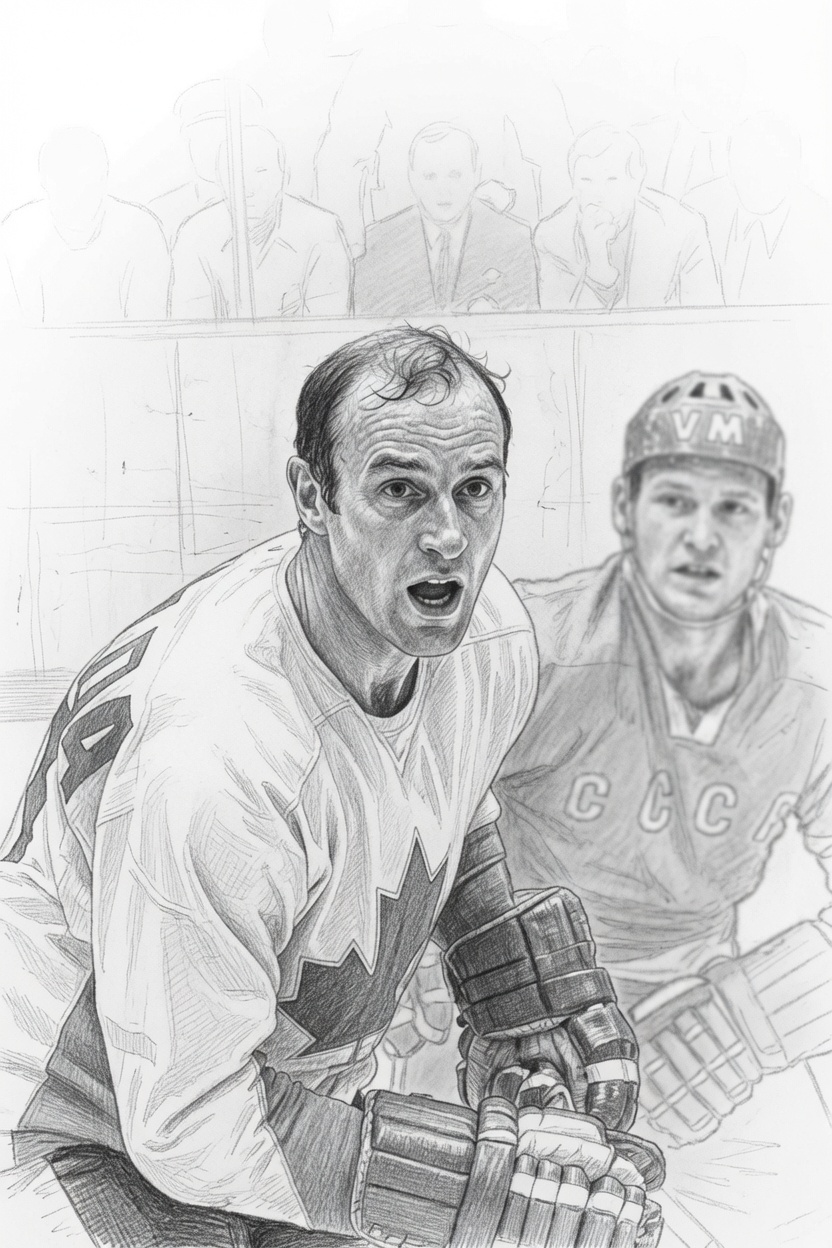
Much more interesting are Bill White and Pat Stapleton. The two played only four seasons together in Chicago, but are joined at the hip in public memory, not just because they were so effective in Chicago but because they kept that going in the 1972 Summit Series. They made two Stanley Cup finals together, losing both to Montreal. Stapleton was nicknamed “Whitey” for his brilliant, long, 1970s blond hair; the sort of player who seemed always to be young. White was the opposite, always old, 28 years old when he reached the NHL and in his early thirties both helmetless and prematurely balding. Stapleton was small, not even hockey small but regular small. White was not really big, but had a fairly standard defenseman’s build. In his rookie season Stapleton managed a -58 in 69 games with the Boston Bruins, which was not actually the worst on the team but still not easy to do, while recording all of seven points. White spent five seasons with Eddie Shore’s Springfield Indians, and only came up after expansion as a 28-year-old rookie with Los Angeles. His worst NHL plus/minus was a -20, which in the team’s context was not that bad. Stapleton made four All-Star games; White made six. Stapleton was the clearly superior scoring defenseman, but White got more love from the award voters. Both had a reputation for stepping up on big occasions. Over Chicago’s two Finals runs, Stapleton was a point-per-game player. Both were big positives in the locker room. White kept things loose, and Stapleton, with the small player’s choice between being a prick and being a prankster, went all in on “prankster.” Famously, Stapleton fished the puck out of the net after Paul Henderson’s goal that everybody remembers, then spent 30 years telling the world that Bill White had it just for the sheer love of the game.

In the 1972 Summit Series White was the better of the two, and despite the table above, was probably better overall. Stapleton’s career NHL point shares/82 games, 8.23, is almost identical to White’s career 8.28, but in our sample point shares gives Stapleton two very big seasons in 1970–71 and 1971–72; he was a second-team NHL All-Star and fourth in the Norris both years behind Orr, Park, and (1971) Tremblay/(1972) White. Stapleton’s declining years were spent in the WHA where point shares don’t exist. Stapleton won the WHA’s best defenseman award in the league’s second season, and led the 1975–76 Indianapolis Racers in scoring, but his defense tailed off as he got old and he didn’t belong with the WHA’s best of the best. White remained elite. Stapleton’s teams lost, not that it was his fault. White kept winning in a modest, Chicago Black Hawks-ish sort of way.

If we define a defensive defenseman as someone whose offensive point shares divided by defensive point shares was below 0.4, which seems as good a cutoff as any3, White was the third-best defensive defenseman of the 1970s behind Savard and Laperrière; the best non-Hab. He also generally won; the Kings were decent in their first two expansion seasons, terrible in their third (but they traded White away in February), and then with the Black Hawks White never played for a losing team and made two Stanley Cup finals. When Stapleton left, Chicago didn’t fall off the pace badly; when White retired, the Black Hawks were immediately and obviously not as good, and there was more than one reason for that, but White was among them.

Stapleton, while a fine player, is recognizably not a Hall-of-Famer, a Torey Krug type, but White has a tight Hall-of-Fame comparable from the same era. Maybe you can come up with a clear reason to put Jacques Laperrière in the Hall of Fame and not White; I cannot. Defensive specialists for very, very good teams acquire outsized reputations; everyone likes to say they see the real reason why that team is great and it’s not Guy Lafleur and Larry Robinson at all. Defensive defensemen for merely good teams are still recognized, as White was, but it’s in a different key. Recollections of the 1972 Summit Series show this in action: White had a great series on a great team, and though Everyone Knows about Phil Esposito, Bobby Clarke, and Paul Henderson, deeper looks have a lot about Bill White: how his immense penalty killing made the series winnable at all, how he played monster minutes and killed the game after Henderson’s game eight goal, how as much as the Soviets could make the Canadians look like pylons at times White was always in the right place. He is the unanimous unsung hero of the 1972 team. Jacques Laperrière was similar for the Habs4, but 1972 was eight games and the Habs were Laperrière’s career5.

Laperrière and White had similar impacts. You can pick them apart in style: Laperrière hit hard, blocked shots, and rushed the puck; he had the Doug Harvey comparison ready-to-hand and boy people used it. White succeeded with body positioning and passing, and though his style was not unusual it happens that there weren’t any old Black Hawks stars you could identify him with. Over their careers, Laperrière had 8.33 PS/82GP and 6.38 DPS/82GP, while White had a very similar 8.28 PS/82GP and 6.14 DPS/82GP6. Both were players you could win with and would be thrilled to have on your team, but that’s just it—both of them. They added about the same amount to your team in slightly different ways. This is not to launch a “Bill White for the Hall of Fame” bandwagon (I’m reserving that for Tremblay), but it’s to add perspective on a player who, because he wasn’t a Hab and never made the leaderboards, is relatively forgotten. Whitey Stapleton got a new path to memory because of his points and the WHA, White just came up late and was very good for years.

There was one truly obscure player on this list, who naturally snuck in through small-sample-size tricks. Craig Norwich was a little scoring defenseman from Minnesota who played high school hockey there and NCAA at Wisconsin, where he ended up nearly a two-point-per-game player, won an NCAA title and got plenty of awards. The Canadiens drafted him, and the Habs defense of 1977–78 was not exactly calling out for a little scoring defender. Apparently Mama Norwich didn’t raise any fools, because looking at the prospect of trying to break in against three Hall-of-Famers and some other very good players, Norwich signed with the WHA. A Minnesota boy who’d gone to university nearby, Norwich was Minnesota Fighting Saints material, but he was soft, so he signed with the Cincinnati Stingers. Playing mostly with Whitey Stapleton, Norwich managed 30 points and a +3 in 65 games as a rookie, which was fine, and the next year without Stapleton Norwich was Cincinnati’s fifth-leading scorer overall and tied with Gordie Roberts as the top-scoring defenseman in the league, 57 points in 80 games7. Norwich was 23 years old, and most of the other top WHA defensemen were even younger, but he looked like he should be alright. And, as you can see, he was! The Jets got his NHL rights and he had a solid 1979–80, 45 points in 70 games with a -10 that was easily the best among Jets’ regular defensemen. Lars-Erik Sjöberg was -33 that year; Barry Melrose was -41 with ten points. Norwich took 218 shots, picked up 27 of his 45 points on the power play, and accumulated 7.1 point shares, which led the Jets. Taken all-in-all, it looked like borderline stardom, actually a lot like peak Whitey Stapleton.

But in the offseason the Jets traded Norwich to St. Louis for Rick Bowness, which was not a good idea for anybody. Bowness was done; Norwich soon followed. In November 1980 Norwich suffered a serious knee injury that never really went away, and though he accumulated 16 points in 23 games the Blues thought little enough of Norwich to put him on waivers. The Colorado Rockies took him, and he recorded fourteen points in eleven games with a +4, tied for the best +/- on the team, and then his NHL career was over. The Rockies let him go; the New York Rangers signed him but never brought him out of the minors.

We can take it for granted that Norwich must have been an indifferent defensive player, simply because with numbers like that somebody would have stuck with him if he looked like he could check his coat. However, you sure can’t pick any defensive deficiencies out of his few career statistics. Injuries were obviously a major problem, but it wasn’t a shattering career conclusion. In 1980–81, between St. Louis, Colorado, and the minors, he played 52 games, which given that he hurt his knee in November is obviously injury-affected but not obviously career-ruining. He played 28 in the AHL in 1981–82, which was a bad sign, then spent two productive seasons in Europe. He returned for an AHL cameo in 1984-85, then closed it out scoring two points a game in the freaking Italian league.

There are players, and Craig Norwich is one of them, where 45 years after the fact you can only look back through the numbers and wonder what on Earth happened. Gordie Roberts was a bit better than Norwich, certainly better-rounded, but his best season was only a bit better than Norwich’s, and he played a thousand NHL games. Then again, Gordie didn’t get hurt. Norwich barely even got looks as a reclamation project. When he did, he produced: 0.69 points per game his last AHL season in limited time, the best defenseman on his team ahead of former first overall pick Craig Joly. We’ll never really know what happened. Craig Norwich might not know. It just never worked out. Some guys are Whitey Stapleton, and some are Craig Norwich, and are only remembered when they fluke their way onto a list like this, and hardly even then. But once in a while, you do see a guy who played all of 249 big-league games, and you have to say “he had something. Not a ton, but more than he showed the world, and if he’d had better luck how different his life would have been.”

  1. All data from Stathead. These are NHL statistics only, because Hockey Reference has no point shares for the WHA. Mark Howe (who would have been in sixth place with 11.19 PS/82GP) is excluded because he qualifies only for 1979–80, which he spent at forward. Mark Howe keeps getting left off these lists for one positional reason or another; life is tough.
  2. For an explanation of how point shares are calculated see Hockey Reference; the calculation changes as more statistics become available so I’m not very comfortable using them across eras, but they’re thought-provoking within one.
  3. Because it includes Stapleton on the “two-way defenseman” side, which he was, and Savard on the “defensive defenseman” side, which he was.
  4. The Habs’ “unsung hero” was really Bob Gainey, of course, but he was unsung for so long that he became sung, and then Laperrière stepped in, being named to the Hall of Fame 13 years after he retired.
  5. Laperrière was not on the 1972 team, though he would have been had he not withdrawn from consideration because of his wife’s health. My eye-test says that White was probably better-suited for the play anyway, but Laperrière’s rushes would have added something.
  6. White joined the NHL late, and missed some prime years; Laperrière got hurt early.
  7. Roberts had 57 points in 79.

Leave a Reply

Your email address will not be published. Required fields are marked *

Enjoyed this? Subscriptions help support future pieces. Support the site