Skip to content

The Great NHL Defensemen of the 1960s

Earlier this summer I saw Bard on the Beach’s production of Antigone. It was very good, with one quirk. The language was mostly respectable modern pseudo-epic: while not authentic it tried to sound ancient and tragic, except for when it didn’t. Antigone would have some poignant speech, and Creon would look at her and say “are you fucking kidding me?”, and the crowd would laugh and my brain would shift from fifth to second without a clutch and leave a stream of engine parts and motor oil on the highway of dramatic appreciation.

The NHL’s defensemen in the 1960s were a lot like that.

It was the last decade of the Classical Tragic Defenseman. Tim Horton. Doug Harvey. Allan Stanley. Red Kelly. Marcel Pronovost. They were excellent players, too excellent to make one type—Pronovost was almost, but not quite, modern—but part of an extended family. Most of them only kinda skate, most of them could drink, those who couldn’t drink thought they could, they all had some just obscene weakness. Horton, maybe the best defenseman of the decade, couldn’t see. Harvey, whose best decade was the ’50s but was still good in the ’60s, was an actual alcoholic, not merely a hard-drinking hockey player. Pronovost’s body was made up of so much scar tissue that he couldn’t move. Yet the league’s standard of defense was such that not only did they all play until they were a billion years old but they played well. The 1967 Maple Leafs were called the “Over the Hill Gang” because Lester Pearson may have passed the Canada Pension Plan as a subsidy for their blue line. And you probably remember how the 1967 Maple Leafs did. It wasn’t just that these guys were incredibly old, it’s that it was good to be incredibly old.

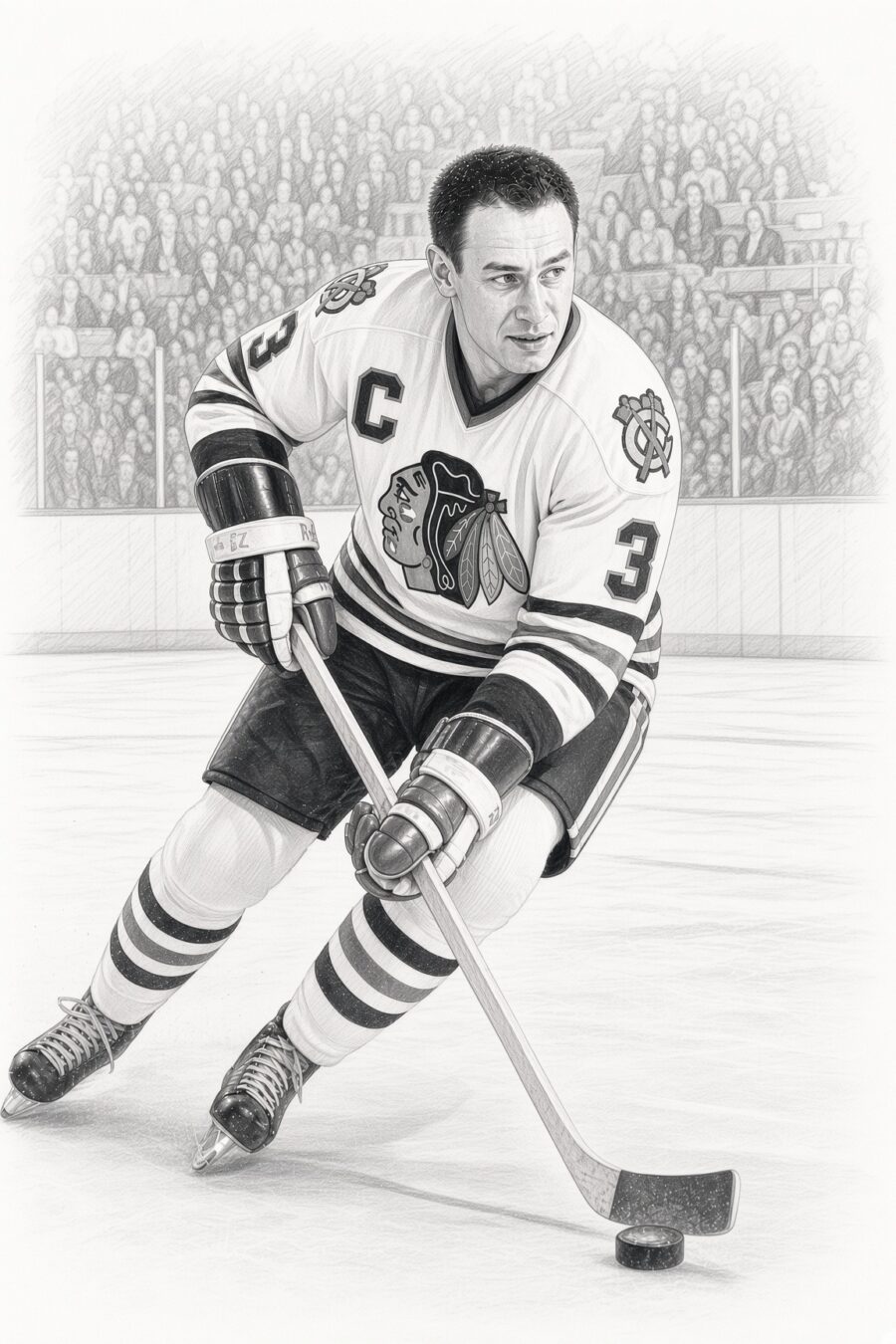
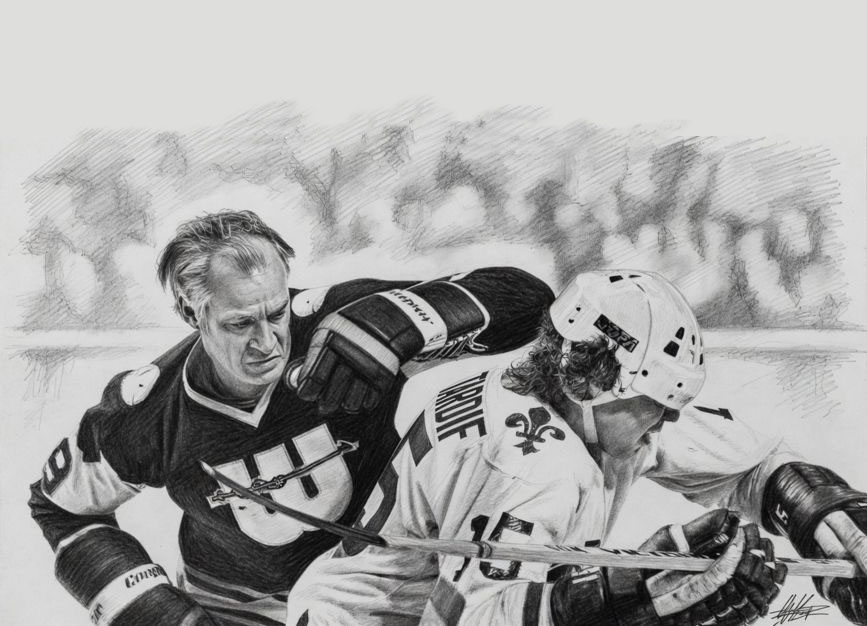
Then, right at the end of the decade, you see Bobby Orr and Brad Park, who changed everything, standing out in history like an F-bomb in the middle of Sophocles. Well, actually, to be more strictly accurate, you have Pierre Pilote, who perhaps was to Orr what Sophocles was to Shakespeare, the man who seemed like a one-off until he wasn’t.

What were the 1960s? The decade of expansion. The NHL doubled in size from the Original Six to the Trendy Twelve in 1967–68. The expansion teams were obviously inferior to the Original Six, so the NHL had them play in their own division and face each other more often than the Original Six teams until 1970–71, so for a few years you have to mentally adjust the performance of expansion team players who played more games against opposition that was still major-league standard, but structurally inferior. Remember, though, that the expansion era covers only three of eleven seasons in our sample. Sure, expansion helped Doug Harvey play until he was 44; when expansion came he was 43 and he probably wouldn’t have had that last crack without it. Expansion wasn’t what made defensemen of the 1960s hang on into their dotage despite flagrant and increasing weaknesses. The style of the times did that.

Here are the top twenty defensemen of the 1960s, or to be more specific 1959–60 through 1969–70, sorted by point shares per 82 games. If you’ve been following along the site so far, you’ll be familiar with all this, but if you’re not, “point shares” are a one-size-fits-all “advanced stat” Hockey Reference cooked up to try and give some sort of statistic of relative excellence that could be applied across eras. It is deeply flawed and starts conversatinos rather than ends them, but start conversations it does1.

Player PS OPS DPS OPS/DPS PS/82GP From To Age GP G A Pts +/- PIM
Bobby Orr 44.6 26.4 18.2 1.45 14.63 1966-67 1969-70 18-21 250 78 178 256 138 423
Brad Park 14 4.9 9.1 0.54 10.07 1968-69 1969-70 20-21 114 14 49 63 35 168
Pierre Pilote 75.4 31.2 44.2 0.71 9.37 1959-60 1968-69 28-37 660 61 345 406 187 934
Barclay Plager 20.6 5.6 15 0.37 9.13 1967-68 1969-70 26-28 185 15 67 82 37 401
Keith Magnuson 7.8 0.7 7.1 0.10 8.42 1969-70 1969-70 22 76 0 24 24 38 213
Jacques Laperrière 47.6 12.9 34.6 0.37 8.30 1962-63 1969-70 21-28 470 28 175 203 106 561
Jim Dorey 10.6 3.6 7.1 0.51 8.12 1968-69 1969-70 21-22 107 14 33 47 18 299
Tim Horton 75.4 23.3 52.1 0.45 8.09 1959-60 1969-70 30-40 764 79 242 321 144 909
Serge Savard 20.1 5.4 14.6 0.37 7.96 1966-67 1969-70 21-24 207 22 55 77 54 145
Carl Brewer 42.6 8.9 33.7 0.26 7.73 1959-60 1969-70 21-31 452 18 147 165 197 824
J.C. Tremblay 60.6 14.4 46.2 0.31 7.72 1959-60 1969-70 21-31 644 40 203 243 175 159
Doug Barkley 23.2 7.6 15.6 0.49 7.61 1959-60 1965-66 23-29 250 24 80 104 56 382
Doug Harvey 32.2 10.3 21.9 0.47 7.61 1959-60 1968-69 35-44 347 24 135 159 46 267
Allan Stanley 58 14.3 43.7 0.33 7.59 1959-60 1968-69 33-42 627 50 177 227 117 299
Jim McKenny 8.5 3.7 4.8 0.77 7.49 1965-66 1969-70 19-23 93 13 33 46 -3 38
Pat Stapleton 36.9 14 22.9 0.61 7.45 1961-62 1969-70 21-29 406 23 191 214 23 260
Carol Vadnais 17.1 8.4 8.7 0.97 7.23 1966-67 1969-70 21-24 194 40 51 91 -46 427
Gary Bergman 34.4 11.4 23 0.50 6.91 1964-65 1969-70 26-31 408 38 128 166 62 621
Bill White 17.6 6.6 11 0.60 6.87 1967-68 1969-70 28-30 210 20 71 91 -19 177
Kent Douglas 35.2 9.1 26.1 0.35 6.74 1962-63 1968-69 26-32 428 33 115 148 -1 631

Bobby Orr, in seasons that would usually be considered developmental ones, is by point shares/82 games already worth one and a half of any defenseman who came before him. Was Orr really worth one and a half Pierre Pilotes? He was probably worth more. We all know what Bobby Orr was, and one thing he was was a paradigm shift.

Pilote’s a great comparison, not because he was comparable to Bobby Orr (nobody was) but because, if you were told “the best offensive defenseman of all time is coming” in 1965, you’d probably imagine a rich man’s Pierre Pilote. Pilote was no Paul Coffey, all flash and no concussion. Pierre Pilote could hit, and he did; if you tried to take a liberty when he was up-ice you found out about it. Even by 1960s standards Pilote had a reputation for being dirty with his stick, he skated hard, always gave a full shift, and knew the game. Pilote was a tremendous, tremendous player.

But Pilote was an offensive defenseman. As good an offensive defenseman in his own zone as anybody thought a player of his type could be, but definitely an offensive defenseman. He was 5’10”, which was still a little small even for the era, and too much of his defensive prowess consisted of the big open-ice hit, or taking the smart penalty after getting caught up-ice. For an attacking player, Pilote was in the box a lot. Not that you minded, much, for they were good penalties; when they’re blowing down 3-on-1 towards Moose Vasko because Pilote fanned on a puck and Pilote busts back and gives the puck-carrier a tap on the ankle, you’re not really mad as long as Pilote didn’t make a habit of those turnovers, and he didn’t.

Unlike many of the defensemen on this list, you could drop Pierre Pilote into a 2026 NHL game and have a good player. He was a modern player, nearly; he even retired at a reasonable age, near the top of his game, and the things that distinguished him from a modern defenseman, those big open-ice hits and over-the-top “big play” mentality, would be coached out of him in a month if Rod Brind’Amour could go back in time and do it. He’d be very small for a modern NHL blueline, but so’s Quinn Hughes. Everyone knew Pilote was terrific, he won three Norris trophies in a row, but he was still underrated. Award voters preferred Doug Harvey for as long as they had half an excuse; Harvey won at least one Norris Pilote should have had. Then Bobby Orr came. It must be bloody difficult to be almost immediately succeeded as the game’s best defenseman by the superhuman version of you.

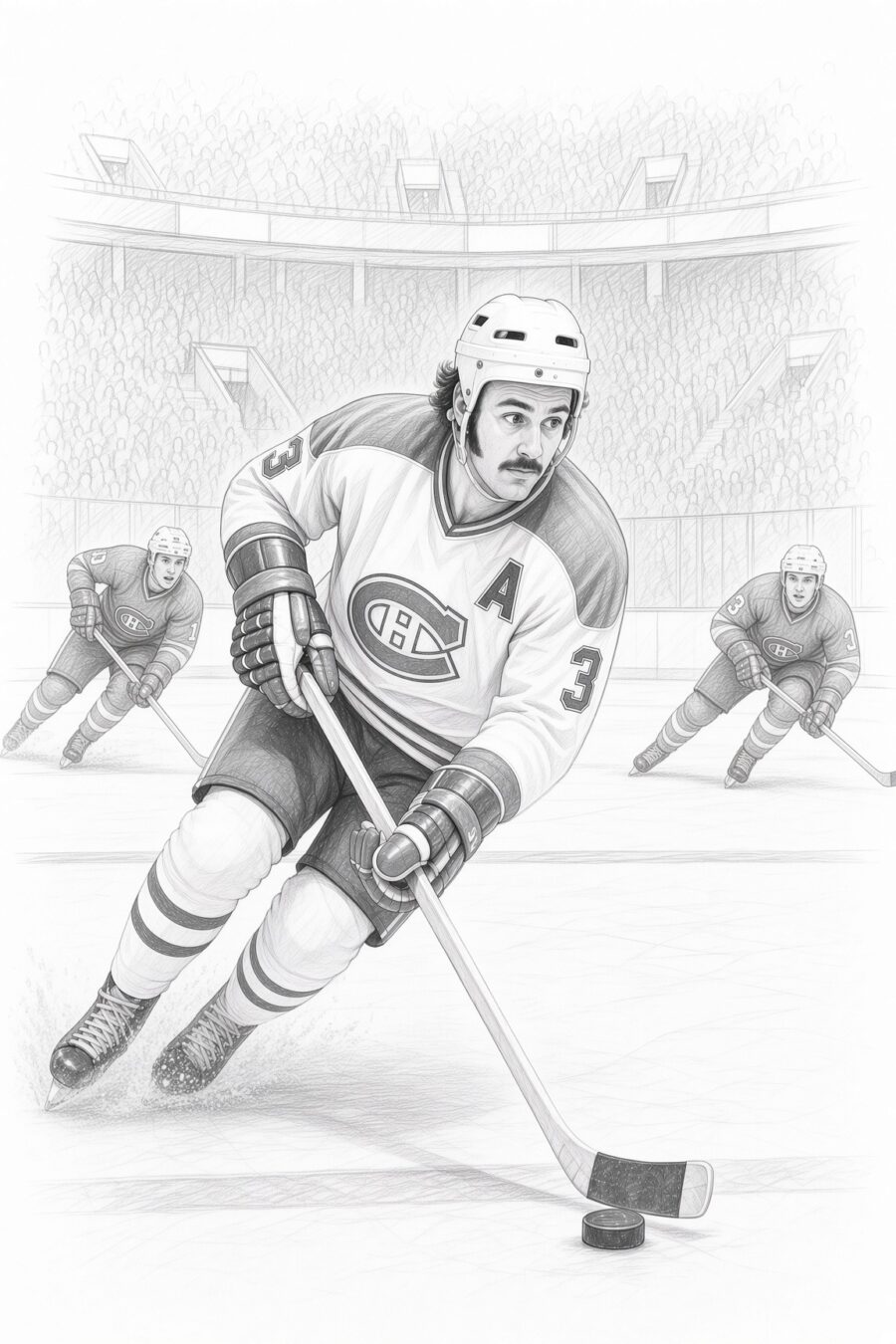
Although it could be worse; you could be Brad Park, surely the best second-best defenseman in the history of the league. Did Pilote pave the way for Orr and Park? Orr was such a monster it’s hard to imagine anything stopping him, but Park turned into sort of a post-Orr Pilote. This was after the 1960s and therefore strictly-speaking out of scope, but while he was basically a bigger, harder Pilote as a young player, in maturity Park got coached out of some of Pilote’s obsolete habits. Not bad habits, coaches thought the way Pilote played was the right way to use his gifts at the time, but once Orr showed it was physically possible to lead the rush and skate back in time to defend, coaches wanted it, and when mere mortals couldn’t quite manage they wanted to fake it, which meant picking spots and prioritizing position play over the big open-ice hits of the Pilote era. Park was one player earlier in his career and another one later; he modernized in a way Pilote was never given the opportunity to.

Just look at J. C. Tremblay. J. C. Superstar’s OPS/DPS of 0.31 in the 1960s, when he was in his physical prime, and 0.69 in the 1970s, when he was getting old, looks very strange. He went from a career high of 39 points prior to 1970 to 63-point and 57-point seasons before he jumped to the WHA. It gets even stranger when you know that Tremblay was a lousy skater at the best of times. Yet, as a historical fact, Tremblay turned into an elite offensive defenseman at an age when most players turn into car salesmen: whether it was because Larry Robinson took up so much ice, or Scotty Bowman changed his role, it happened. My theory, simply put, is that he just modernized. Everyone agrees J. C. Tremblay was one of the smartest men on ice, and the 1970s gave him the moral room to rag the puck, pass more aggressively, try bouncing shots from centre ice, and he made the adjustment. He could never have been Pilote, he didn’t have the hitting and he didn’t have the legs, but in the wake of Orr, a little risk-taking from positionally-aware players came into vogue. If Tremblay got the puck somewhere around the hash marks, tried to skate it out and make a breakout pass, and happened to turn it over, he would have been benched in 1963 and he would not have been benched in 1972.

Top 20 by point shares/82 games is unusually harsh this decade. The 1970s list wasn’t missing anybody glaring, but in the 1960s defensemen played a long, long time past their salad days. So we’re without Jean-Guy Talbot, who was fourth in the decade for point shares by a defenseman but 21st in point shares per 82 games. Bobby Baun was 7th in point shares and 31st per 82 games. Harry Howell was 6th overall and 37th per 82 games. Marcel Pronovost: 10th and 42nd2. That’s two Hockey Hall of Famers, Pronovost and Howell, left off, plus Baun, who I keep forgetting isn’t in the Hall of Fame from how much you hear about how great he was3. Pronovost was quite a lot better in the 1950s than the 1960s, and it was the injuries much more than the age which caught up to him. Howell was honestly never that great, but played forever. He won his only Norris in 1966–67, and there have been worse winners. But I reckon the voters wanted to give the Horse his due: it was a nice fluke season for an old, respected player, and nobody would have been excited to vote for Pierre Pilote again. Pilote handily outscored Howell but that’s a bit like saying the sun handily rose in the west. Besides that, Pilote was about equivalent defensively and went plus 54 in seventy games. Why yes that did lead the league, and not by a little bit, great though Pilote’s Black Hawks were.

In the 1970s, we defined a defensive defenseman as somebody whose offensive point shares divided by defensive point shares was less than 0.40. It’s the “Whitey Stapleton line,” because everyone knows Whitey Stapleton was a two-way defenseman and everyone knows Serge Savard was a defensive defenseman, and 0.40 made that look right. Anyway, on the 1970s list, the only four defensive defensemen in the top 20 were Serge, Jacques Laperrière, Bill White, and Jim Schoenfeld. Some of this is because point shares, and especially point shares per 82 games, are biased towards offensive defensemen: no matter what these primitive advanced statistics say, Barry Beck’s mom wouldn’t have taken Barry Beck over Jacques Laperrière in the 1970s.

But some of this is because the 1970s were that kind of decade, and the 1960s were not. Look at our defensive defensemen now. Barclay Plager comes in fourth in point shares per 82 games. Then Keith Magnusson; his rookie season was the second-best of his career by Point Shares and he led the entire league in DPS that season, so this is a bit of a fluke, but he was that type of player. Immediately after him is Jacques Laperrière again, this time in the prime of his career. Young, pre-prime Serge Savard isn’t far off the pace, nor is a decade of Carl Brewer, and there’s J. C. Superstar before he suddenly learned how to put up points. Finally there’s Kent Douglas, who frankly it’s hard to justify on this sort of list based off reputation. He was a tough Eddie Shore-trained player, and should have been in Punch Imlach’s wheelhouse, but he actually missed both the Maple Leafs’ Stanley Cup runs during his career because Imlach had him in the minors. For all the flaws of historic point shares it’s bloody rare for them to elevate a dud into a decadal top 20. Maybe Imlach was irrationally down on Douglas (that was known to happen), or maybe the math shows him better than he was. No way to tell now.

Anyway, eight of our 1960s top 20 were defensive defenseman, mostly in the top half of the list; in the 1970s they’re clustered at the bottom. Horton, who was very nearly a defensive defenseman, could be argued as the best all-round blueliner of the decade, and the defensive defenseman par excellence, Laperrière, was not far behind. You can gripe about Douglas, but he was 0.05 PS/82GP ahead of Talbot, who is not well-remembered but probably ought to have won a Norris in 1962 and would have been the most defensive defenseman on either the 1960s or 1970s top twenty.

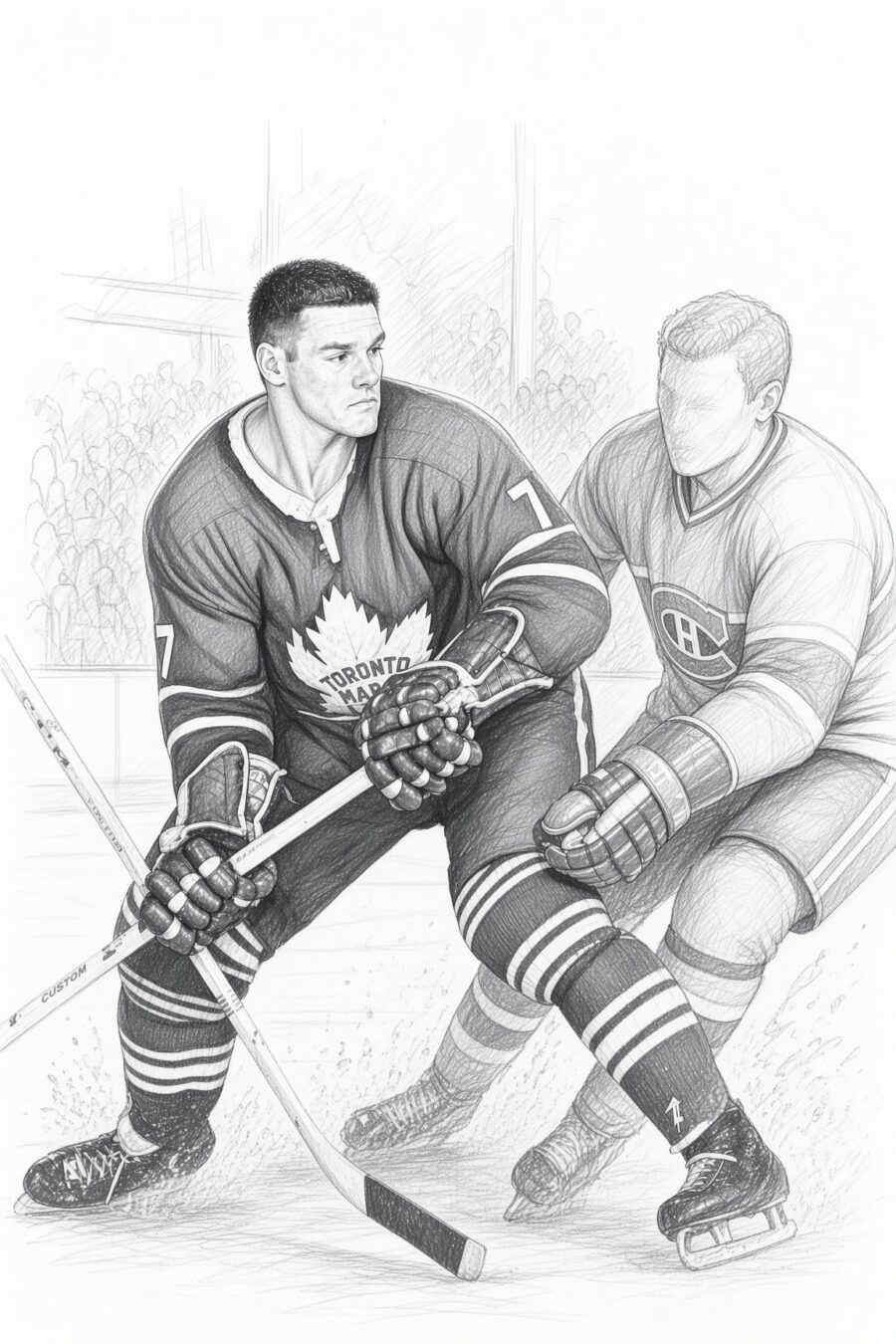
What do you even say about Tim Horton? He was a Leaf. From romantic small-town Ontario. Who won Stanley Cups in Toronto. And died in a fashion that was appropriate to his time and place. His name lives on in the worst restaurant, and maybe the worst company, in Canada, which nevertheless retains a hallowed status among people too old to be reading this blog. He was actually as tall as Pierre Pilote, officially, but broader and stronger: he had a reputation as the strongest player in the game, which is hard to believe since he was a Leaf and Gordie Howe was active, but he was certainly in the top three.

Horton’s strengths were durability, durability, durability, strength, and calm. Nobody ever seems to have caught Tim Horton panicking; his faith in his own abilities was very high and not wrongly. He never won a Norris, though he was top five six times, as he didn’t really put up the points or wrap the course of a play around his finger in the way Harvey or Pilote (or Pronovost) could, but as you can see he did contribute offensively, and if you go down that long, long Hockey Reference page, you’ll see that he chipped in more points than you probably imagine, every year, for a century.

Horton’s peak value wasn’t first-class, but he was a very good defenseman indeed at his best, and his best lasted a long time. Horton’s first 40-point season came in 1953–54 when he was 24. He had to wait eight seasons for his next one, in 1961–62. Then his third one came seven years after that. When he died, midseason at age 44, Horton had slowed down, but he probably had another season or even two of value in him.

Which is extraordinary because Horton was such a limited player. His skating was average when he was young, and a lot less than that once he was old. As an offensive player he was a faithful member of the supporting cast but obviously no more, and, most famously, he couldn’t see. Which perhaps explains the state of his restaurants these days, but he was a slow guy with serious myopia and modest puck skills, and also an undisputed Hall-of-Famer, one of the few best defensemen of his era, because that was the time in which he played. Go out, stay healthy, overpower people, and don’t make mistakes, and you could play an almost unbelievably long time.

Since point shares in the pre-Corsi/Fenwick/time-on-ice era are biased towards offensive defensemen, I nearly stretched a point to list Talbot because he was obviously one of the decade’s top 20 on merit. But we leave him for now; he will return on the 1950s list, one of the most archetypal, though not the best, pre-Orr defensemen.

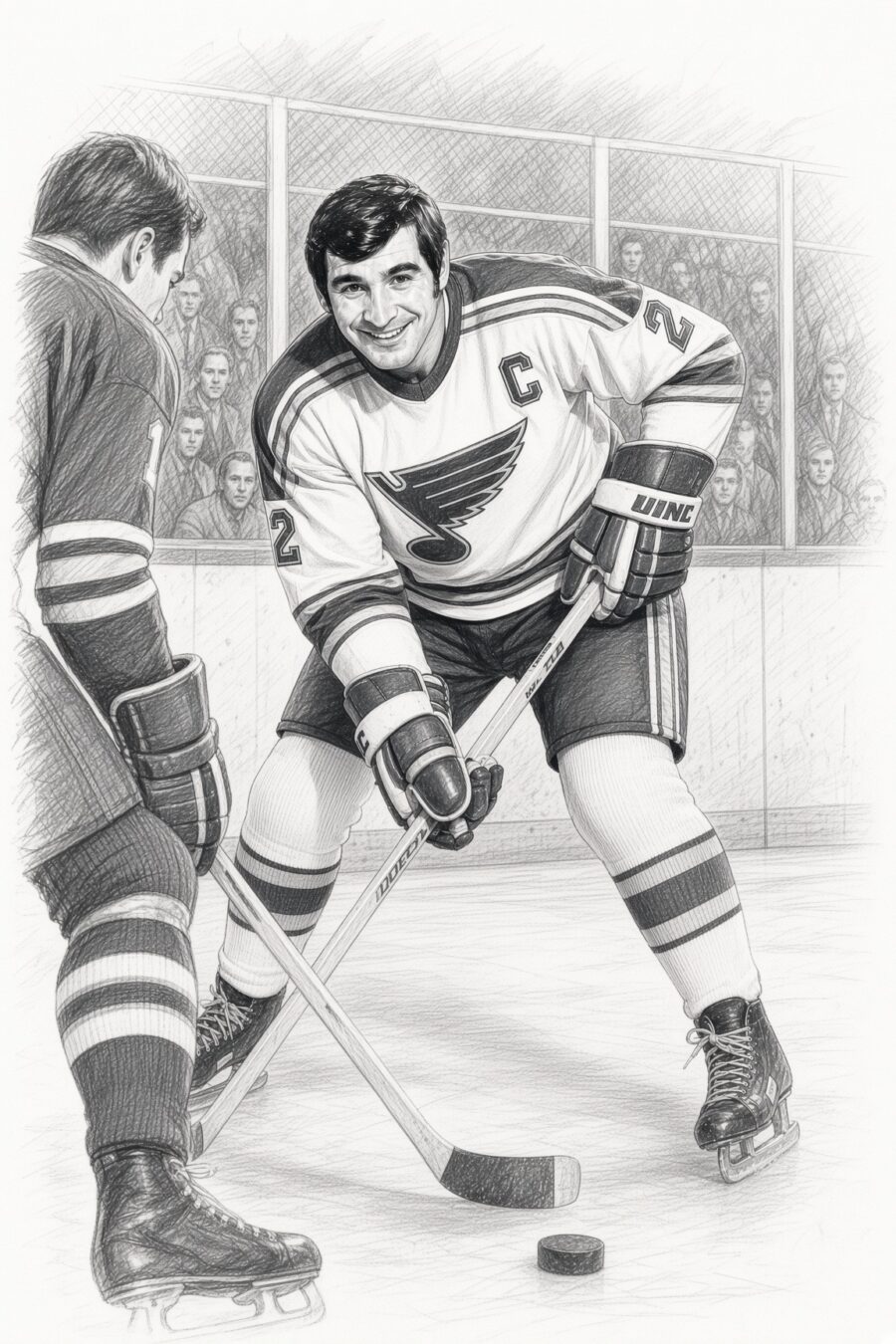
Barclay Plager is another player whose career is defined by his era. One of the few players trapped in the minors by the Original Six who really was as good as people imagine, Plager toiled in the New York Rangers organization forever and never got a big-league game, but the St. Louis Blues almost instantly found him to be one of best defensive defensemen in the league. You can see why the scouts missed him; he wasn’t big, he didn’t put up points, and he had a face like a catcher’s mitt, but he was hard, by the time he got to the show he knew the game and was desperate to make it, and yet he was a team player through and through, born captain material, someone who let his long struggle strengthen his character rather than embitter him. Plager played his first NHL game at age 26, and when healthy was never out of the lineup again until he was 35. He made four All-Star games in nine full-time NHL seasons and even his last year, when he was a player-coach in the minors, he picked up the league MVP award. He’s not a household name, and his high position on this list does flatter him: he was in his physical prime every year and got the easier expansion-team schedule. Fine; he wasn’t the fourth-best defenseman of the decade, he was tenth or something. Not bad for a guy spending a lifetime on the Rangers’ farm.

Jim McKenny got his first NHL cup of coffee when he was 19 years old, and despite playing on a Leafs team that could have used all the youth it could get took forever to get established, probably because of a drinking problem he is now quite open about, and because if you were struggling to cope with the pressures and perils of major league sports the last coach you’d want is Punch Imlach. In our sample he played 93 games in four seasons, which says something, and some of it was at forward; I’d feel bad having him on the list except that you could see, in the 1970s, what all the fuss was about. Not that he blossomed into stardom, exactly, but his best seasons were very good, a two-way defenseman who could deliver, Pat Stapleton with demons, and given another shot at it he’d have played in the Summit Series. He seems to have made his way in life, anyway.

You still see Doug Harvey on this list. He started this decade at 35 years old and ended it at 44. Like Tim Horton, he was a great old player; he was obviously better than Horton when they were both young, but Horton’s strength and Harvey’s on-ice wisdom kept them going in an age that didn’t ask a lot of a defenseman. I have so many thoughts about Doug Harvey I’ll put them into a bonus post: he is one of those players, like Bob Gainey, whose undeniable quality has been blown out for an overappreciated appreciation as an underappreciated player.

One doesn’t get the impression one would have liked 1960s hockey, having experienced the alternative. Slow, party-hearty players trying to throw monster hits at forwards skating along rather than passing the puck. By the 1972 Summit Series this was starting to change, you can see the blips at the end of the decade, but you can also see why people associated North American hockey with that style and why the fully modernized Soviet game seemed so revolutionary next to the half-modernized Canadians. Any league that rewards you from running someone like Tim Horton out there into his mid-40s is a league ready for change, and that’s just what happened.

  1. All stats from Stathead. Minimum 70GP. Doug Mohns, who would have been #20, is excluded because he spent most of the 1960s on left wing.
  2. Stathead tells us that Red Kelly was 18th overall and 45th in PS/82GP, but Kelly spent almost the entire 1960s at centre. Doug Mohns, 5th/20th, was mostly a left winger.
  3. Did you know: Bobby Baun once scored a goal with a broken leg? Not a lot of people know that.

Leave a Reply

Your email address will not be published. Required fields are marked *