Skip to content

Statistical history

Patrick Roy and the Incredible Improving Goalies

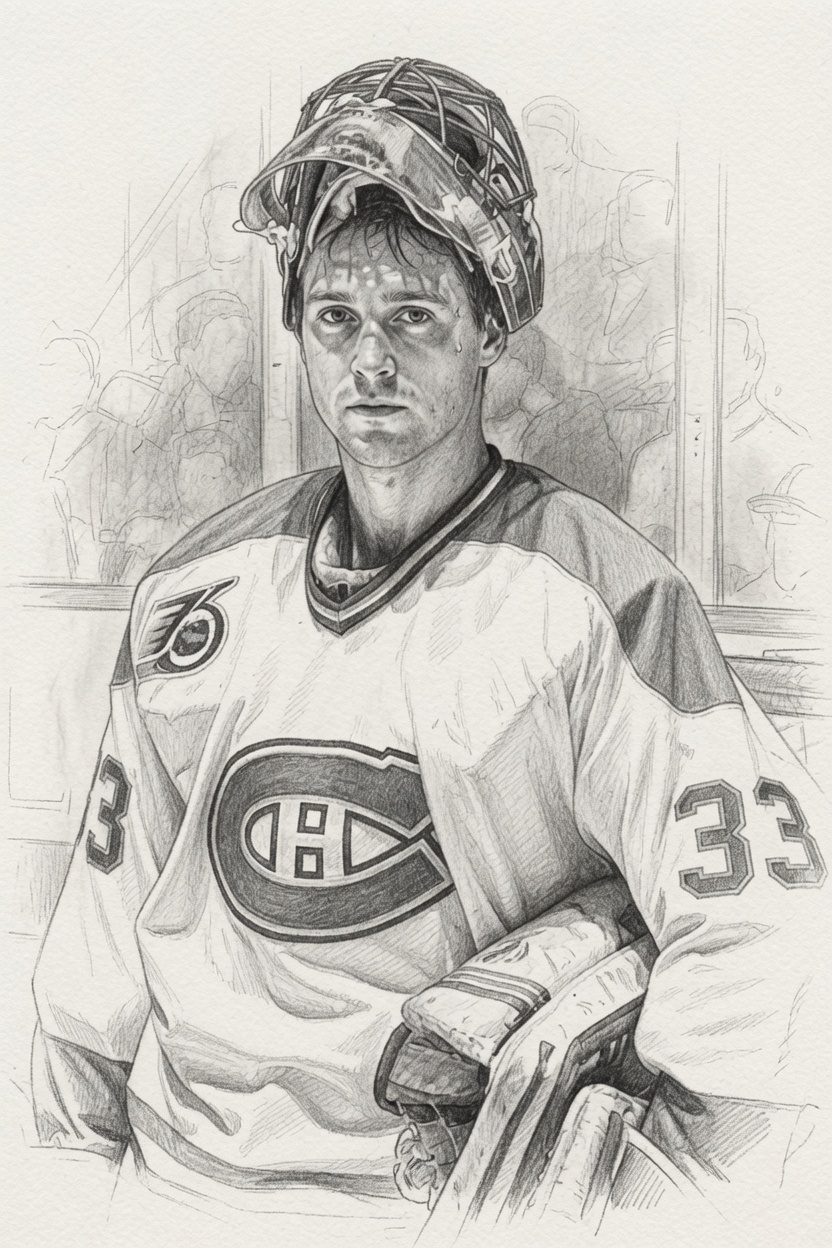
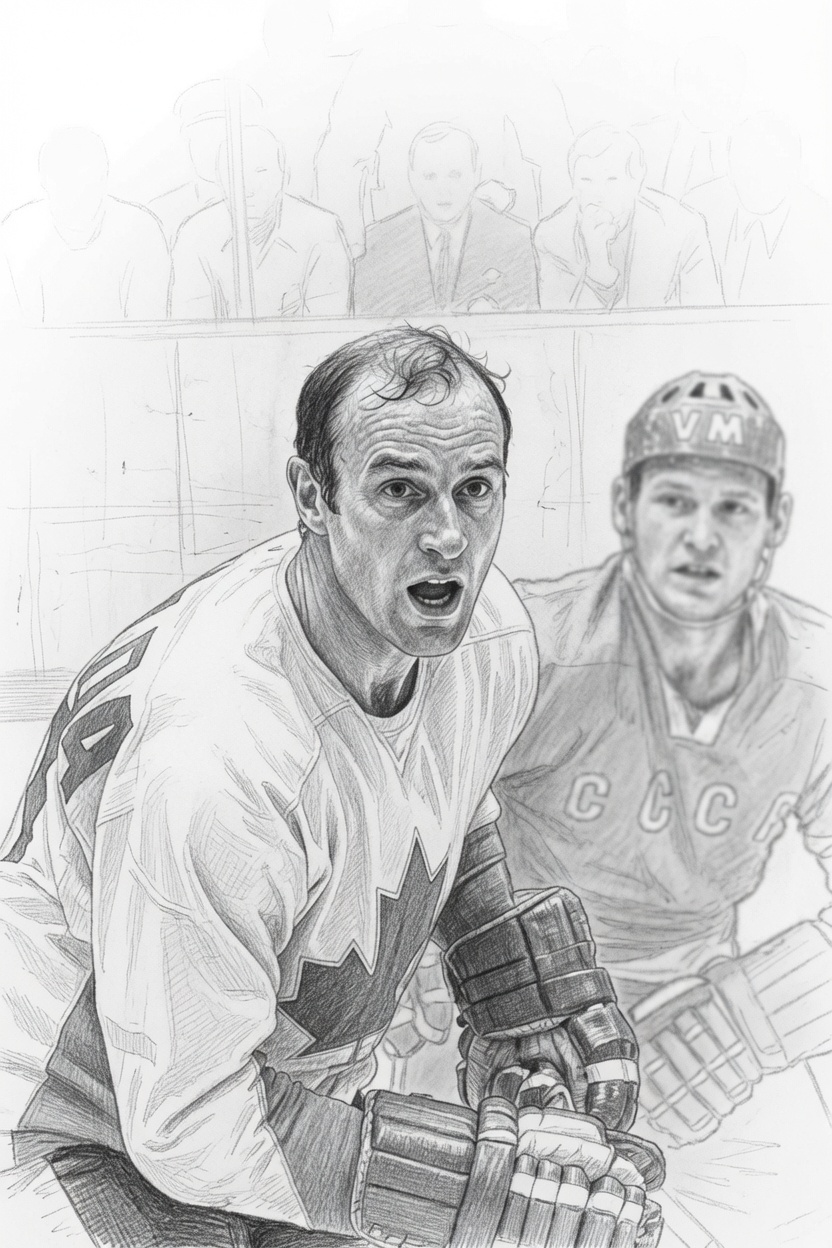
Here are the first eight full seasons of a goalie's NHL career and then, in the last row, his career totals. You know who this is, because his name is in the title and his picture is over there, but let's take a second and pretend. What would you think when you saw these?

Season Age GP W L T GA Sh Sv Sv% GAA SO
1985–86 20 47 23 18 3 148 1186 1038 0.875 3.36 1
1986–87 21 46 22 16 6 131 1206 1075 0.891 2.94 1
1987–88 22 45 23 12 9 125 1248 1123 0.9 2.9 3
1988–89 23 48 33 5 6 113 1226 1113 0.908 2.47 4
1989–90 24 54 31 16 5 134 1522 1388 0.912 2.53 3
1990–91 25 48 25 15 6 128 1362 1234 0.906 2.71 1
1991–92 26 67 36 22 8 155 1806 1651 0.914 2.36 5
1992–93 27 62 31 25 5 192 1814 1622 0.894 3.2 2
8 Seasons 417 224 129 48 1126 11370 10244 0.901 3.14 20
Career 1029 551 315 131 2546 28346 25800 0.910 2.54 66

Even forcing the fact that this is Patrick Roy out of your mind with a bulldozer, you'll recognize a very fine goalie of the late '80s and early '90s. Then you'll look at the career stats and say "yes, of course, all-time great." I do not propose to surprise you with that. Everyone knows Patrick Roy was a great goalie and everyone is right. Sometimes, conventional wisdom is wise.

But see those season-by-season save percentages, then look at the bottom, to Patrick's career save percentage. Six of Roy's fisrt eight full seasons had save percentages below his career average; often quite a lot below. It is something of an article of faith in statistical circles that, and this fully deserves capital letters, Goalies Don't Improve; that by the time a goalie gets to the show he's enough of a finished article that you can't expect a lot more from him. Patrick Roy went from a .901 save percentage in his first eight seasons to a .910 overall; a difference of thirteen, fourteen goals against a season. If a skater goes from 36-goal seasons in his mid-twenties to 50-goal seasons in his thirties we have no trouble recognizing an improvement, though we might find it somewhat mystifying. Sure, Roy went from the high-scoring 1980s to the low-scoring 2000s, he played in an era where save percentages went up, but Patrick Roy was still the same goalie. The passage of time did not improve his reflexes. In fact, the conventional story is that Roy, by popularizing the butterfly, had a lot to do with what made his era one with high save percentages; in short, Roy should have been way ahead of the field early on, as a pioneer, but come back down to earth as the butterfly became ubiquitous. This, as you can see from that table and as you remember from his career, is not what happened.
Continue reading

The Great NHL Defensemen of the 1970s

The 1970s was hockey's coolest decade. Sudden expansion, new types of player, the arrival of the Europeans, more fighting, great dynasties, great hair, first-time winners, the World Hockey Association. Bobby Orr, Guy Lafleur, Bobby Clarke, Ken Dryden, Paul Henderson. Glorious brawls, glorious goals, drama off the ice and on. The 1970s hold together, as a decade, in the way few others do, with expansion on one end and the post-WHA Gretzky era on the other. The 1970s are their own thing.

Ahead of the scoring explosion of the 1980s, it was an era unusually gifted with great defensemen. Orr, of course; the greatest of them all, the player who half a century later has not even been approached, whose greatness only grows with time, the player who changed the way defensemen could play but also set a standard none of his gifted successors have approached. But there was Brad Park and Denis Potvin and Larry Robinson, there was the start for Ray Bourque and the end for J. C. Tremblay, there was Börje Salming revolutionizing the game in an entirely different way. Though not a low-scoring era, the 1970s may have been the decade of the blueliner. There were plenty of great defensemen between Eddie Shore and Bobby Orr, of course, but people had forgotten that the first person to touch the puck has every opportunity to be as creative as the last. The influence of European hockey was just arriving, and hadn't had time to influence young players, but the game had already changed, and the ability of the defense to control where the puck went beyond throwing a thundering open-ice hit was being developed and appreciated in new ways.

So let's look at the best NHL defensemen of the 1970s. Not so much the very best, because nobody needs to be told that Bobby Orr or Larry Robinson was good, but the second tier, the guys who just made the Hall of Fame or didn't quite, the mass of elite talent who, in an elite era, influenced the game.

Continue reading

NHL Power Play Specialists

The greatest goalscorer on the power play in NHL history is Alexander Ovechkin, because he has the most goals.

Nobody's mad if you stop there. The job of the power play is to put the puck in the net and Alex Ovechkin has done that more than anyone, both with the man advantage and just generally. As of this writing, Ovechkin has scored 35.83% of his 921 NHL goals a man up; this will have changed by the time you're reading. 20% of NHL goals, give-or-take, are scored on the power play, so Ovechkin is conspicuously more effective with the man advantage than the statistical median NHL player. Which, since Ovechkin is quite a lot better than the statistical median NHL player, is not a surprise when you think about it.

Of course the power play is an advantage, it opens up more ice for the attacking team. Better players get more time on the power play, thus scoring a higher proportion of their goals there, and they should, because their skills mean they achieve more. This all makes sense after three seconds of thought. That the best scorers generally are also the best scorers on the man advantage is true, but uninteresting. If I had, say, the 2024–25 Anaheim Ducks, who were a decent team despite having one of the twenty worst power plays since recordkeeping began, I would not want you to tell me that I could use Leon Draisaitl; I knew that already. I would want to know what sort of player might make an impact disproportionate to his 5-on-5 skill with the man advantage, and might therefore be someone I can get. What I want, then, is a measure of a player as a power play specialist, the extent to which his powerplay productivity stood out from his normal scoring skills, and hopefully an idea of what type of player that is.

Continue reading