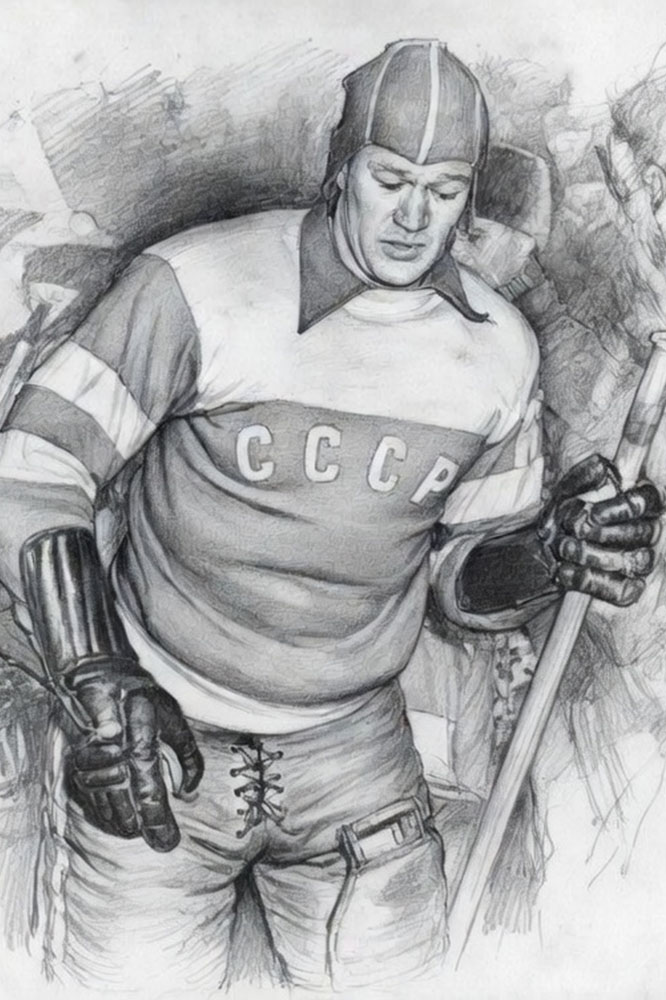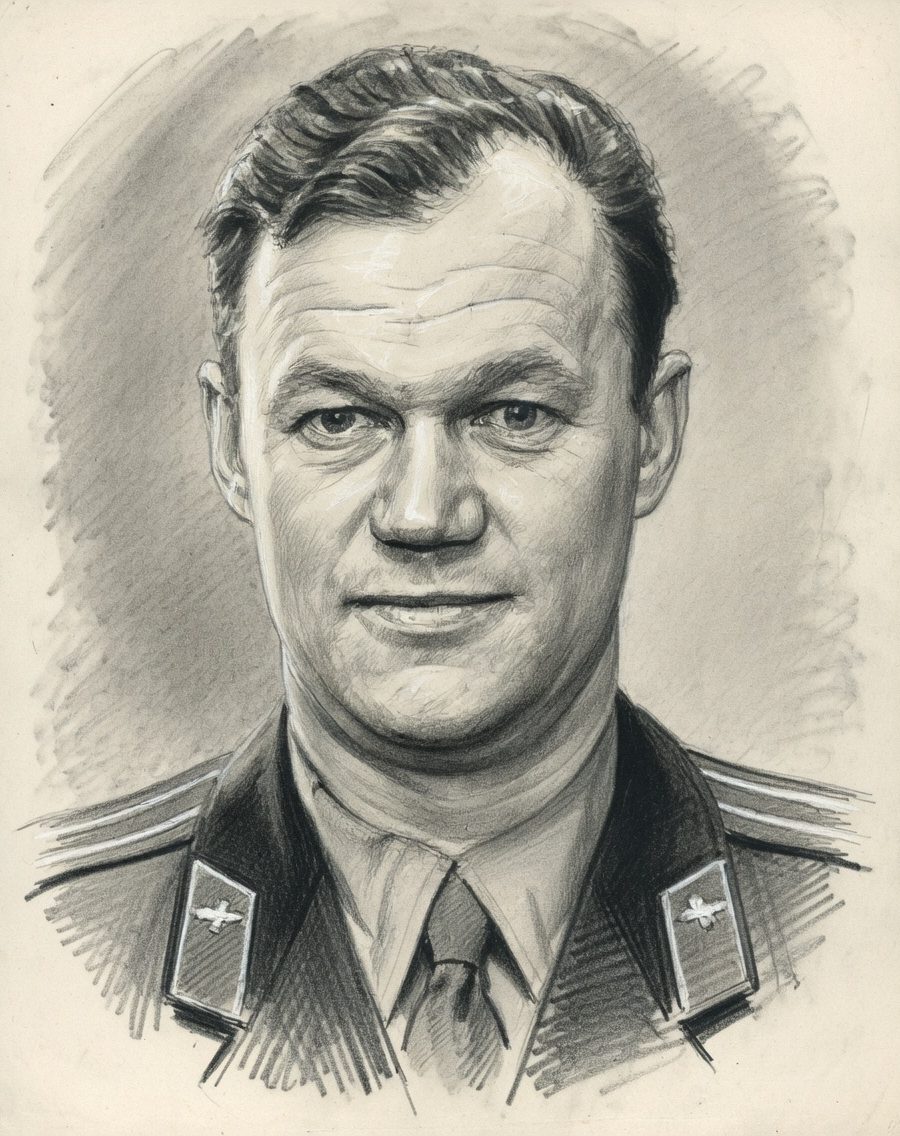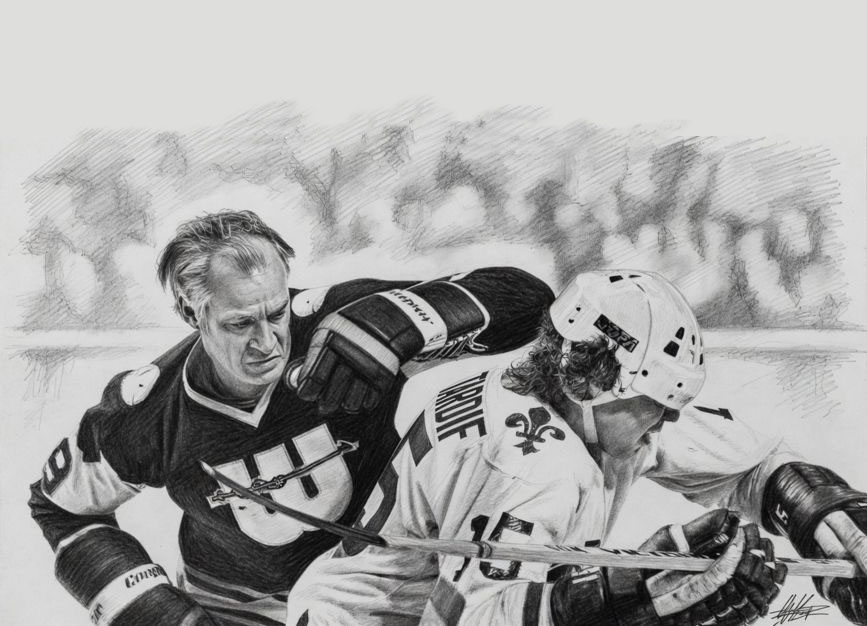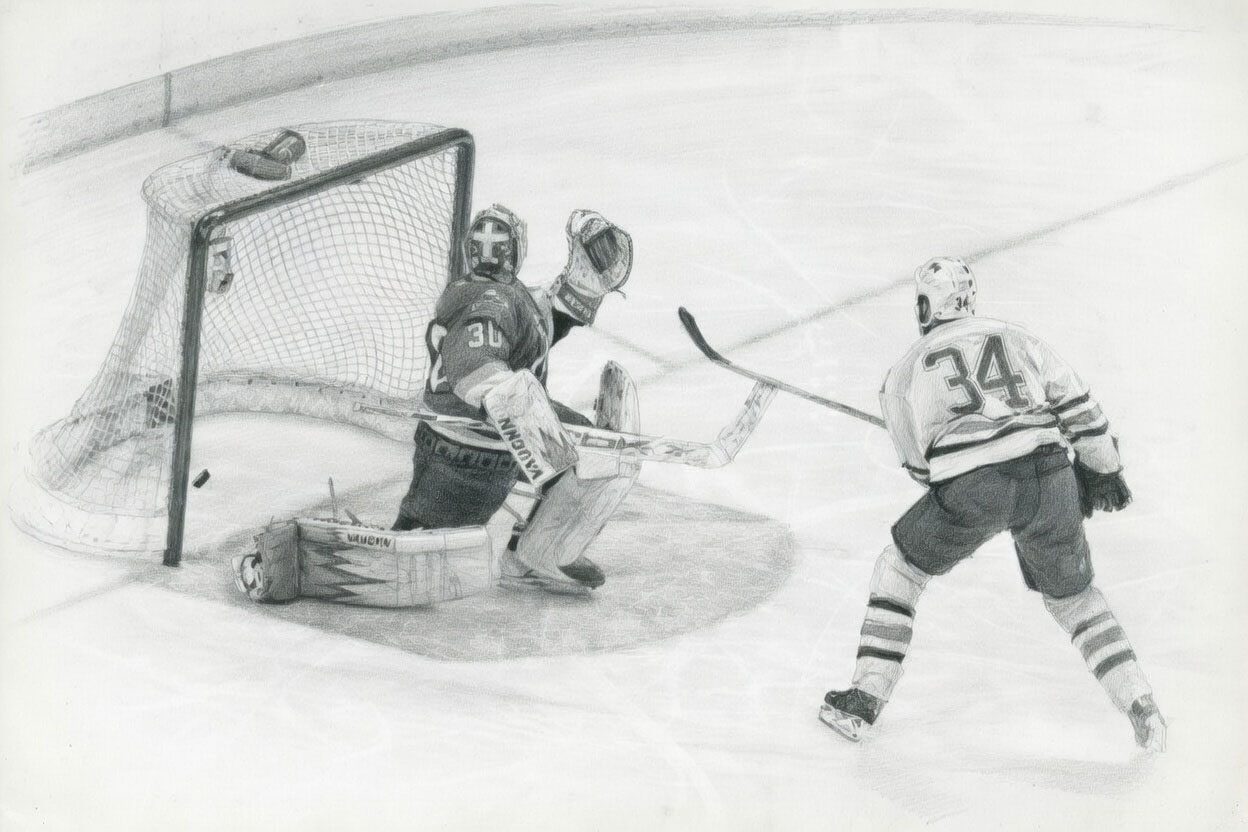
Vsevolod Mikhailovich Bobrov (December 1, 1922 – July 1, 1979) is the official first hockey hero of the Soviet Union, to the extent Soviet hockey went in for anything as bourgeoisie as heroism. The “Big Red Machine,” the formless, perfectly-engineered game-winning communist automaton, all wheels and cogs and interchangeable parts cast in the foundries of the Red Army, was one-third real, one-third the team’s goal, and one-third a contrast to North American individualism that appeared starker than it was. The men, like Bobrov, were still men: they lived and breathed and often enough partied like hellions, flying through the snow in their Ladas with a quart of vodka in the system and smoking Polish cigarettes, differentiated from Guy Lafleur by haircut and quality of goods. They left enough memories that Bobrov was named to the IIHF Hall of Fame on its founding a quarter-century after his death, was named to the IIHF “All-Time Russia Team” in 2020, and the KHL named one of its divisions after him.
Although a well-known Soviet athlete immediately after the war, Bobrov made his first international impact at the Olympics. The Summer Olympics, to be specific; in addition to hockey and bandy (which is to hockey as Pravda is to truth), Bobrov was an excellent soccer forward and captained the Soviet soccer team at the 1952 Summer Olympics. Bobrov began by scoring the equalizer in a 2-1 extra time preliminary-round win against a decent Bulgarian team lead by influential goalkeeper Apostol Sokolov. But that was nothing: the Soviets faced a good Yugoslav team next in the first round proper. Yugoslavia took a 3-0 lead at halftime; while Bobrov was able to make it 3–1 Yugoslavia got the next two to stake a 5–1 lead and, like Tito taking over Albania, they probably thought it was all over. At 75′ Vasili Trofimov scored for the Soviets; Bobrov added his second at 77′ to make a game of it, then completed his hat trick on 87′. 5–4. Aleksandr Petrov tied the game in the eighty-ninth of ninety minutes, and the Soviet Union had what match referee Arthur Ellis called “the most honourable draw ever recorded.” There were no penalty shootouts in those days, so two days later they played again: Bobrov opened the scoring in the sixth minute, but the Yugoslavs took control after that, winning 3-1 and going on to the silver medal, losing only to Ferenc Puskás’s unstoppable Hungarian “Magical Magyars.” Ellis said of Bobrov, “he, almost single-handed, took the score to 5–5 [. . .] For once, use of the word sensational was justified.”
This, it will be remembered, was Bobrov’s second-best sport.
They say, and this is always the mark of quality historiography when talking about Joseph Stalin, but they say Stalin expected a gold medal in soccer in 1952. He had clearly never heard of Puskás then, but losing to Tito’s Yugoslavs, with whom there was bad blood, was ill-advised no matter how many comeback heroics went with it. At any rate, the Soviet coach was officially disgraced and most of the 1952 team, including Bobrov, never played for the national soccer team again. Luckily Bobrov had a better-than-usual plan “B.”
Hockey has been played in Russia since the nineteenth century1 but was not taken up seriously in preference to bandy, the national ice-and-ball game, until after the Second World War. As many regimes have done in many sports, Soviet officialdom saw a game to which its people were well-suited, and had prestigious international competition, but where relatively few countries were competitive, and decided to build a hockey program out of whole cloth.
For many years players crossed over with soccer; the greatest Soviet soccer star of them all, goalkeeper Lev Yashin, faced Bobrov in the Soviet hockey league until 1953. Bobrov started out with the Air Force hockey team, VVS, the fiefdom of Joseph Stalin’s no-good son Vasily. If you haven’t seen The Death of Stalin, you should, and if you have you will remember Vasily’s travails trying to cover up losing an entire hockey team in a plane crash by replacing them with a band of incompetents. It ain’t easy to be unfair to Vasily Stalin but that sequence managed it: the crash spared Bobrov, not only the best player in Russia but a personal friend, who overslept for the ill-fated flight, and Viktor Shuvalov, a scoring champion who did not travel because of injury. It also turns out that Vasily Stalin had a connection or two and his replacements for the deceased players were in fact, by domestic standards, first-rate. Stalin junior’s VVS team won the next three Soviet titles after the plane crash before Stalin senior died in March 1953. VVS lost its patronage instantly; the Soviet authorities disbanded the Air Force team and concentrated their strength at a team that would be named CSKA Moscow but remembered as “Red Army.”2
The early Soviet league must have been an interesting place. Their approach was familiar: teams would be made up of employees of some factory, or some government institution, and then play each other. Hockey was not their job, assembling boots or writing five-year-plans or whatever was, and the players were amateurs linked by a common institution. Even in the West this was a routine way to run a league until the Second World War.
But in the Soviet Union institutions such as the Red Army or the KGB had certain advantages over the tractor factory. Bobrov, for example, was essentially a professional athlete from 1946 to 1954, though nominally an officer in the Soviet military. There was a rigid, dare I say mock-imperialist, rank structure. Bobrov had actually been active during the war; he had served behind the lines as an enlisted man. As a hockey player Bobrov was suddenly officer material, if not a great specimen of it: the country’s best hockey player was a mere lieutenant for nearly a decade. Coaches were a different story, and upon moving behind the bench Bobrov found promotion coming fast and was able to retire a full colonel despite the fact that, by all accounts, Bobrov was not actually a very good coach (if Canada had swept the Soviets in 1972 they’d have made him a brigadier).
This had predictable effects on league parity. Moscow teams won every Soviet championship. Until Gorbachev ruined everything that usually meant the Red Army, with the Ministry of the Interior (i.e. the KGB)’s Moscow Dynamo a distant second. The Air Force won three times in a row during the happy Stalin years, and every now and then a Moscow team of all-star electricians or aircraft builders or something would sneak a title to keep proletarian appearances up.
In the early years seasons were as short as 15 games, at a time when the NHL played 60 or 70 plus playoffs. Until the mid-1950s, all Soviet games were played outdoors, and the best players scored by the snowshovelful. In 1950–51 Bobrov’s VVS Moscow Air Force team scored 117 goals in 15 games, an average of 7.8 goals per game, and allowed only 27. Bobrov himself scored 42 goals, or 2.8 goals per game. He repeated as goalscoring champion in 1951–52 with 37 goals in 16 games; 2.3 goals per game if Bobrov played every game of the season which he probably didn’t. His linemate Shuvalov came second with 313. By comparison, Gordie Howe scored 43 then 47 goals in 70 games as the best goalscorer in the NHL those years.
Multi-sport athletes, wildly uncompetitive play, short schedules, goals galore; Soviet hockey in this era was in a rather primitive state. It bears comparison to the first season of the NHL, 1917–18, where teams played a 22-game schedule and Joe Malone led the circuit with 44 goals in 20 games (2.2 goals per game). If you could have seen one of those games you’d hardly recognize it. On top of his 44 goals, Malone had four assists, which even remembering that the secondary assist hadn’t been invented yet reminds us of how different the game was. All three of the top NHL individual seasons for goals-per-game came in its first year, 1917–18.