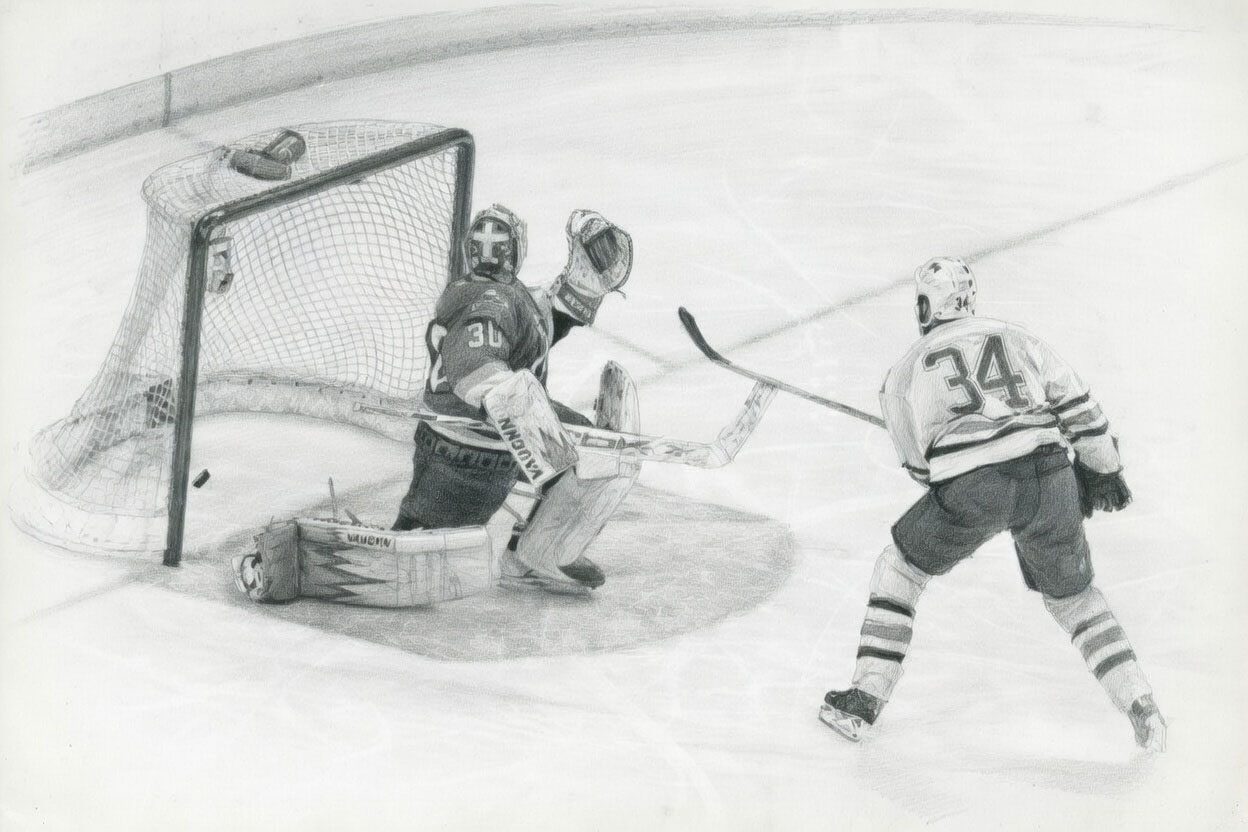
The World Hockey Association was major league-quality hockey when you look back at its best players and the overall quality of its teams, as well as the finest defensemen in a very forward-first league. A major league is defined by having players who can star in other major leagues, and teams that could compete with those in other major leagues; both boxes the WHA has already been shown to check.
We have not yet, however, explicitly looked at the ordinary WHA players who didn’t earn as much money as Bobby Hull but added up to far more ice time. Such players were not the key factor on the ice or in history, but hockey is a team game and not even Connor McDavid and Leon Draisaitl win on their own. Depth players matte and, to quote myself quoting Bill James, as he discussed baseball’s Union Association, traditionally but unworthily considered a major league:
The Union Association had big-league players. James counted 272 players who played at least once in the UA; 179 of them either had no other major league experience or mere cups-of-coffee, there were 53 otherwise-fringe major leaguers, 26 players who had been or would be major-leaguers but were either too old or too young at the time, 14 “legitimate major league players,” and, for James, zero stars. The WHA did have NHL stars; besides Hull and Tremblay, Gerry Cheevers, Bernie Parent, Derek Sanderson, and Paul Henderson played in the WHA in their prime. But several major-leaguers, in both the UA and WHA, put up numbers way above their otherwise-established level, while no established pros that James could found particularly disappointed in the UA and few did so in the WHA. As James put it:
Doesn’t it seem pretty obvious what the level of competition in that league was? It was a league that made .270 hitters into .400 hitters, and .450 pitchers into Sandy Koufax. In modern baseball, Al Martin is a career .280 hitter. Let me ask you: if there was a new league now, and if Al Martin hit .400 in that league, and Donovan Osborne went 23–4, would you accept that as a major league?
285 men played 150 games or more in the World Hockey Association, which adds up to two or three seasons as a regular in a league that lasted seven. Of those 285 players, how many of them were playing at an NHL standard during their WHA careers? The best way to find out would be to play hockey history over again in a control universe where the WHA never existed, but that is beyond the scope of this post, so we have to hit the encyclopedias instead.
Rather than play a lot of Franchise Hockey Manager and call it science, I went through each of those 285 players and assigned them their SUbjective Career Score, or SUCS. A player’s SUCS is my personal rating from zero to five, based entirely on what sort of player that WHA player was in the NHL at the time of their WHA careers. We’re less interested in the fact that Dave Keon had been an NHL superstar who later played in the WHA and more in what Dave Keon was at the time he moved to the WHA.
The possible SUCS values, and their meanings:
- 5 – NHL superstars immediately before they joined the WHA, or immediately after they left.
- 4 – NHL stars immediately before they joined the WHA, or immediately after they left, or NHL superstars who were noticeably below that standard in the WHA.
- 3 – Solid NHL players who played in the WHA, or NHL stars/superstars with long gaps between WHA play and NHL excellence. NHL players you’d be pleased to have.
- 2 – WHA players with modest NHL careers. NHL players.
- 1 – NHL appearances but no meaningful NHL career. Maybe played a full season or two but didn’t do anything. “Cups of coffee” and better.
- 0 – Zero NHL games played.
As you see, and indeed the name implies, SUCS is subjective. Is 140 NHL games over seven years a 1 or a 2? I usually said a 1, but if one of those seasons looked pretty good, it was a 2. To make matters more difficult, the WHA played seven seasons, a significant chunk of a career. Legitimately decent players got 0s or 1s when, if the WHA had never existed, they may have been 2s or 3s, because their prime years overlapped with the WHA era. The numbers, therefore, are conservative, but that is the way to err.
Goalie Ernie Wakely played in the 1971 All-Star Game, but that was clearly a fluke, it was his only season as a starter and he didn’t start playing regularly in the NHL until he was 29. I gave him a 3. Goalies mess up the field because even good backups look like a 1 and almost all of them had terrible inconsistent ’70s/’80s numbers; was John Garrett a star in the NHL or not?




Enjoyed this? Subscriptions help support future pieces. Support the site