Skip to content

Author: <span>Ben Massey</span>

The NHL’s Great Pests Were Underrated

I'm trying to post every week for a few months, and sometimes you're going to get one that's mailed right in, in an envelope that smells a bit like Blue Buck. You get what you pay for.

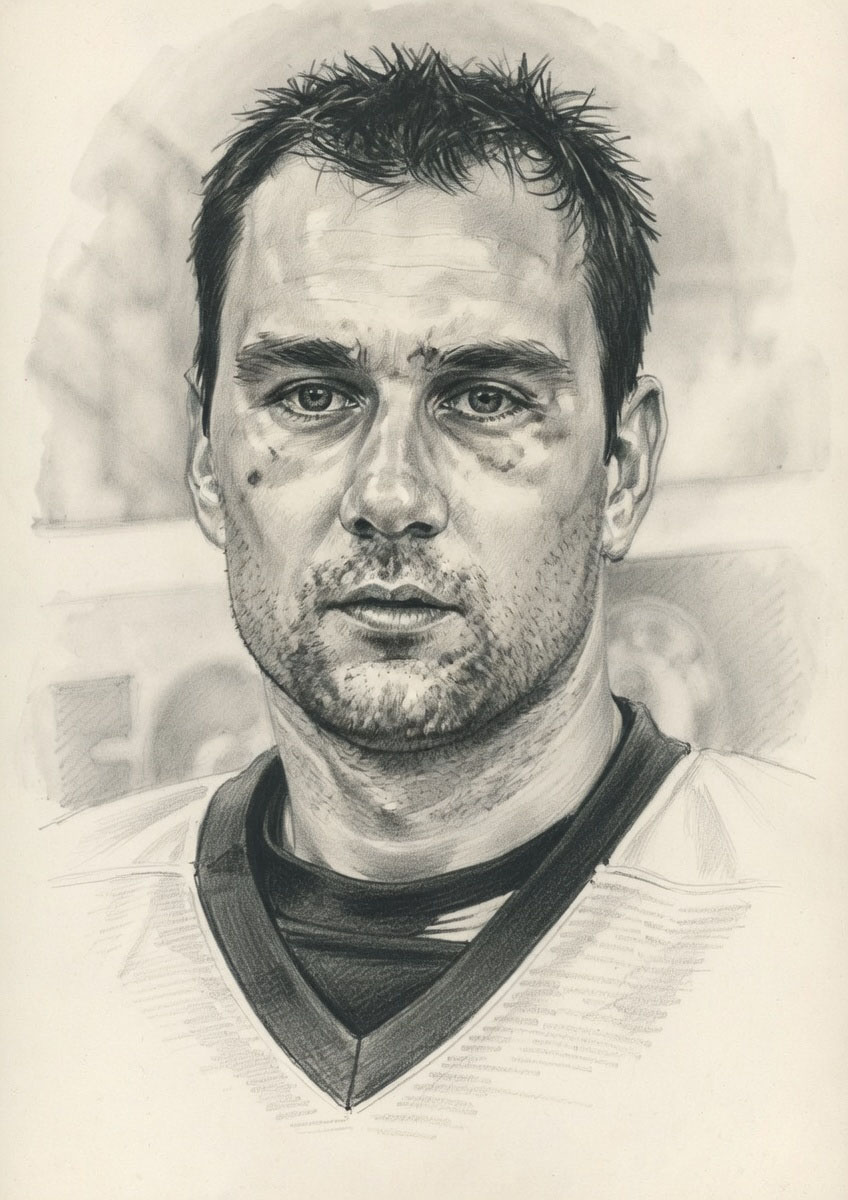
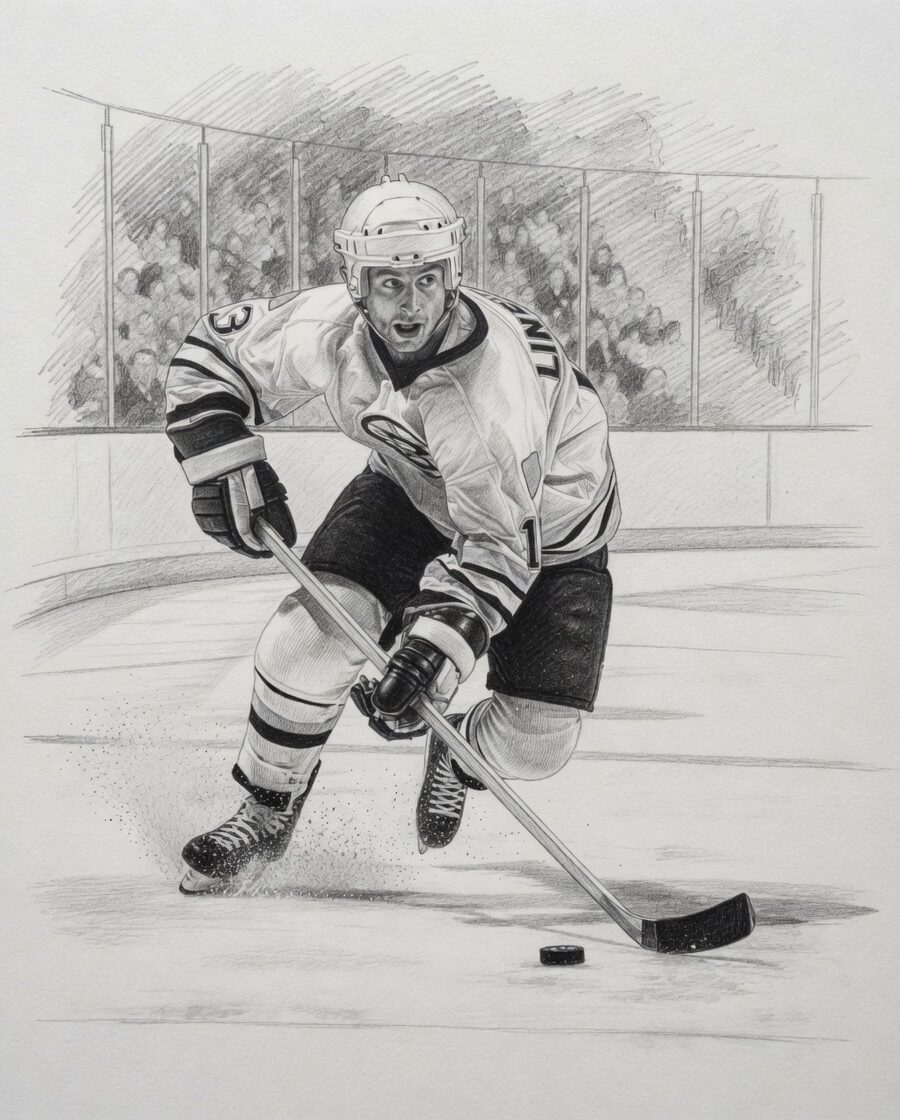
Last week I made a throwaway remark about how good a player Ken Linseman was. For the under-35s, Linseman was ubiquitously known as "the Rat" and that's about all you need. He was an incredible player, for a certain meaning of "incredible," all filthy stickwork and imaginative torments, every shift, nineteen minutes a night, seventy games a year. When he finally said just the wrong thing, and you turned on him with your glove slipping off your hand, then unless you were 6'0" and didn't fight much it was not Ken Linseman waiting at all but somehow Dave Semenko or Jay Miller or some other cement-handed ruffian. Oopsie-poopsie.

The man even skated like a deadbeat, trundling along in an Aqualung hunch; his teams should have issued him a trenchcoat. He played hard, he goaded hard, his very face was infuriating, and he was never happier than when he agitated you into a mistake that his team could exploit. He wore #13 in Edmonton and Boston. Even playing alumni games he somehow managed to show up with the most ridiculous swimming-goggles glasses you've ever seen like his very aging process was goading the opposition to take an unwise swing at the Rat. He knew exactly what he was. Linseman was also, incidentally, by all accounts a boisterous but solid human being, and a really good hockey player. In Edmonton he was obviously a cut below the really great players, but still an awfully good second-liner because the first-line centre spot was just plain off limits, and in Boston Cam Neely was definitely his superior, but from the scoring record Linseman was a solid, solid first-line centre for decent teams. No sport other than hockey could produce a player like Ken Linseman. He was an astonishing specimen.
Continue reading

How Good Was the WHA: Major League Teams

We've seen that the calibre of the World Hockey Association's top stars was high enough to call the WHA major league hockey. But hockey is not a superstar game. J. C. Tremblay was a great player; him and five AHLers make a good AHL defense. Your team would get smoked by the worst team in the NHL in a seven-game series and nothing Tremblay could do would make much difference. How can we judge how good the actual teams, from Bobby Hull down to the worst fourth-line goon, actually were compared to the NHL?

Just on the off chance a young person is reading this, I'll tell you something old WHA fans know: the one way you must not answer this question is by looking at what the four WHA teams accepted into the NHL did there. The NHL-WHA merger is often called a "surrender," where the NHL teams ruthlessly pillaged the WHA of their talent. It was a bit better than that; the WHA teams were permitted to keep three to four players officially, and in practice kept many more as the NHL's hard line softened once it was official that they'd actually have to share a business with these guys. True, there was some lingering NHL spite: making the WHA teams pick last in the Entry Draft rather than first, and denying Wayne Gretzky the Calder trophy on the grounds that he already had major-league experience. This did not wind up hurting that much: of the four Hall-of-Famers selected in the first round in 1979, two went to WHA teams (Michel Goulet to the Nords and Kevin Lowe to the Oilers), and Gretzky's legacy is fairly safe. They lost most of their top stars, but not all of them, and the NHL honoured Gretzky's personal services contract with Peter Pocklington rather than fight it. They were more like "expansion teams plus" than true expansion teams. Only the Quebec Nordiques finished last in their division their first year in the NHL, and they weren't a bad last. However, what they weren't was representative of the teams as they played in the WHA.

Going through each player on each roster would be more noise than signal. If you can compare half-century-old third-liners across two different leagues statistically and come out with a comprehensible result you are a better man than I. In baseball you can look at a guy who hit .280 and the pitching he faced and say something; in hockey ice time matters and we don't know it. There isn't enough video for even objective comparisons, and who'd have the time to watch it if there was? What we want is a corpus of how WHA teams played against NHL teams, or teams that NHL teams can otherwise be compared to; very fortunately, we have it.

Continue reading

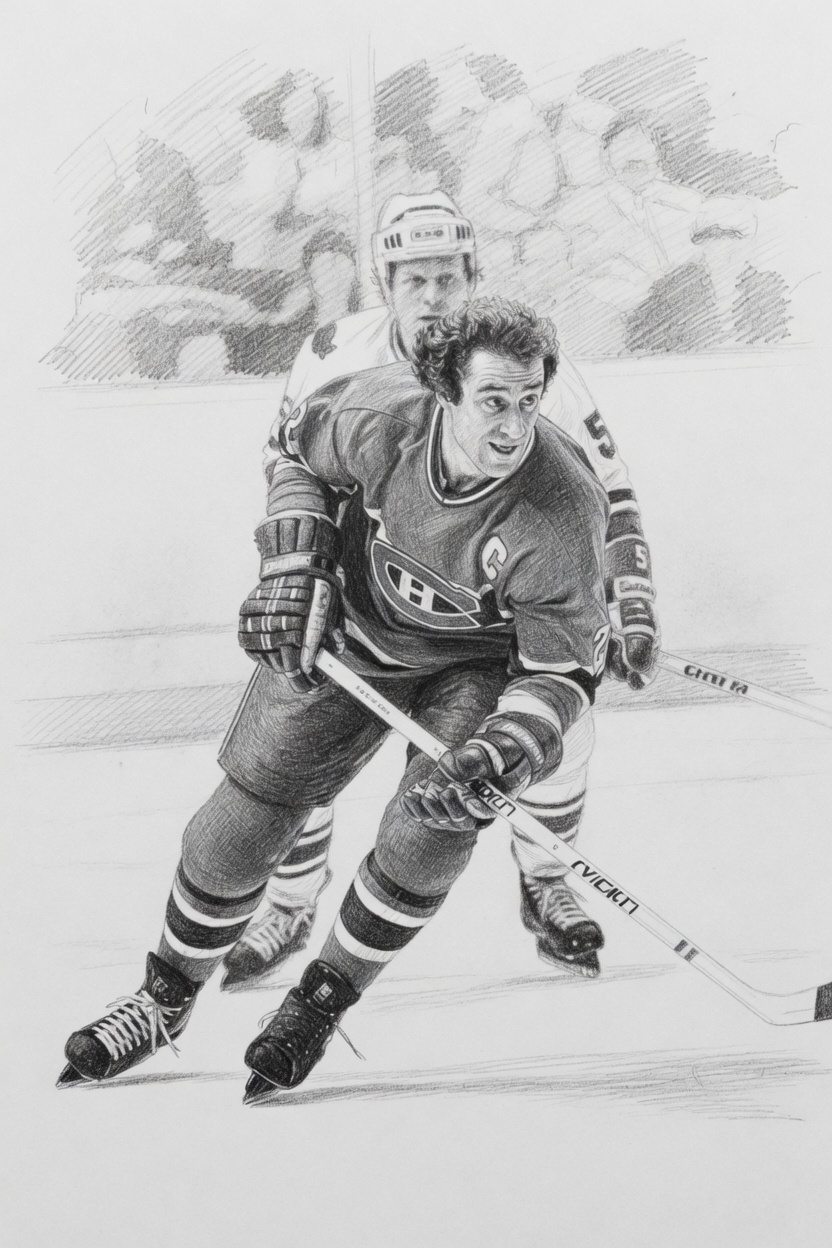
Bob Gainey Was Overrated

According to Hockey-Reference.com, 134 forwards played at least 500 NHL games between 1979–80 and 1989–90. Of those, Bob Gainey was 118th in points per game with 0.46. Basically tied with Rick Meagher, another Selke-winning forward I don't recall seeing in the Hockey Hall of Fame, and Pat Hughes, who was some guy. He was much worse than Troy Murray (66th, 0.77), another Selke winner and a St. Albert Saints legend, much worse than Keith Acton (86th, 0.68), much worse his successor Guy Carbonneau (87th, 0.66). He scored less than Steve Tambellini (100th, 0.56) and Craig MacTavish (103rd, 0.53), he scored less than Tiger Williams (107th, 0.51). This is a list of (mostly) good players, because few bad ones play 500 NHL games in a decade, but a Hockey Hall of Famer is not just one of the hundred best forwards of the '80s.

Bob Gainey is not an accidental Hall of Famer, but was inducted in 1992 at the earliest possible moment, before his management and coaching careers had added any laurels. He has, on multiple occasions, been named one of the 100 best players in NHL history. notwithstanding that he was a less effective offensive player than Steve Tambellini (though a considerably better general manager). Steve Shutt: "There are a lot of defensive forwards in the league, but he is the only one who controls a game." Serge Savard: "I can’t think of anyone on our team who means more to us than Gainey. A few guys like Larry Robinson, Guy Lafleur and Guy Lapointe mean as much. But they’re not more important than Gainey." The Habs have retired his number. He won five Stanley Cups, one as a captain, the first four Selke Trophies in a row, and a Conn Smythe.

Who cares? Nobody pretends Bob Gainey is in the Hall of Fame for his scoring. His strengths did not show up in statistics and everyone knew it. He was a durable leader with first-rate intelligence, strong physical play, and an inspiring work ethic; if there was an NHL award for intangibles Gainey would have won it every year until the voters got sick of him, and arguably that's what those Selkes in fact were. And Gainey's teams won. He was obviously a useful player, but realize just how vast a problem his scoring is. Offensively, he does not belong in the conversation with any other Hall-of-Fame forward. He is not close; he is not close to being close. Over the highest-scoring era in hockey history, Bob Gainey was an average to below-average scoring forward. To be a Hockey Hall of Fame-quality player, he would have to be so good defensively as to make up for that. Today, we know that is probably impossible. Defensive forwards are not that valuable, and Bob Gainey simply wasn't extraordinary enough to be the exception.

Continue reading

How Good Was the WHA: The Top Players

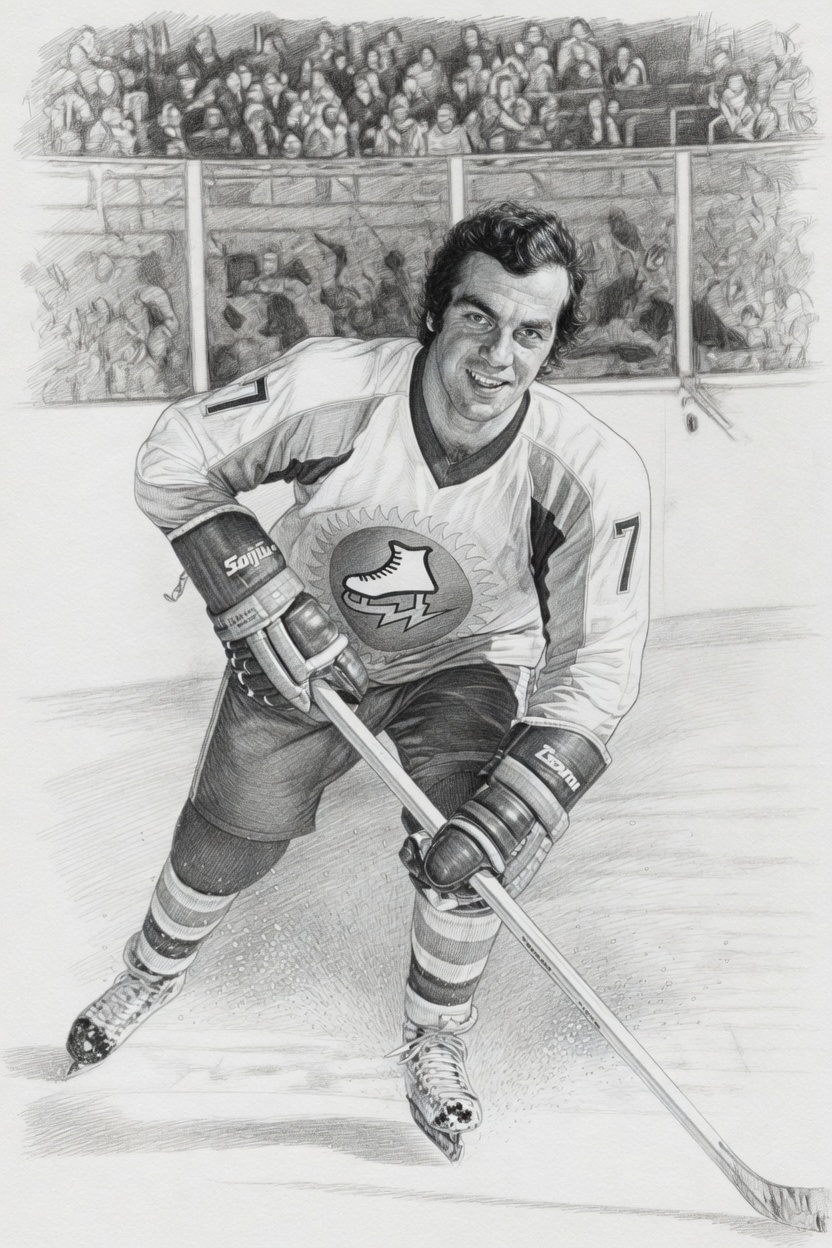
The World Hockey Association (1972–1979) was the one serious attempt to compete with the National Hockey League since the reign of George V. From their first season to the last they had real hockey markets and real stars, beginning with Bobby Hull and ending with Wayne Gretzky. They played exhibitions against the NHL, regular season games against European national teams, and a Summit Series of their own against the Soviets. They tried the shootout, they tried blue pucks, they tried cheerleaders, they tried some of the most flamboyant sweaters in hockey history, name it and they probably tried it. Not coincidentally they embodied a chintzy sleaze of bounced cheques, naming their championship trophy after a financial services company, and playing in some of the worst arenas to allegedly host major-league hockey since the invention of artificial ice.

The year before joining the Winnipeg Jets Bobby Hull had tied for second in the NHL in goals and was seventh in points. Hull was 33 when the WHA began play; so while not nearly washed-up he was entering the downswing of his career. One of the few non-hair-dye users on Hull's last Black Hawks team was a 26-year-old named André Lacroix, Prior to joining the WHA Lacroix had been an elite, but hardly superlative, junior player, and in five NHL seasons he achieved only a little. Then, in seven WHA seasons, he recorded 251 goals and 798 points in 551 games with a +22, leading the league in all-time scoring, winning two season titles, and being twice named MVP. Returning to the NHL after the merger, he lasted less than a season. Hull scored fewer points, but in fewer games, and with a better points-per-game. Hull won WHA championships; Lacroix never even made a final, though it was hardly his fault. Hull was one of the great shooters of all time, Lacroix a playmaker. You can pick either one for the WHA's greatest forward, but what does it say about the league to discuss an old, bald man and a definitely second-rate NHLer in such terms?

Was the WHA a major hockey league, not as good as the NHL, but worthy to be held alongside it? In this series I will answer "yes, obviously." However, the best possible reason for instinctive doubt is the quality of its marquee players. Lacroix, though a pretty good NHL player, was nobody's idea of a superstar. Hull was, but he was also old. And their best defenseman was J. C. Tremblay, a six-time NHL All-Star and Norris finalist in the Bobby Orr years, but he was 34 when he joined the WHA and put up superstar numbers. Tremblay twice led the whole league in assists and won the best defenseman award, the last at age 36. If your all-time stars, your Alex Ovechkin, Bobby Orr, and Wayne Gretzky, are an old Hull, an old Tremblay, and André Lacroix, can you really be a major league?

Continue reading

How Good Was Tony Hand?

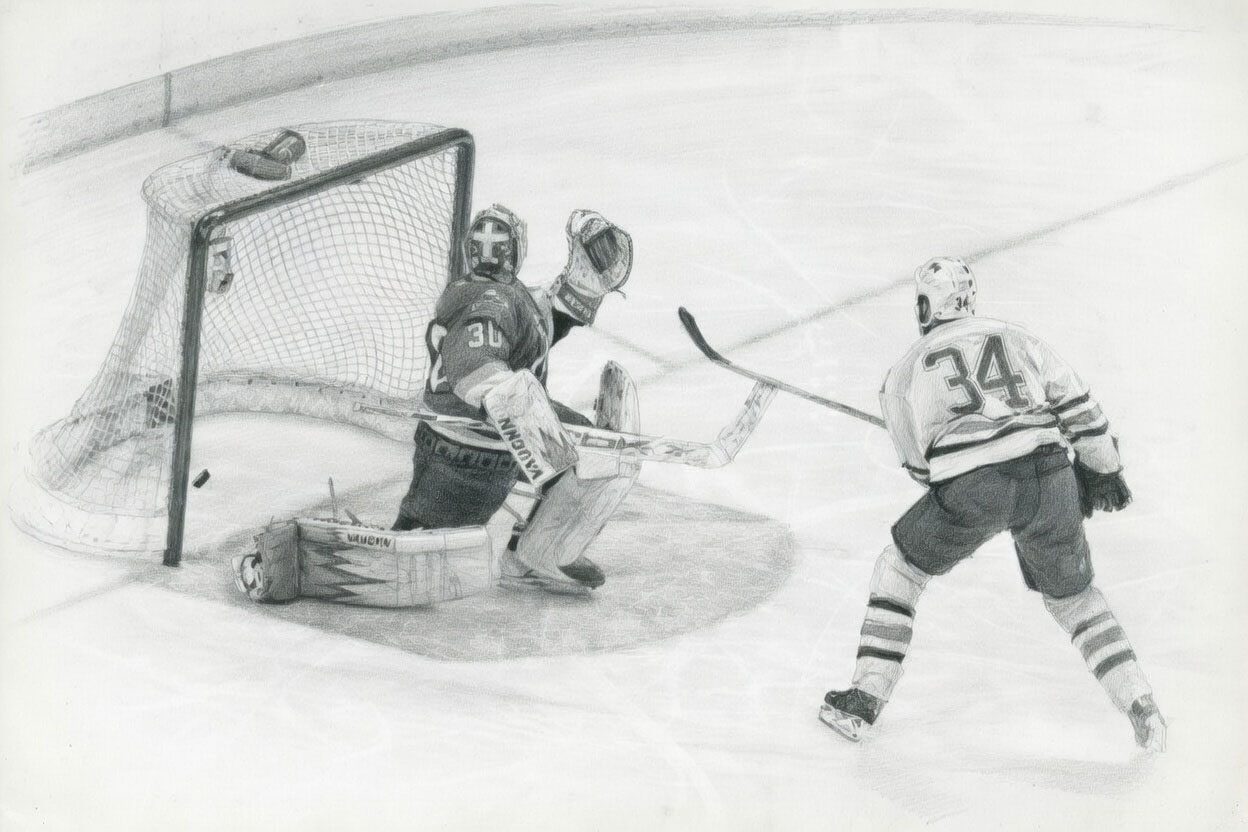
Anthony Hand MBE (August 15, 1967 –) is the greatest British born-and-bred ice hockey player of all time. This is not a vividly hot take; one might as controversially say that Patrick O'Brian liked ships. In British-trained hockey Hand is first and the rest nowhere. Liam Kirk, the best British-trained player of the twenty-first century to date, may make it an argument before the end, but Hand has all the qualities of a legendary player for a bottom-rate team: a lack of international success, a great deal of personal recognition for his talent, and an enormously long career. Hand was active in top-division British hockey, with interruptions, from 1983 to 2009, played in the second division until 2015, and although statistics are unreliable is probably the all-time leading scorer of the old British League.

Born, raised, and whenever he could get away with it professionally based in Edinburgh, Hand is best remembered for having been drafted 252nd and last overall in 1986 by the Edmonton Oilers; the first British-trained player ever selected in an NHL Entry Draft, supposedly on the suggestion of former Oiler Garry Unger, who played a few years in England to close out his stat book. Attending a couple training camps with one of the best offensive teams in hockey history, Hand did well enough to seriously interest Glen Sather in giving him a minor-league deal, but Hand was homesick and, apart from a short but successful spell with the WHL's Victoria Cougars and a second strong training camp, played his entire professional career in England and Scotland. Whenever one hears the story of Tony Hand, one will hear Glen Sather's quote that Hand "was the smartest player [in Oilers camp] other than Wayne Gretzky." Small wonder he is known as "the Scottish Gretzky."

But really, how good was he? Hand played three league games outside of Great Britain, and those were as a junior. His British career was immense and successful but coincided with the all-time nadir of British international hockey, where the Brits were at times as low as the fourth division of the World Championships with the likes of New Zealand and Spain. Hand led a modest resurgence, culminating to a glorious top-pool appearance at the 1994 World Championships, but Hand failed to score, the Brits lost all five of their games, and never managed to escape the second division during the rest of Hand's career, though they were sometimes quite good there.

Continue reading