Skip to content

Free-friendly hockey history

Old-school, long-form, statistically relevant hockey history for the masses.

Time to Kill Now is and shall remain free-friendly. Membership lets readers support the work, helps improve the site for everyone, and offers regular posts a week early plus access to bonus digressions and excessive notes.

Subscribe Why become a member?

How Good Was the WHA: The Top Players

The World Hockey Association (1972–1979) was the one serious attempt to compete with the National Hockey League since the reign of George V. From their first season to the last they had real hockey markets and real stars, beginning with Bobby Hull and ending with Wayne Gretzky. They played exhibitions against the NHL, regular season games against European national teams, and a Summit Series of their own against the Soviets. They tried the shootout, they tried blue pucks, they tried cheerleaders, they tried some of the most flamboyant sweaters in hockey history, name it and they probably tried it. Not coincidentally they embodied a chintzy sleaze of bounced cheques, naming their championship trophy after a financial services company, and playing in some of the worst arenas to allegedly host major-league hockey since the invention of artificial ice.

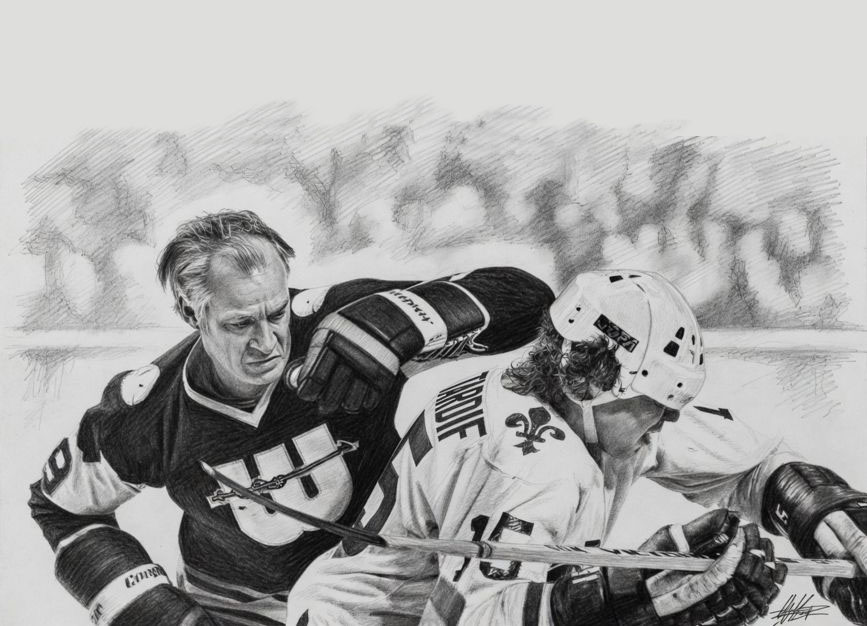
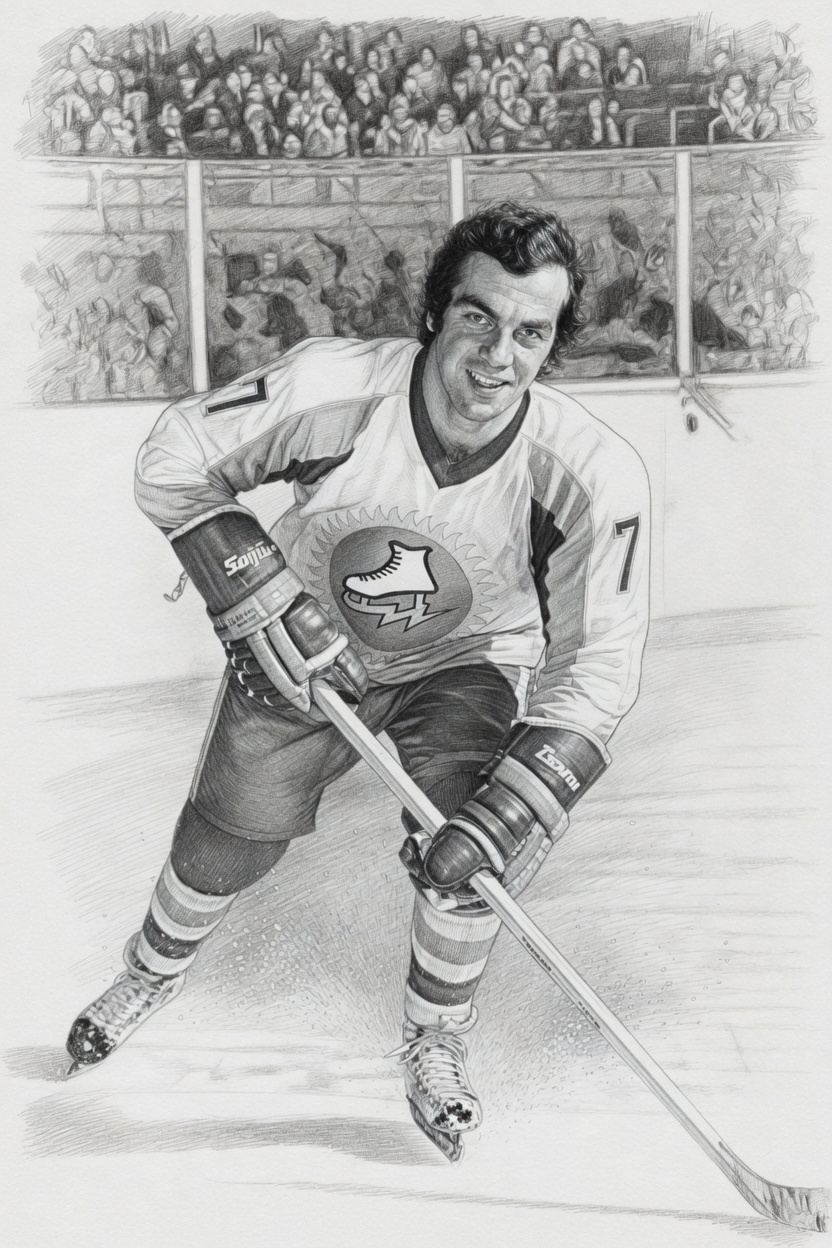
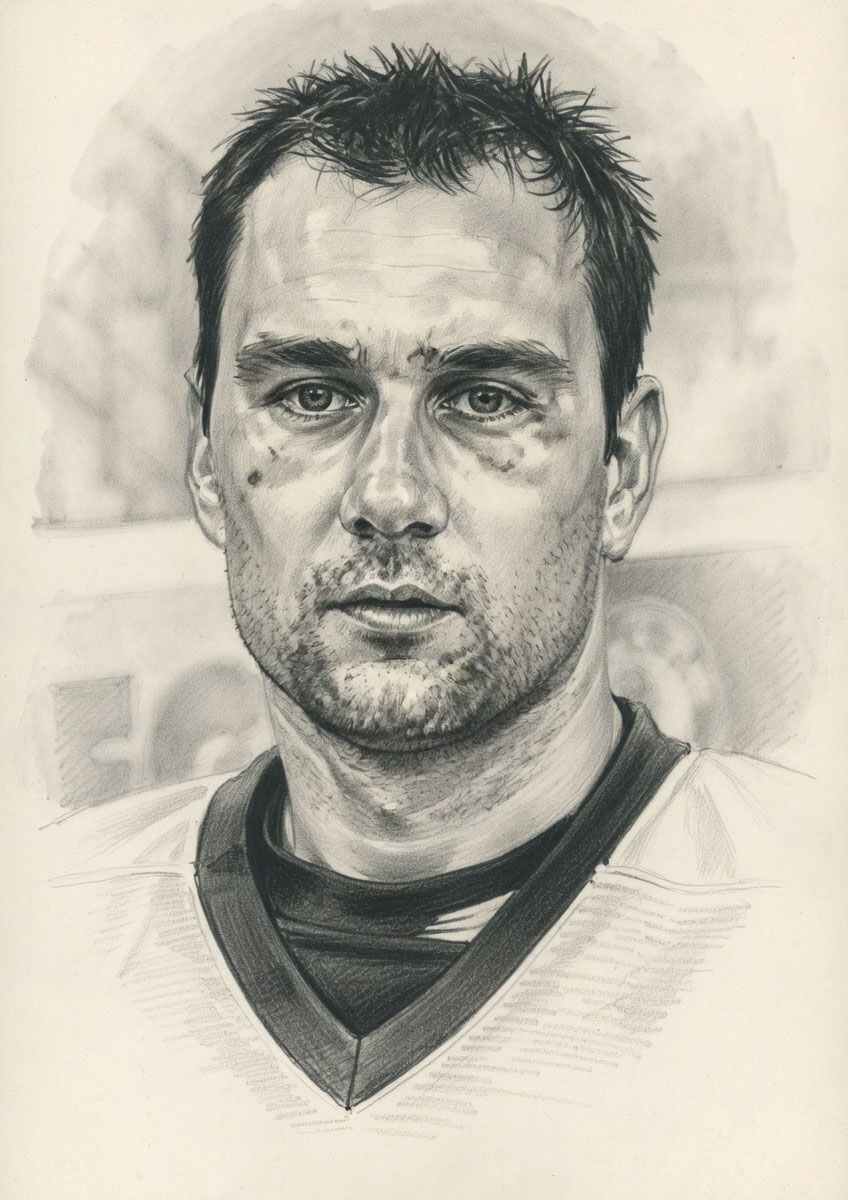
The year before joining the Winnipeg Jets Bobby Hull had tied for second in the NHL in goals and was seventh in points. Hull was 33 when the WHA began play; so while not nearly washed-up he was entering the downswing of his career. One of the few non-hair-dye users on Hull's last Black Hawks team was a 26-year-old named André Lacroix, Prior to joining the WHA Lacroix had been an elite, but hardly superlative, junior player, and in five NHL seasons he achieved only a little. Then, in seven WHA seasons, he recorded 251 goals and 798 points in 551 games with a +22, leading the league in all-time scoring, winning two season titles, and being twice named MVP. Returning to the NHL after the merger, he lasted less than a season. Hull scored fewer points, but in fewer games, and with a better points-per-game. Hull won WHA championships; Lacroix never even made a final, though it was hardly his fault. Hull was one of the great shooters of all time, Lacroix a playmaker. You can pick either one for the WHA's greatest forward, but what does it say about the league to discuss an old, bald man and a definitely second-rate NHLer in such terms?

Was the WHA a major hockey league, not as good as the NHL, but worthy to be held alongside it? In this series I will answer "yes, obviously." However, the best possible reason for instinctive doubt is the quality of its marquee players. Lacroix, though a pretty good NHL player, was nobody's idea of a superstar. Hull was, but he was also old. And their best defenseman was J. C. Tremblay, a six-time NHL All-Star and Norris finalist in the Bobby Orr years, but he was 34 when he joined the WHA and put up superstar numbers. Tremblay twice led the whole league in assists and won the best defenseman award, the last at age 36. If your all-time stars, your Alex Ovechkin, Bobby Orr, and Wayne Gretzky, are an old Hull, an old Tremblay, and André Lacroix, can you really be a major league?
Continue reading

How Good Was Tony Hand?

Anthony Hand MBE (August 15, 1967 –) is the greatest British born-and-bred ice hockey player of all time. This is not a vividly hot take; one might as controversially say that Patrick O'Brian liked ships. In British-trained hockey Hand is first and the rest nowhere. Liam Kirk, the best British-trained player of the twenty-first century to date, may make it an argument before the end, but Hand has all the qualities of a legendary player for a bottom-rate team: a lack of international success, a great deal of personal recognition for his talent, and an enormously long career. Hand was active in top-division British hockey, with interruptions, from 1983 to 2009, played in the second division until 2015, and although statistics are unreliable is probably the all-time leading scorer of the old British League.

Born, raised, and whenever he could get away with it professionally based in Edinburgh, Hand is best remembered for having been drafted 252nd and last overall in 1986 by the Edmonton Oilers; the first British-trained player ever selected in an NHL Entry Draft, supposedly on the suggestion of former Oiler Garry Unger, who played a few years in England to close out his stat book. Attending a couple training camps with one of the best offensive teams in hockey history, Hand did well enough to seriously interest Glen Sather in giving him a minor-league deal, but Hand was homesick and, apart from a short but successful spell with the WHL's Victoria Cougars and a second strong training camp, played his entire professional career in England and Scotland. Whenever one hears the story of Tony Hand, one will hear Glen Sather's quote that Hand "was the smartest player [in Oilers camp] other than Wayne Gretzky." Small wonder he is known as "the Scottish Gretzky."

But really, how good was he? Hand played three league games outside of Great Britain, and those were as a junior. His British career was immense and successful but coincided with the all-time nadir of British international hockey, where the Brits were at times as low as the fourth division of the World Championships with the likes of New Zealand and Spain. Hand led a modest resurgence, culminating to a glorious top-pool appearance at the 1994 World Championships, but Hand failed to score, the Brits lost all five of their games, and never managed to escape the second division during the rest of Hand's career, though they were sometimes quite good there.

Continue reading

How Good Were the Hanson Brothers?

My favourite minor scene in Slap Shot comes right before that guy bellowing "you goons, you can't skate" throws his keys. The three bespectacled ruffians score a fine team goal, the guy beans Jeff, and more movie magic happens as the Hanson brothers climb into the stands to beat the tar out of every opposing fan who crosses their fists, including coincidentally the right one.

I like it because Slap Shot is fictional[citation needed] but the cast was as legitimate as some of the stories. Michael Ontkean looks credible as the skilled Ned Braden because he was a quality NCAA scorer who could have played senior hockey if he'd wanted to (glad though we Twin Peaks fans are that he didn't). The camera sensibly doesn't show the other real actors trying anything more ambitious than skating in circles or dumping the puck in, but between Ontkean, the Hansons, and the famous parade of goons in the final game we see guys who could have been, and often were, paid to play hockey in real life, firing gloves off and having stick fights. A movie of minor-leaguers who could play pretty well playing pretty well is not interesting; a movie of minor-leaguers who could play pretty well hammering a drunk guy into the boards until he wets himself definitely is, but just once in a while the movie calls attention to the fact that these players are not actually jokes. The Hansons' goal is the best-looking hockey play in the movie, which is what you'd expect because they were the best hockey players.

The Hanson Brothers, registered trademark, are Steve Carlson, Jeff Carlson, and Dave Hanson, who replaced Jack Carlson in the movie because Jack missed filming to play major league hockey. Slap Shot gave them a stylized but reasonable portrayal. Slap Shot is the all-American hockey movie, with its dying mill town, its fashion shows, and its empty old rinks, and all four "Hanson brothers" are American. Jack Carlson and Dave Hanson were definitely goons, but Steve Carlson was a skill player, and Jeff was a well-rounded minor pro. The fictional Hanson Brothers were never more at home than punching people in half-empty arenas; the real foursome, like in that one scene, showed spots of ability. All got at least a cup of coffee in the big leagues and three of the four had a sort of career. Heck with it, it's April 1, let's capture the spirit of the thing. How good were the Hanson Brothers?

Continue reading

NHL Power Play Specialists

The greatest goalscorer on the power play in NHL history is Alexander Ovechkin, because he has the most goals.

Nobody's mad if you stop there. The job of the power play is to put the puck in the net and Alex Ovechkin has done that more than anyone, both with the man advantage and just generally. As of this writing, Ovechkin has scored 35.83% of his 921 NHL goals a man up; this will have changed by the time you're reading. 20% of NHL goals, give-or-take, are scored on the power play, so Ovechkin is conspicuously more effective with the man advantage than the statistical median NHL player. Which, since Ovechkin is quite a lot better than the statistical median NHL player, is not a surprise when you think about it.

Of course the power play is an advantage, it opens up more ice for the attacking team. Better players get more time on the power play, thus scoring a higher proportion of their goals there, and they should, because their skills mean they achieve more. This all makes sense after three seconds of thought. That the best scorers generally are also the best scorers on the man advantage is true, but uninteresting. If I had, say, the 2024–25 Anaheim Ducks, who were a decent team despite having one of the twenty worst power plays since recordkeeping began, I would not want you to tell me that I could use Leon Draisaitl; I knew that already. I would want to know what sort of player might make an impact disproportionate to his 5-on-5 skill with the man advantage, and might therefore be someone I can get. What I want, then, is a measure of a player as a power play specialist, the extent to which his powerplay productivity stood out from his normal scoring skills, and hopefully an idea of what type of player that is.

Continue reading

Welcome to Time to Kill Now

If you're old like me, you will remember when the cutting edge of hockey analysis and the finest writing was to be found, not on large corporate sites nor still less in newspapers, but on things called "blogs." Back when "67" was a Toronto Maple Leafs reference, people would start blogs that looked like hell, had no marketing to speak of besides word-of-mouth, were updated erratically as a rule, contained whatever the author found interesting, had no possibility whatsoever of making any money, and changed the way people thought about hockey: bringing serious statistical analysis to the game, at first, almost single-handed.

Those days are gone and shall never return. The "blog" has become a column on a corporate network at best; a Substack at worst. Young people are more likely to start a YouTube channel than a long-form writing enterprise, and the community of the comment section has become the community of the chat window. AI and social media motivate takes churned out at speed rather than 1,500 words about Stan Weir every third Wednesday.

That's not all bad: the gifted can now actually make money writing on the Internet (even I made some), and the really smart guys turned hobbies into thriving careers. Edmonton Oilers bloggers circa 2006 have more Stanley Cup rings than the post-Messier Edmonton Oilers, but as to bringing the style back, 2006 was twenty years ago. The old days had its excesses: I went along with some of them, and glad I am that they're lost in the mists of time. It had its limitations: we'd have killed for Hockey Reference or Natural Stat Trick. Concepts that were once almost in-jokes, "Fenwick" and counting scoring chances, are now commonplace. For tastes to change with the times is no unhealthy thing.

Continue reading