Skip to content

Free-friendly hockey history

Old-school, long-form, statistically relevant hockey history for the masses.

Time to Kill Now is and shall remain free-friendly. Membership lets readers support the work, helps improve the site for everyone, and offers regular posts a week early plus access to bonus digressions and excessive notes.

Subscribe Why become a member?

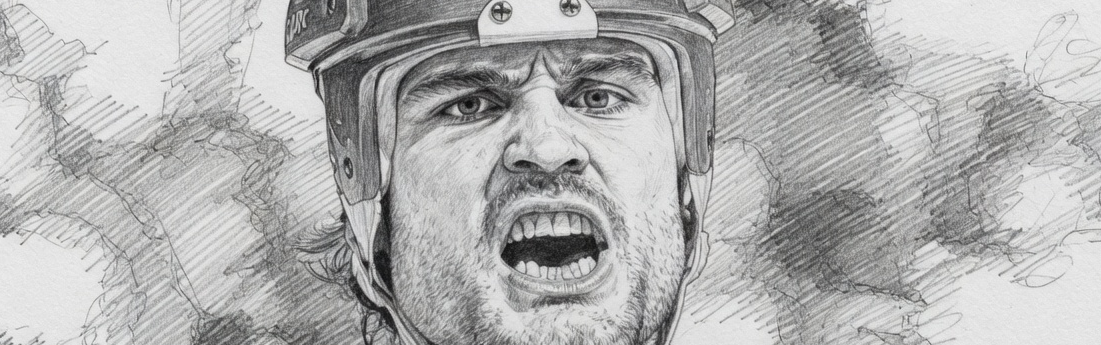
The Brilliant Flash of Dennis Maruk

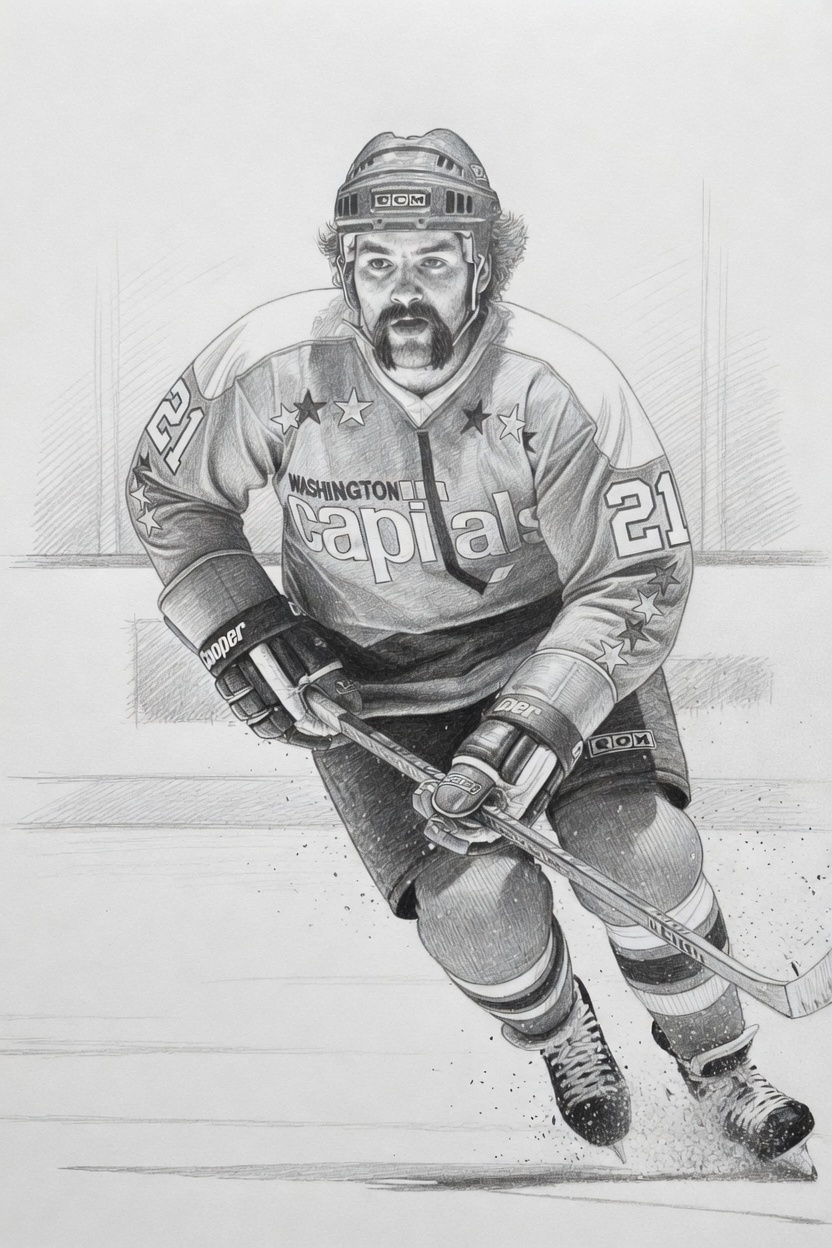
The 1981–82 Washington Capitals, 26-41-13, were not a great team. Last in the old Patrick Division, though being the early Capitals it was about their best squad yet. They were on the verge of making the playoffs, it showed in the underlying numbers, with their bit-better-than-median goals for and bit-worse-than-median goals against, but it was waiting to come together. They had a 22-year-old Mike Gartner, an 18-year-old Bobby Carpenter, a 23-year-old Bengt-Åke Gustafsson, and a few other young-ish players of reasonable quality. Their captain, Ryan Walter, was 23 and not too bad. So naturally their leading scorer was some guy named Dennis Maruk.

Not by a little bit. Walter was second on the team with 87 points, followed by Gartner with 80; Maruk had 136. He scored four hat tricks, he made the All-Star Game, he was fourth in the voting for the season-ending All-Star team at centre and seventh in voting on right wing, which says something, and sixth in the Hart. He finished fourth in the NHL that year in points, behind Wayne Gretzky, Mike Bossy, and Peter Šťastný; ahead of Bryan Trottier, Denis Savard, Marcel Dionne, Dino Ciccarelli, Glenn Anderson, Dale Hawerchuk, and Bernie Federko, to name only the Hall-of-Famers in the top 20. Third in goals with 60, behind Gretzky and Bossy. Sixth in assists, behind five Hall-of-Famers. Maruk and Bernie Nicholls are the only eligible players to have recorded a 60-goal season and not make the Hall of Fame and Nicholls got 30 assists from Gretzky. It was a killer year. Maruk's mustache may be second only to Lanny McDonald's in the era, and Lanny's in the Hall of Fame too.

This was not Maruk's only pretty good season; he was an All-Star in 1977–78 with the Cleveland Barons, because somebody had to be, and had another 50-goal season and a total of four 80-point seasons. Maruk actually outscored Gartner in each of the four full seasons they played together, and sure Gartner was young; it was four seasons over five years and it was still Mike Gartner. However, hanging out with Gretzky and Bossy was a one-off. 136 points was 29% better than his second-best career total. Sure, he scored 50 goals another time, but it was exactly 50, and his usual level was 30-odd.
Continue reading

How Good Was the WHA: The Blueliners

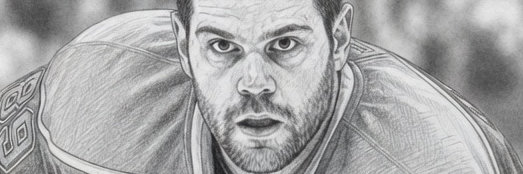
It is unfair, and possibly actionable, to accuse me of quietly stealing article ideas from Twitter replies. Oh, no, I loudly and exuberantly steal ideas from Twitter replies; I dive on them with the frenzy of a pitbull given a steak. So when Andrew Cunningham replied to my first post on the WHA's superstars suggesting that J. C. Tremblay was not really regarded as the WHA's best defenseman at all, I at once saw "content."

My opinion didn't come from nowhere: Tremblay held the points record at the position and won two best-defenseman awards. But Mr. Cunningham suggested Barry Long, Kevin Morrison, Paul Shmyr, and Lars-Erik Sjöberg were better-regarded in their day than Tremblay. Sjöberg and Shmyr were each named defender of the year once, Long and Morrison were not. Tremblay and Morrison were at their best in the WHA's earlier seasons; Sjöberg arrived and (apart from one fluke) Long peaked later, and Shmyr was outstanding throughout. Shmyr and Long had decent NHL careers apart from their WHA accomplishments, Tremblay was of course an All-Star, and Morrison and Sjöberg were in the NHL very briefly. Moreover, though Shmyr and Sjöberg were familiar names, Morrison I knew only from a few stories and Long not at all. They were all serious blueliners in the league and anybody who is quoting World Hockey Association facts from personal memory is a jewel to be cherished in 2026; I certainly couldn't say he is right or wrong.

After all, such personal memories are the stuff history is made of. Statistics are great to fill in the gaps, but they don't nearly tell everything. The World Hockey Association was, as we have now thoroughly established, major league hockey; yet it is major league hockey which is fading from memory without actually being nearly gone. Grabbing these stray 140-character thoughts, filling them with data, and transforming that into perspective is one of the great joys of life.

Continue reading

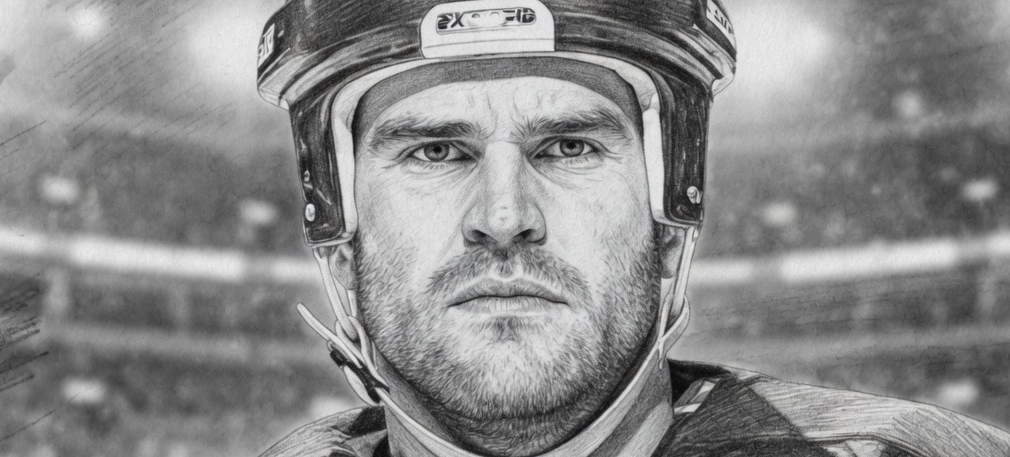
The NHL’s Great Pests Were Underrated

I'm trying to post every week for a few months, and sometimes you're going to get one that's mailed right in, in an envelope that smells a bit like Blue Buck. You get what you pay for.

Last week I made a throwaway remark about how good a player Ken Linseman was. For the under-35s, Linseman was ubiquitously known as "the Rat" and that's about all you need. He was an incredible player, for a certain meaning of "incredible," all filthy stickwork and imaginative torments, every shift, nineteen minutes a night, seventy games a year. When he finally said just the wrong thing, and you turned on him with your glove slipping off your hand, then unless you were 6'0" and didn't fight much it was not Ken Linseman waiting at all but somehow Dave Semenko or Jay Miller or some other cement-handed ruffian. Oopsie-poopsie.

The man even skated like a deadbeat, trundling along in an Aqualung hunch; his teams should have issued him a trenchcoat. He played hard, he goaded hard, his very face was infuriating, and he was never happier than when he agitated you into a mistake that his team could exploit. He wore #13 in Edmonton and Boston. Even playing alumni games he somehow managed to show up with the most ridiculous swimming-goggles glasses you've ever seen like his very aging process was goading the opposition to take an unwise swing at the Rat. He knew exactly what he was. Linseman was also, incidentally, by all accounts a boisterous but solid human being, and a really good hockey player. In Edmonton he was obviously a cut below the really great players, but still an awfully good second-liner because the first-line centre spot was just plain off limits, and in Boston Cam Neely was definitely his superior, but from the scoring record Linseman was a solid, solid first-line centre for decent teams. No sport other than hockey could produce a player like Ken Linseman. He was an astonishing specimen.

Continue reading

How Good Was the WHA: Major League Teams

We've seen that the calibre of the World Hockey Association's top stars was high enough to call the WHA major league hockey. But hockey is not a superstar game. J. C. Tremblay was a great player; him and five AHLers make a good AHL defense. Your team would get smoked by the worst team in the NHL in a seven-game series and nothing Tremblay could do would make much difference. How can we judge how good the actual teams, from Bobby Hull down to the worst fourth-line goon, actually were compared to the NHL?

Just on the off chance a young person is reading this, I'll tell you something old WHA fans know: the one way you must not answer this question is by looking at what the four WHA teams accepted into the NHL did there. The NHL-WHA merger is often called a "surrender," where the NHL teams ruthlessly pillaged the WHA of their talent. It was a bit better than that; the WHA teams were permitted to keep three to four players officially, and in practice kept many more as the NHL's hard line softened once it was official that they'd actually have to share a business with these guys. True, there was some lingering NHL spite: making the WHA teams pick last in the Entry Draft rather than first, and denying Wayne Gretzky the Calder trophy on the grounds that he already had major-league experience. This did not wind up hurting that much: of the four Hall-of-Famers selected in the first round in 1979, two went to WHA teams (Michel Goulet to the Nords and Kevin Lowe to the Oilers), and Gretzky's legacy is fairly safe. They lost most of their top stars, but not all of them, and the NHL honoured Gretzky's personal services contract with Peter Pocklington rather than fight it. They were more like "expansion teams plus" than true expansion teams. Only the Quebec Nordiques finished last in their division their first year in the NHL, and they weren't a bad last. However, what they weren't was representative of the teams as they played in the WHA.

Going through each player on each roster would be more noise than signal. If you can compare half-century-old third-liners across two different leagues statistically and come out with a comprehensible result you are a better man than I. In baseball you can look at a guy who hit .280 and the pitching he faced and say something; in hockey ice time matters and we don't know it. There isn't enough video for even objective comparisons, and who'd have the time to watch it if there was? What we want is a corpus of how WHA teams played against NHL teams, or teams that NHL teams can otherwise be compared to; very fortunately, we have it.

Continue reading

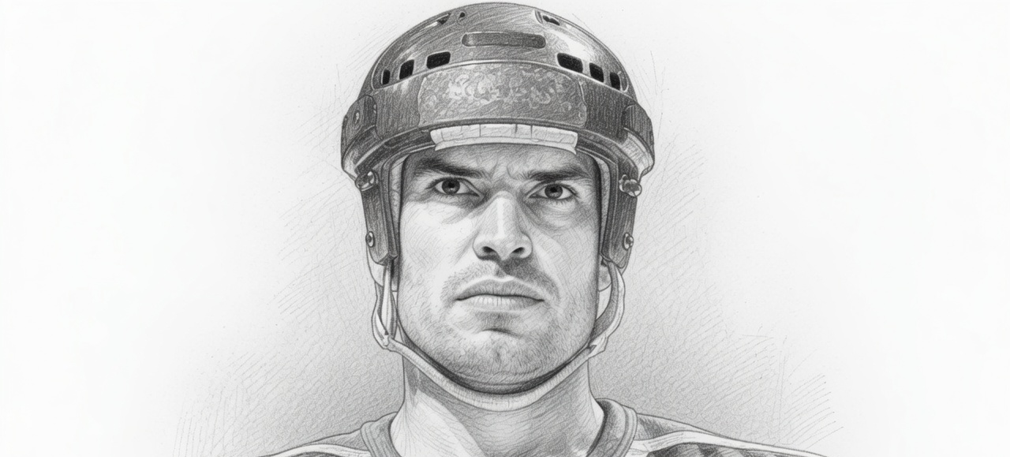
Bob Gainey Was Overrated

According to Hockey-Reference.com, 134 forwards played at least 500 NHL games between 1979–80 and 1989–90. Of those, Bob Gainey was 118th in points per game with 0.46. Basically tied with Rick Meagher, another Selke-winning forward I don't recall seeing in the Hockey Hall of Fame, and Pat Hughes, who was some guy. He was much worse than Troy Murray (66th, 0.77), another Selke winner and a St. Albert Saints legend, much worse than Keith Acton (86th, 0.68), much worse his successor Guy Carbonneau (87th, 0.66). He scored less than Steve Tambellini (100th, 0.56) and Craig MacTavish (103rd, 0.53), he scored less than Tiger Williams (107th, 0.51). This is a list of (mostly) good players, because few bad ones play 500 NHL games in a decade, but a Hockey Hall of Famer is not just one of the hundred best forwards of the '80s.

Bob Gainey is not an accidental Hall of Famer, but was inducted in 1992 at the earliest possible moment, before his management and coaching careers had added any laurels. He has, on multiple occasions, been named one of the 100 best players in NHL history. notwithstanding that he was a less effective offensive player than Steve Tambellini (though a considerably better general manager). Steve Shutt: "There are a lot of defensive forwards in the league, but he is the only one who controls a game." Serge Savard: "I can’t think of anyone on our team who means more to us than Gainey. A few guys like Larry Robinson, Guy Lafleur and Guy Lapointe mean as much. But they’re not more important than Gainey." The Habs have retired his number. He won five Stanley Cups, one as a captain, the first four Selke Trophies in a row, and a Conn Smythe.

Who cares? Nobody pretends Bob Gainey is in the Hall of Fame for his scoring. His strengths did not show up in statistics and everyone knew it. He was a durable leader with first-rate intelligence, strong physical play, and an inspiring work ethic; if there was an NHL award for intangibles Gainey would have won it every year until the voters got sick of him, and arguably that's what those Selkes in fact were. And Gainey's teams won. He was obviously a useful player, but realize just how vast a problem his scoring is. Offensively, he does not belong in the conversation with any other Hall-of-Fame forward. He is not close; he is not close to being close. Over the highest-scoring era in hockey history, Bob Gainey was an average to below-average scoring forward. To be a Hockey Hall of Fame-quality player, he would have to be so good defensively as to make up for that. Today, we know that is probably impossible. Defensive forwards are not that valuable, and Bob Gainey simply wasn't extraordinary enough to be the exception.

Continue reading