Skip to content

Free-friendly hockey history

Old-school, long-form, statistically relevant hockey history for the masses.

Time to Kill Now is and shall remain free-friendly. Membership lets readers support the work, helps improve the site for everyone, and offers regular posts a week early plus access to bonus digressions and excessive notes.

Subscribe Why become a member?

Time to Kill Now is Offering Memberships

Like you, I have a horror of excessive panhandling. At the same time, if there's no way to support the site, nobody will. Thus, Time to Kill Now is now taking subscriptions for a small (or a medium!) monthly fee. In exchange for your generous support, you get regular posts a week early, and get access to bonus content that will primarily appeal to those interested enough to pay for it.

If you'd like to support the site, please do become a subscriber and choose the tier that is most comfortable for you. Subscriptions are run through this site, with payments handled securely through Stripe and your information kept here rather than used on someone else's marketing list, but if you prefer to use your Patreon account, there is also a Time to Kill Now Patreon. As to the tier names, if you know you know.

Time to Kill Now is and shall remain a free-friendly site. You will not have to pay a dollar, not even a Canadian dollar, to get the good stuff. The goal of taking subscriptions is not just to make money and allow you to show your appreciation, but also to improve the free content that the site will continue to deliver as regularly as practical.

Continue reading

The Great NHL Defensemen of the 1970s

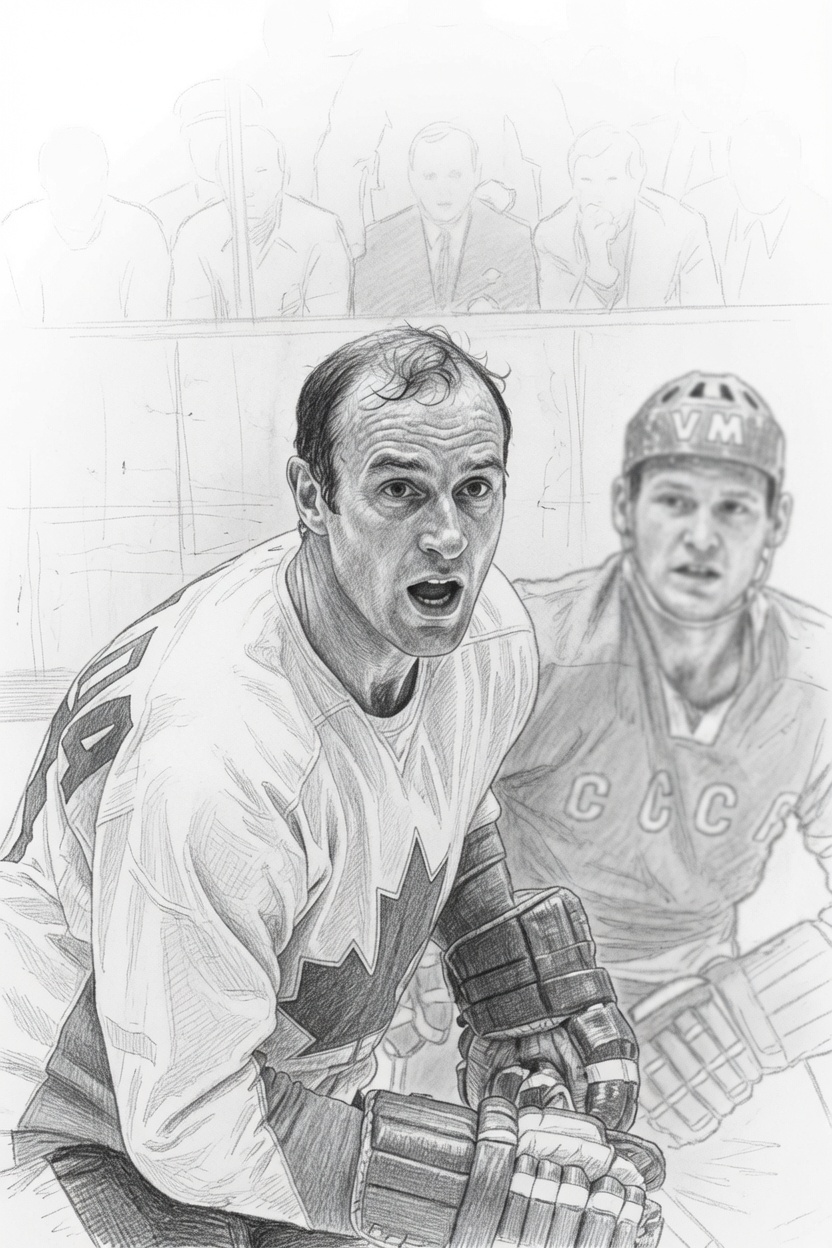
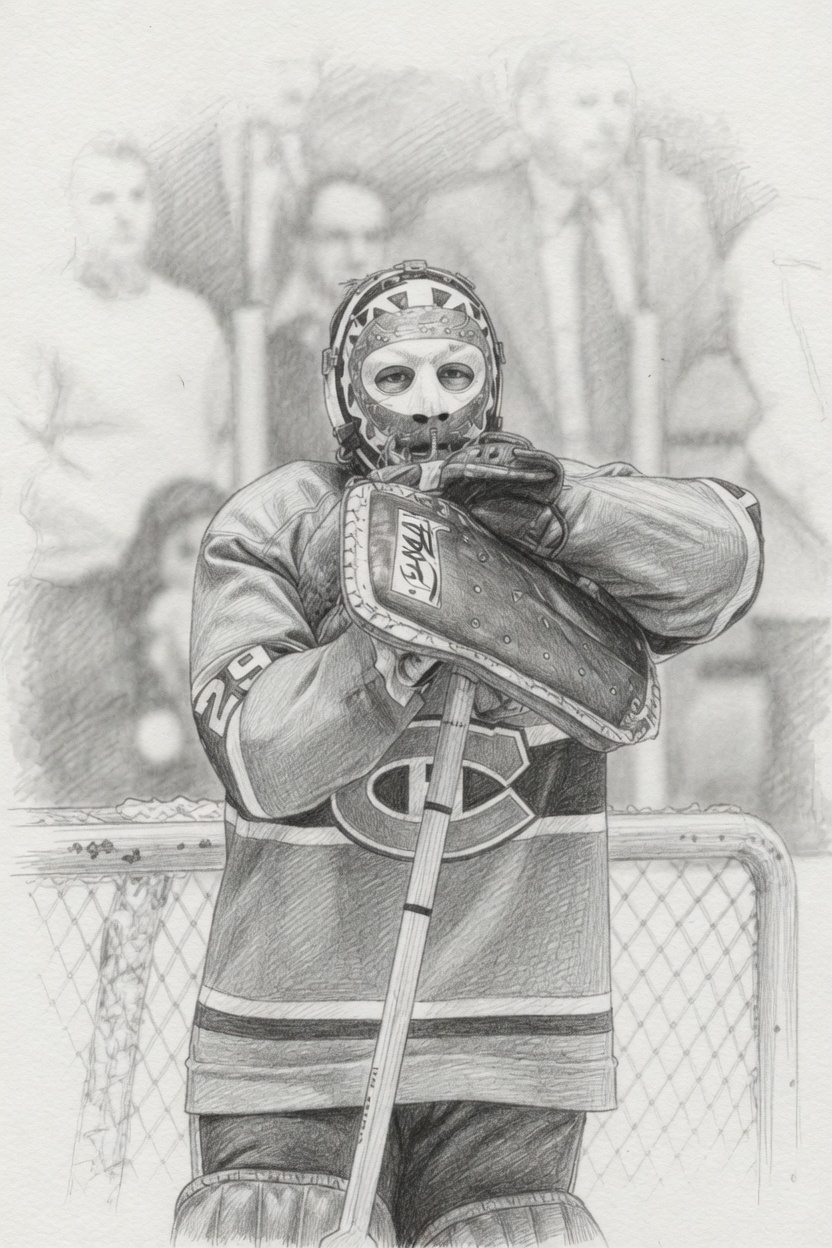
The 1970s was hockey's coolest decade. Sudden expansion, new types of player, the arrival of the Europeans, more fighting, great dynasties, great hair, first-time winners, the World Hockey Association. Bobby Orr, Guy Lafleur, Bobby Clarke, Ken Dryden, Paul Henderson. Glorious brawls, glorious goals, drama off the ice and on. The 1970s hold together, as a decade, in the way few others do, with expansion on one end and the post-WHA Gretzky era on the other. The 1970s are their own thing.

Ahead of the scoring explosion of the 1980s, it was an era unusually gifted with great defensemen. Orr, of course; the greatest of them all, the player who half a century later has not even been approached, whose greatness only grows with time, the player who changed the way defensemen could play but also set a standard none of his gifted successors have approached. But there was Brad Park and Denis Potvin and Larry Robinson, there was the start for Ray Bourque and the end for J. C. Tremblay, there was Börje Salming revolutionizing the game in an entirely different way. Though not a low-scoring era, the 1970s may have been the decade of the blueliner. There were plenty of great defensemen between Eddie Shore and Bobby Orr, of course, but people had forgotten that the first person to touch the puck has every opportunity to be as creative as the last. The influence of European hockey was just arriving, and hadn't had time to influence young players, but the game had already changed, and the ability of the defense to control where the puck went beyond throwing a thundering open-ice hit was being developed and appreciated in new ways.

So let's look at the best NHL defensemen of the 1970s. Not so much the very best, because nobody needs to be told that Bobby Orr or Larry Robinson was good, but the second tier, the guys who just made the Hall of Fame or didn't quite, the mass of elite talent who, in an elite era, influenced the game.

Continue reading

The Best Winning Writers in Hockey History

Much has been written about the 2026 Stanley Cup champion Carolina Hurricanes and their unusual front office. General manager Eric Tulsky is an old hockey blogger, as is assistant general manager Tyler Dellow. Several people who were 20 years ago called basement-dwelling hacks will now receive Stanley Cup rings. Three of them, Dellow and scouts Dennis King and Ellen Etchingham, are familiar names to old Edmonton Oilers bloggers like me. Of all their achievements, getting Oilers fans to cheer for Literally the Carolina Hurricanes may have been the most improbable.

If you want to read about this winning combination of big-brained analytics and big-bodied athletic excellence, Greg Wyshynski has written that article. The statistics revolution that came out of hockey blogs in the beginning of the century, a disproportionate number of whom were fans of the Oilers, is worth a book more than an article, but that can probably only be written once they are no longer working for pro hockey front offices and may again shoot their mouths off. To be an Oilers fan active online in the 2000s was more like the stereotype of attending a great university than any university I've been to: it was surrounded by people who, as a matter of course, without making a big deal about it, were changing how the hockey world thought and operated. Even for those of us who were not really contributors, it is in hindsight amazing to have been part of it: like going down to the pub with the mates and discovering 20 years later that you were hanging around the Inklings.

Setting aside the revolutionary concepts, there is now a new record for the best writer, in fact the best few writers, to win a Stanley Cup. Sadly, if you weren't there you have to take my word for this, because these great writers wrote excellent prose on blogs that are now, by and large, offline. You can dig through the Internet Archive for bits of it, but there is no corpus, no The Hot Oil Hockey Abstract for $5 at the used bookstore. But do take my word: the reason these men and women attained a following with nothing more than their keyboards was that they made complicated, controversial concepts understandable, readable, and eventually inevitable to anybody who could approach them with a slightly open mind. They write well. That your Tulskys, your Dellows, your Kings, your Etchinghams (to name only a few of the Hurricanes) are successful in the NHL is fantastic in every way except that now we civilians no longer see what they can do. Only the bad things on the Internet last forever; good ones vanish within the lifetimes of the people who made them.

The previous, and probably still the canonical, Best Stanley Cup Champion Writer is Ken Dryden, whose The Game has been in print for more than thirty years and is still hallowed among the sort of person who hallows that sort of thing. Dryden was, in every way, more of what you expect a hockey writer to be. He did not get into the game because of his writing; he got into the game and afterwards he wrote about it. The Game stands out because, up until the blog revolution, most hockey writing was fairly bad. You had a dichotomy between journalists, who were sometimes decent writers but obviously never won, and athletes, who could be winners but when it came time to write dictated their memoirs over a few bottles of wine to one of the journalists. Such mailed-in memoirs can rise to the level of "pretty good." Dryden was distinguished by the fact that he cared about writing himself, and had a talent for it.
Continue reading

Remembering Gerry Meehan

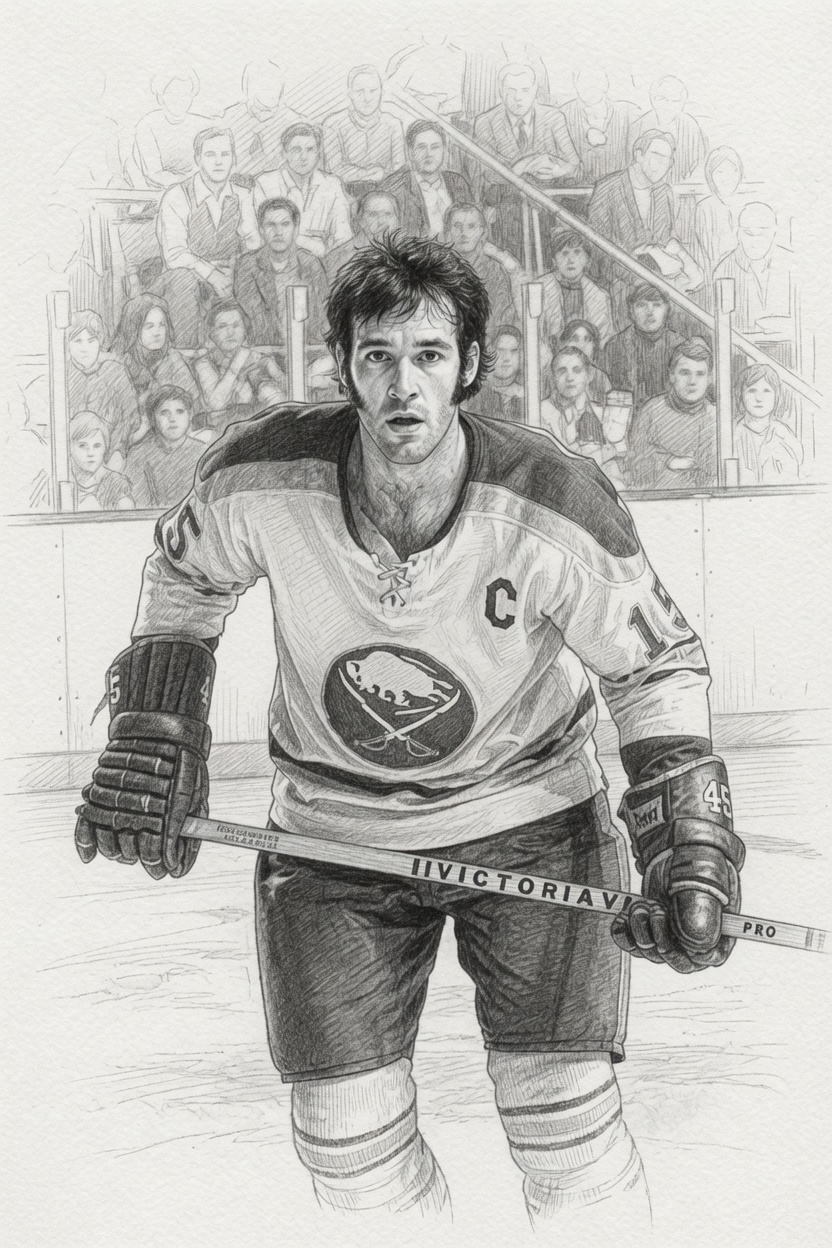
Gerry Meehan, forward for six NHL teams and long-time NHL front office jack-of-all-trades, died earlier this month at age 79. Meehan was perhaps most famous as "the man who built the Buffalo Sabres twice" and destroyed the Philadelphia Flyers once. The second captain in Sabres history, Meehan scored one of their most famous goals and led Buffalo to their first ever playoff appearance. As Sabres general manager Meehan got Alex Mogilny out of the Soviet Union, drafted Pierre Turgeon, traded him for Pat LaFontaine, probably lost a trade for Dale Hawerchuk, but made up for every imaginable sin by acquiring Dominik Hasek for a scrub and a fourth-round pick: if that's not the best trade in NHL history I'd very much like to know what is. Meehan's time as GM was relatively short, but few general managers can say they acquired the two best players in franchise history in such a span.

As a player, Meehan was destined for an awkward epoch: the immediate expansion era. Meehan was never considered a star prospect, as a kid he played well for good teams but didn't stand out. He was drafted by the Leafs, but it was the first ever amateur draft, for the few players who hadn't signed with an NHL team already; Meehan went last overall. Although the format was so weird you have to put an asterisk beside this, Meehan was probably the best last overall pick until Patric Hornqvist 42 years later.

Had he been ten years older, Meehan would been lost in the deep dark sea of the Original Six. Had he been ten years younger, he would have benefited from the highest-scoring era in NHL history, for Meehan was a premature '80s Guy if ever there was one. He had good size and skill, was respected, played a versatile attacking game, and got the puck on goal. He was smart on the ice and smarter off it. But he had a rep as a soft player, which when his most famous teammate was Gilbert Perreault took some doing. Despite, or maybe because of this, he played in 672 big league games. Though he wasn't a regular in a big-league lineup until he was 24, he was basically never hurt; he had two eighty-game seasons, a 78, three 77s, a 74, and a 72. He played for one of the worst teams in NHL history, the 1975–76 Washington Capitals, and may have been the reason they weren't the worst team in NHL history. He never came close to leading an NHL team in scoring. His teams always traded him, usually for not much; the team that got him usually improved. Not a great player, and better remembered in the front office, but a man before his time, a Volkswagen Golf during a Buick age, who showed how far you can get with brains and a work ethic.

Continue reading

How Good Was Vsevolod Bobrov?

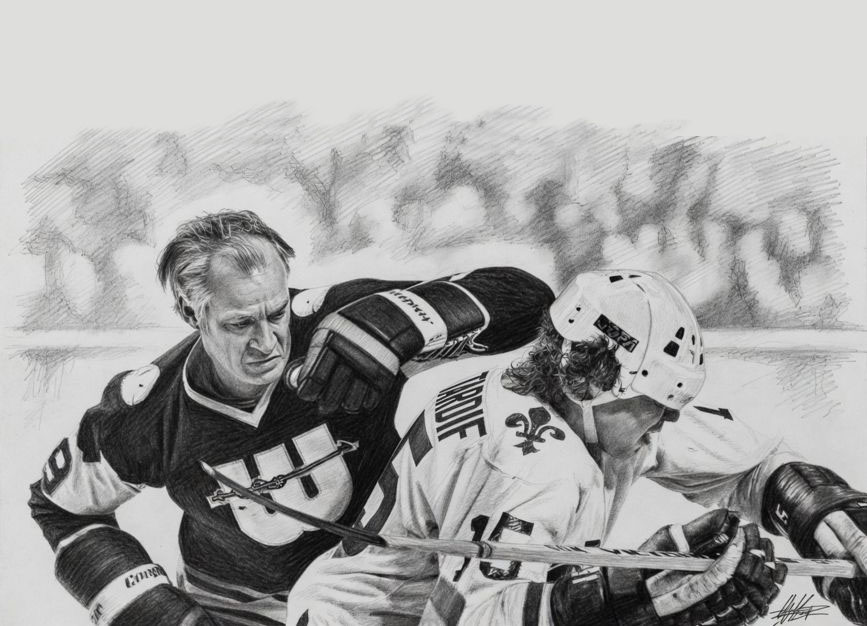
Vsevolod Mikhailovich Bobrov (December 1, 1922 – July 1, 1979) is the official first hockey hero of the Soviet Union, to the extent Soviet hockey went in for anything as bourgeoisie as heroism. The "Big Red Machine," the formless, perfectly-engineered game-winning communist automaton, all wheels and cogs and interchangeable parts cast in the foundries of the Red Army, was one-third real, one-third the team's goal, and one-third a contrast to North American individualism that appeared starker than it was. The men, like Bobrov, were still men: they lived and breathed and often enough partied like hellions, flying through the snow in their Ladas with a quart of vodka in the system and smoking Polish cigarettes, differentiated from Guy Lafleur by haircut and quality of goods. They left enough memories that Bobrov was named to the IIHF Hall of Fame on its founding a quarter-century after his death, was named to the IIHF "All-Time Russia Team" in 2020, and the KHL named one of its divisions after him.

Although a well-known Soviet athlete immediately after the war, Bobrov made his first international impact at the Olympics. The Summer Olympics, to be specific; in addition to hockey and bandy (which is to hockey as Pravda is to truth), Bobrov was an excellent soccer forward and captained the Soviet soccer team at the 1952 Summer Olympics. Bobrov began by scoring the equalizer in a 2-1 extra time preliminary-round win against a decent Bulgarian team lead by influential goalkeeper Apostol Sokolov. But that was nothing: the Soviets faced a good Yugoslav team next in the first round proper. Yugoslavia took a 3-0 lead at halftime; while Bobrov was able to make it 3–1 Yugoslavia got the next two to stake a 5–1 lead and, like Tito taking over Albania, they probably thought it was all over. At 75' Vasili Trofimov scored for the Soviets; Bobrov added his second at 77' to make a game of it, then completed his hat trick on 87'. 5–4. Aleksandr Petrov tied the game in the eighty-ninth of ninety minutes, and the Soviet Union had what match referee Arthur Ellis called "the most honourable draw ever recorded." There were no penalty shootouts in those days, so two days later they played again: Bobrov opened the scoring in the sixth minute, but the Yugoslavs took control after that, winning 3-1 and going on to the silver medal, losing only to Ferenc Puskás's unstoppable Hungarian "Magical Magyars." Ellis said of Bobrov, "he, almost single-handed, took the score to 5–5 [. . .] For once, use of the word sensational was justified."

This, it will be remembered, was Bobrov's second-best sport.

Continue reading